Audrey Seguy – Ventoux, France
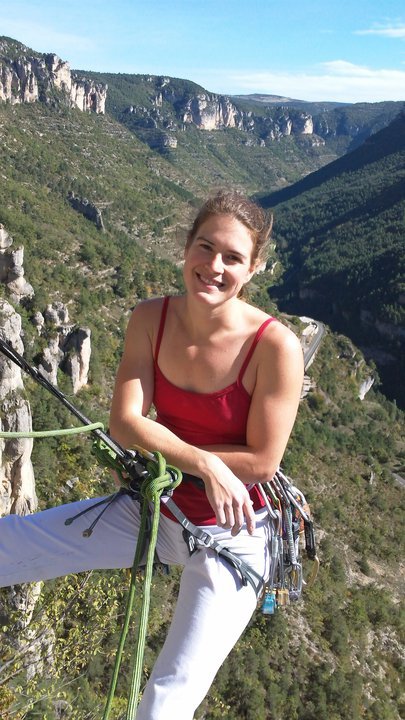

The first proper conversation I had with Audrey was back in 2011 on a walk-in up to the Grand Grotte in Kalymnos. I say conversation, I struggled a bit as I was somewhat embarrassingly out of breath walking up a steep hill, carrying a load of gear (and lacking a bit of fitness!) while Audrey, pregnant at the time, was bombing along setting a pretty solid pace. And that’s Audrey! Until then I’d only seen her climbing like an absolute beast at the Castle and will confess to being in awe of her incredible shoulders! I should add, however, that she is also an inspiration not only as a climber but as a business woman and as a human. Former British Bouldering Champion (2006 and 2008) and British Lead Champion (2008), Audrey is one of those folk who never stops adding strings to their bow. She trained as a lawyer in Illanois before becoming Managing Director of the Castle Climbing Centre, London, where she worked for 9 years before moving to France to set-up a pretty sweet group of gites in a gorgeously remote haven in the hills around the Ventoux. She runs Alauzon with her partner, Rockfax guru, Adrian Berry. Life is still pretty busy just in a different kind of way.
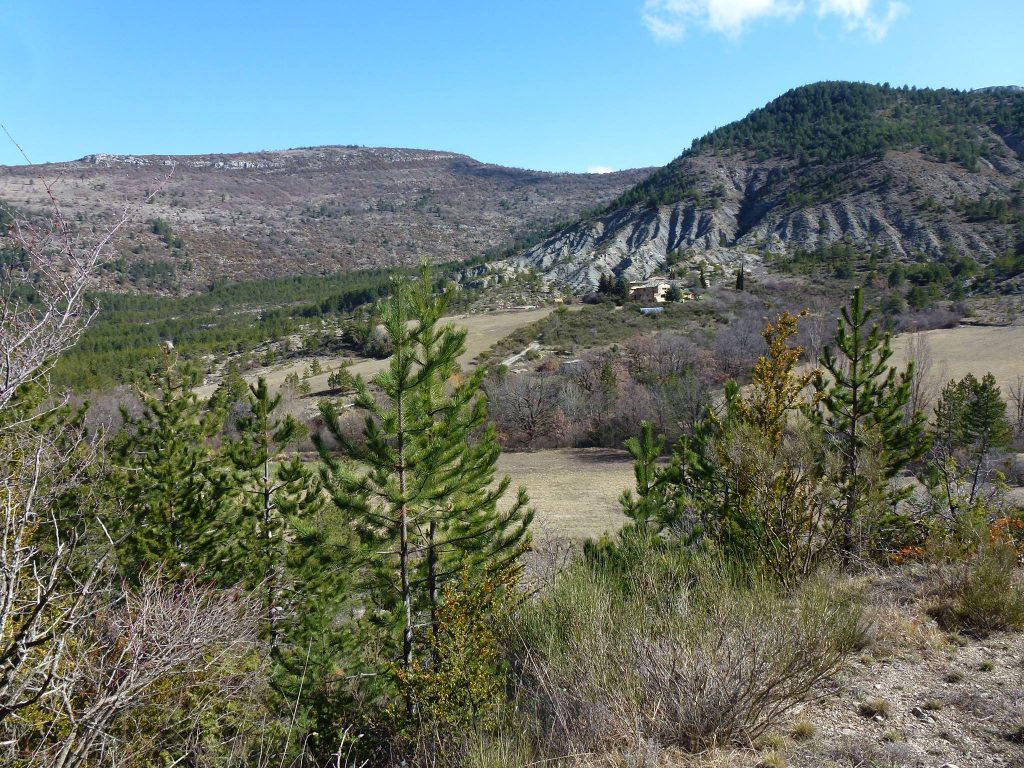
When I asked Audrey to select a climbing destination, she was keen to bring St Leger du Ventoux into greater prominence. Yes, it lies about 30 minutes from Audrey’s gites ;) but, as she says, it offers “year round, world-class sport climbing and a nice river with waterfalls to cool-off in in the Summer. There’s a lovely north-facing sector for warmer days with grades starting at 6a. The rest of the year, the other faces have absolutely anything you want as long as it’s single-pitch sport. The walk-in isn’t brutal and we can go with the kids. For those who like a bit of via ferrata that is on offer too, as of course, is plenty of opportunity for cycling, it being Tour de France territory. Adrian is busy putting up new routes all the time as there is a wealth of rock to explore here.”
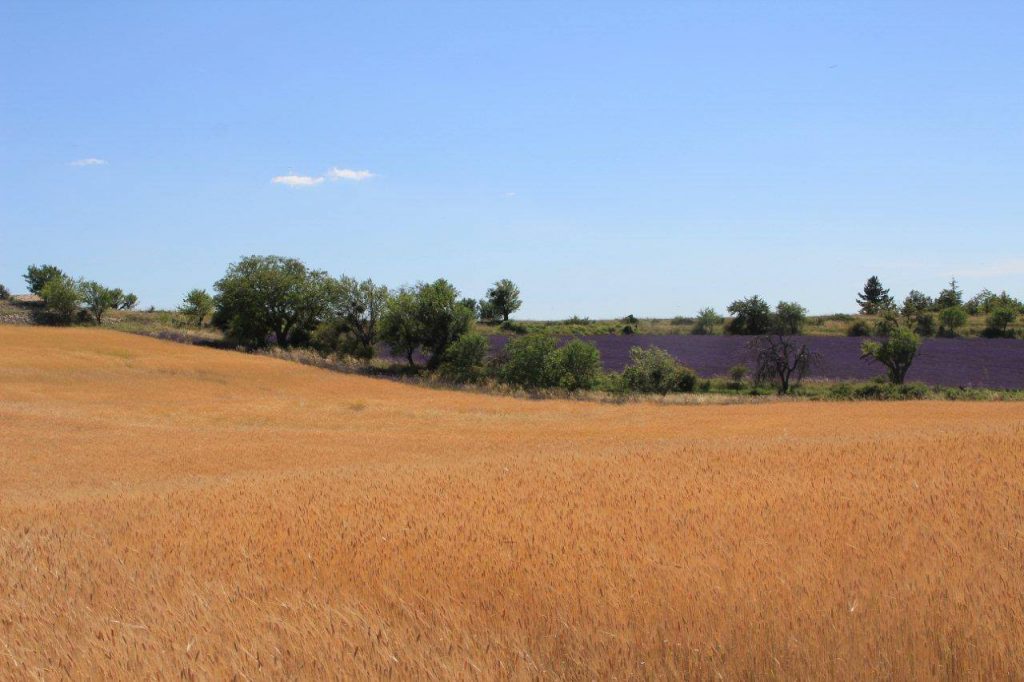
For local ingredients to try, Audrey has chosen something a little more on the unusual side and something that whilst it obviously sounds very French, isn’t particularly “glamourous” … “petit épeautre”, a humble, local spelt grain. It’s not particularly well-known outside of this region and humble it may be but it’s actually a fantastic grain, particularly for hungry climbers. It will fill you-up and has a high vitamin and mineral content so is very nutritious. Helpfully, it is also super versatile and low-gluten. France was all cheese, pastries and wine?
Like most grains, petit épeautre also comes in flour form (as in spelt flour like we have in the UK). You can make bread with spelt. I’ve not included it here as I’m will be focusing on van breads elsewhere in this section of the site. Audrey’s top local tip for crag bread is to swing by Oh le Pain! in Buis les Baronnies (the nearest town)… “They do really nice fougasse (olive bread) and my kids love their choco smileys (chocolate and bread)”.
Hearty stovetop spelt gratin
(it’s a sort of ersatz gratin as there’s no breadcrumb action – I’ve left these out because these won’t crisp-up on the stove top).
You can also use the petit épeautre to make a couple of other stove-top friendly dishes:
Risotto – obviously not French but a crowdpleaser and simple to scale-up. You can pretty much put anything you like in a risotto and it’s a good way to get creative. Think of the rice (spelt, here) as your blank canvas. You can give it a French twist by adding local ingredients and by stirring through goats cheese instead of parmesan.
Alternatively, you could use petite épeautre in a simple soup, which is a good way to get rid of any leftover vegetables (or grain, for that matter). All you need is to prep the basic soup: fry the onions, garlic for about 10 minutes until translucent, then add whatever veg you have to hand, maybe some chopped fresh rosemary/thyme, a dash of chilli for extra warmth; when these are tender, add 700ml hot stock bring to the boil, then add c. 250g of the grain. It will need to long, slow simmer on the hob, mind (lid on)– say, 1 hour 30. Serve with crusty bread and some local goat’s cheese.
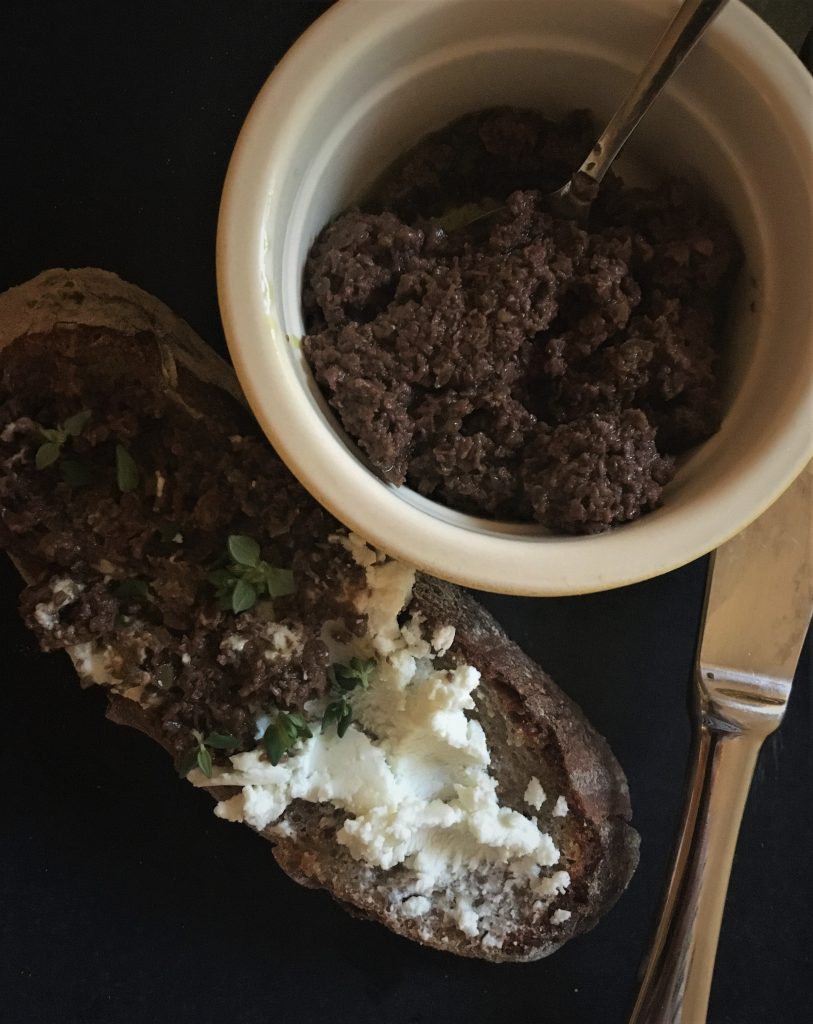
Tapenade
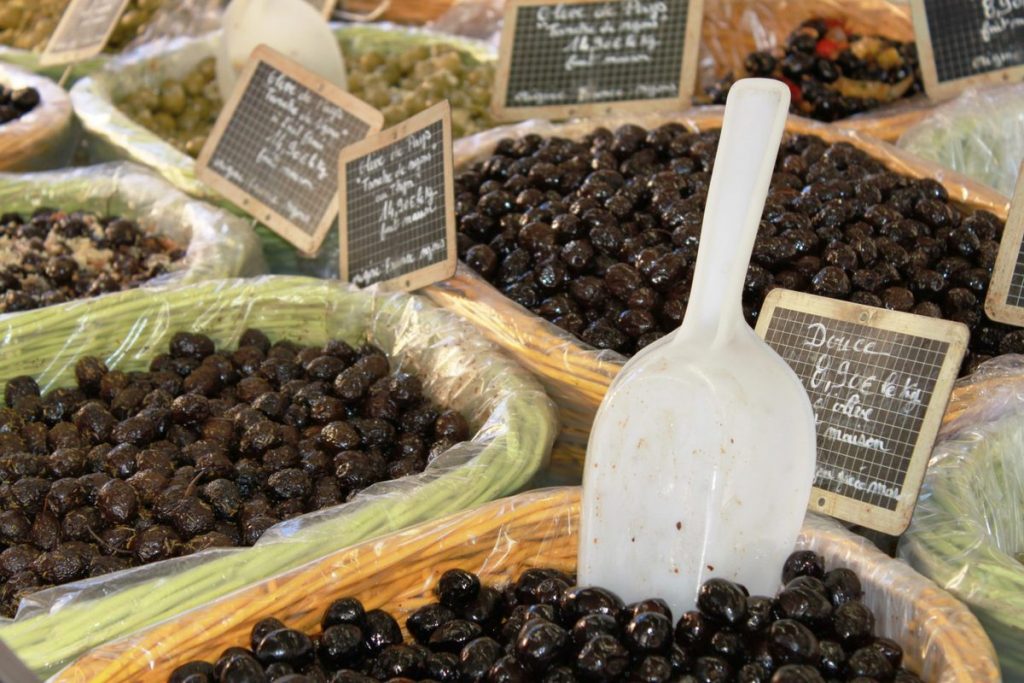
Aside from the spelt, Audrey also wanted to note that this is a famous olive-producing region (Olive de Nyons, AOP) and that this is definitely something that you shouldn’t leave without trying (the olives and the oil). Obviously olives are pretty simple in the eating of, especially when they slip down easily with a sun-downer. Personally, I enjoy them all the more in paste form and below is a recipe for a simple tapenade – super easy to make and also pretty portable – a great accompaniment for crag baguettes.
Salade de petite épeautre au basilac
And finally, for good balance, a recipe which combines the spelt and the tapenade!
And, last but not least, what to drink with these...
Well, these will be similar to the suggestions for Jim Pope, I’m afraid, as Audrey’s gaff sits right in Rhône country so shares similar options when it comes to wines (hopefully the next climber will choose somewhere other than (the south of) France! ;)). Not a problem though. The Ventoux region produces some of the worlds most glorious grenache so I would absolutely advocate getting involved with this red delight for sure. It will be a super match for the spelt gratin as the crisp berry fruit will pick out the sweetness of the local veg in the dish and the bright acidity will balance the richness of the roux and the grain. There are plenty of pure grenache wines to try but it also features in many of the red blends down that way.
This is one of my favourite wine regions and you can refer to my Drop page for further information on the Rhône.
For whites, Rousanne, one of this regions native white varietals, really likes black olives so that would work very well with the tapenade and will be an absolute delight with the salade au basilac as it has some richness and the sweeter white fruit flavours will balance the herbs. You often find it blended (with Marsanne and Viognier or in a more generic white blend) more than as a single varietal.
Q & A
Quick Q&A on climbing/food/life on the road…
What do you find challenging when cooking on a trip?
Not having an oven (although more and more people are fitting ovens in their vans these days #vanlife!). Not having big enough pots/pans. Keeping food from going off. I try to avoid cheese and meat for this reason as it’s so hard to keep these cool, especially in summer (if you don’t have a fridge in your van, that is!). Vegan diets are pretty good for camping, but it’s important that you don’t just radically change your diet on the trip because your body needs some time to adapt to not having meat. Arguably this kind of travelling provides another reason to cut down on meat consumption.
You kind of live in the great outdoors now but what’s been your experience of van life?
My first ‘van’ was actually a VW gold estate. I used to fold the back seats down and sleep in the back. Then I upgraded to a Peugeot Partner. We did a very basic conversion – basically just a platform bed in the back and storage underneath. To cook, I had a folding table and basic camping stove. Then, when Adrian was working on his guidebooks we realised he was going to be spending several months a year in the van so we upgraded to a long wheel base T5. Adrian kitted it out himself over three “long months”. Not easy to do when you’re living in London with no space to work and having to pack up your tools every night. Anyway, because we did it ourselves it was exactly as we liked it with a large bed, swivel seats and a three-hob stove. If it was raining we didn’t even have to leave the van! Good times.
I think it really impacted on my eldest son Raphael (now 7) because he LOVED that van. His first drawings were of that van and he still remembers it fondly. When we moved to France we were worried that because it was a self-build we might not be able to register it in France. Also we needed a more practical vehicle. We’re on a 13 acre rural property with lots of gravel tracks. So we sold the van and bought a double cab pick-up truck, which has been perfect though we do miss our van. If we go camping now it’s with a car and a tent which feels much more limiting because you can’t just park up and sleep.
What’s your best trip/camping hack – cooking or otherwise?
My best trip hack doesn’t really have much to do with cooking, but is more about group trips in general and is something I learned from my partner, Adrian. I hate that when you’re on group trips everything seems to take so much longer: you spend ages waiting for people to figure out where they want to go climbing, waiting for people to get ready, waiting for dinner to be ready. I just want to go out climbing in the best conditions! So now we do our own thing alongside other people and everyone is much happier. Yes it’s nice to go with the flow but it’s your trip too and it’s important to think about what you want to do. Let everyone else know and listen to what they want to do then you can make a plan to fit as much of that in as possible. Never mind about “being English about it”; it’s frustrating to be on a trip and not feel assertive enough about what you want/your goals.
Who are your climbing heroes?
My biggest obstacle has always been my head so I look to climbers who keep a cool head. If I’m at a crag I’m more inspired seeing a woman try hard and take some falls no matter what the grade is. Some might think that what matters is the objective performance – the grade that is climbed and there are more men climbing the hardest routes than women. But while I admire what they have achieved, it doesn’t inspire me because I can’t picture myself in their position. But when I see a woman try hard and achieve something, it is inspiring. And this is why representation in sport really matters. In the early stages of any sport or activity, it feels a bit forced to promote images of women, ethnic minorities, LGBT and disabled people, but it does have a bigger impact on increasing diversity which is always a good thing….what was the question again? Oh yeah, climbing heroes. I always looked up to Lucy Creamer and would often think ‘what would Lucy do?’ while I was climbing or training. I’d try to channel my inner Lucy to keep a cool head when I got scared. Another climbing hero is Anna Stohr. She loves climbing and had such a great attitude towards it. I’d see her in bouldering competitions and when she was stumped she didn’t throw her toys out of the pram, she’d smile and seemed pleased that the route setters were trying to challenge her. Then she’d figure out what she had to do and did it. I like the idea that it’s just puzzle that you need to unlock.
What does climbing give you?
So much. It takes me to beautiful places. It keeps me fit. It makes me focus on the moment rather than stress out about anything else going on in my life. It makes me respect and love my body as it is. It gives me confidence. It’s also a sport which is adaptable enough to suit wherever you are in your life. For example, I went through a period when I really wanted to train, improve and mark my improvements through competitions and grades. That was great. Other times, I’ve just wanted to take a day off work and be immersed in a different world. Climbing’s also taught me about risk management and decision-making. Because Adrian and I are both climbers we were OK with our kids taking risks early on and it’s more important for us to teach them how to manage the risk rather than avoid it.
You were manager of the Castle Climbing Centre (London) for 10 years and a competitive climber for 4 years. How has the climbing scene changed in your opinion?
The competition climbing scene has evolved so much, particularly in the standard of women’s climbing. I was on the international circuit for three years from 2006 to 2008. In that period, there were still a handful of women like me who had full-time jobs and trained part-time. Now, it’s become a proper sport where you train full-time. It was inevitable; and, even if I was younger and fitter I wouldn’t be able to achieve now what I had then. In terms of indoor climbing, I think a major achievement has been to widen the appeal and to make indoor climbing fun. One big step was to professionalise route setting. When I started, there were still lots of places (there probably still are a few) where you’d give someone free entry in exchange for setting a few problems or routes. Quality was all over the place, there was no consistency and safety standards were non-existent! You couldn’t use volumes because problems would be set on top of each other without an area being stripped first. Now, we expect more from route setters and give them the framework in which to do it. Some people think that setting is an art form, but the truth is that anyone can do it if they are super-analytical about it. It looks like an art form because the really good setters (and there are some really great ones!) have internalised so much of the process – what holds to select, is it reachy, can moves be skipped, does it use natural features, does it look good, is it the right level of difficulty etc?… Setting is the heart of indoor climbing. Well, that and the café ;-).
What made you move to the Ventoux?
Adrian wanted to leave London and we had two plans. Plan A was to find a property in France where we could have guesthouses. France was the obvious choice because I am French (I grew up in the USA but both my parents are French). Plan B was to do a road trip in America so Adrian could work on some guidebooks while we rented out our flat in London. We put both plans in motion by doing lots and lots of searches on the internet. We even got married so that it would ease any administrative formalities later because I have French and American passports. When I was on my second maternity leave we moved to France to check-out some properties. We knew this area because we had friends in Buis-les-Baronnies and Adrian had already done the Haute Provence guidebook. Alauzon (our property) was on of the first places we visited and it was perfect for us. So we sold-up! I negotiated a transition period with my job and less than a year later we were here!
where is the most unusual place you have climbed?
My backyard. Our first winter here Adrian let a leaky hose pipe run over a north facing ravine to form a frozen waterfall. It was such a trip to be able to wake up, put on your boots and walk 5 minutes to the ice fall. I’ve got pictures of climbing it naked (!).
What’s the best thing about nailing a route / problem?
The satisfaction of a good job well done. Often the best performances come from not focusing on the outcome but on the execution of the plan.
what’s your greatest achievement?
Being happy. I’ve got a great husband and two amazing children. I live in a beautiful place and have a job that is challenging and often fun. I’m pretty healthy. These things are all way more important to me than any climb.
Bouldering or sport or trad?
Um, d – “all of the above”! Indoors, I love bouldering because it’s super-physical and I like puzzling out sequences. Trad climbing is very satisfying and always memorable. Sport climbing is more fun and easy (even if the route is very hard). I used to go ice climbing too, but haven’t really gone in years. Probably the only facet of climbing that never appealed to me is mountaineering because it seems like a lot of walking up and down hills with a big backpack. Also it’s very dangerous and requires a great deal of experience to limit the risks.
Have you ever been benighted or had a close call?
Not really. There were plenty of times when I was very, very scared, but that was mostly all in my head.
If you were a pair of climbing shoes what would you be and why?
My favourite pair, of course – the Evolv Bandit. Nothing fancy, but it rocks hard climbs and is a great all-rounder.
What’s your best piece of advice when it comes to training?
Climb. I was a national champion without campusing. Obviously, once I did start training under the supervision of a coach and incorporating other exercises my climbing improved, but you can get still get very far just by climbing lots. Do a lot of easy climbing, but do it well. Firstly, you’re less likely to get injured on easy climbs and it helps build-up a good base from which to progress. Secondly, by practising perfect footwork, balance and movement on easy climbs you ingrain good habits which make it easier to apply on harder climbs.
What’s your view on grades? Are they a useful measure/necessary evil or do they rob you of enjoyment?
I think that people’s attitudes towards grades are a reflection of themselves. If you’re a competitive, goal-driven person, then you’ll try to get the maximum grade. If you’re into the beauty or purity of the movement then you’ll want to climb a king line regardless of whether it’s easy or not. If you’re a practical person, then you’ll see them as a useful guideline that will help you choose a route within your ability. I do think that they can be a limiting factor because people don’t often push past their grade and try something harder, particularly in trad climbing. I’d recommend to everyone at least once to go to a crag or bouldering area without a guidebook and just trying something because it looks good. In that context, you’ll find that you really study a route and that you climb it with much more intention and focus because you’re not sure if it’s going to be hard or not.
Where do you return again and again to climb and why?
Fontainebleau. We are lucky to have friends who live in the forest with children who are about the same age as ours, so it’s an easy choice for us. Font is great for children and there is so much to do. I love the circuits because they force me to do problems that I would otherwise not try and it takes some of the decision-making away. I have so many great memories in Font. Times when I’ve just sat on a boulder and thought to myself ‘this is perfect’.
Where’s your next trip and why?
Not sure. We’re finding it very difficult to get away from our business here as we feel that one of us needs to be here constantly when we have clients. And because the business is doing well and we have clients all the time, we’re not getting away. One of our aims as we develop the property is to make it a bit more foolproof and low-maintenance so that we can get away more often. We recently had a couple of days at Ailefroide which was absolutely awesome. We only did two routes – one trad multi-pitch and one sport multi-pitch, but we also swam in the river and did a bit of bouldering and it’s all within walking distance of the campsite. It really motivated me to get our shit together so that we can go away more often.
Finally, as we’re discussing this during lockdown, do you have any advice for those who are feeling anxious about their climbing, training, de-conditioning etc?
The gist of my advice at this moment would be to not dwell on the fact that you can’t climb. I’ve had to put climbing on hold for many times in my life due to injury, pregnancy, motherhood or just because I had other priorities. This is just one of those times. It might feel a bit harder to accept because it’s not self-imposed like work or health-related reasons might be. It feels unfair. But it is what it is and so we need to make the most of it.
I use these periods in my life to reflect on what my greater life ambitions are. If I know that I want to get back out climbing, then I would use this period to prepare for this. For example, research areas you’d like to go to; start planning that trip – who will you go with? what kit do you need? get the guidebook… where will you stay? How will you get there? Maybe use this time to look into travelling by rail or driving rather than flying.
To keep sane during all this uncertainty I go for a walk by myself in the morning before anyone else is up. By the time I get back home, I’m usually ready for the day. Mornings are spent homeschooling the boys and then we chuck them outside for the rest of the day. We’re incredibly lucky to have a lot of land in an isolated area where we can do this, plus the weather has been very cooperative. The rest of the day I work with my Adrian on our building projects. I try not to stress about our financial situation by reminding myself that as long as I can buy groceries then everything else will eventually sort itself out. This crisis has really given me a sense of perspective about what’s important for me. I’m not even really thinking about climbing at the moment and that’s OK with me. I know that I’ll have time to go out later and I’ll appreciate it all the more.
As for training at the moment, I’m always surprised by how much people think training is effective for their climbing. My observation is that 90% (maybe even 95%) of climbers don’t need to train, they just need to climb. Minimum twice a week to maintain a decent level; three or more if you want to improve. So what people should be focusing on is probably how they can organise their lives and their work to carve that into their schedules. Of course, if you’re climbing 7c or more you would benefit from specific training programmes, but if you’re climbing at that level you probably already have a training programme and know what to do. Most people are climbing around 5C-6C level and just climbing twice a week would bump them up a grade. If you still want to train, then this is what I’d consider to be a prep phase where you condition your body to get ready for sport-specific training. So think aerobic fitness, general flexibility, stuff like that. This will build a good base on which to apply specific training later on. Besides, this stuff won’t hurt. Make a plan. Imagine that you’ll be able to go out climbing by summer (fingers crossed!) and work backwards from there.
But for me, three weeks into our confinement period, my biggest takeaway is to stop expecting so much. My kids don’t want to do their schoolwork every day. Some days it’s easy, others it’s like pulling teeth. I intend to do some exercise every day, but don’t manage. I’ve been meaning to practice more yoga, but haven’t. I’ve been hoping to get ahead on marketing work for our business, but haven’t. And that’s all OK. The important thing is that we’re all safe, we’re keeping other people safe and although I thought I hated talking on the phone, I’ve reverted back to my teenage self and have remembered that hearing someone’s voice over the line brings a closeness that you don’t get by text or email.
Comments
Hit me up with any variations you've got for these ingredients/dishes; any other van-friendly recipes you would like to share from your travels to this region; or, indeed wines that you have come across on your travels that you would recommend - either as a match or just for drinking!