
Come back stronger - with GB trainer, Jon Redshaw
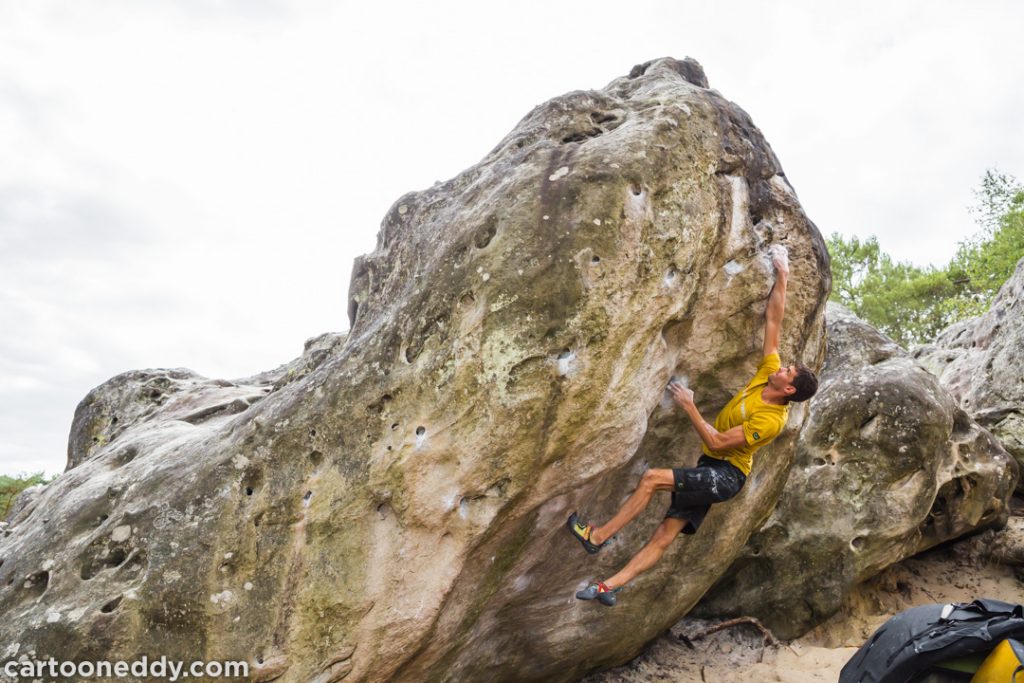
Jon Redshaw has a big belt with many things under it! His sports science background and love of climbing led him to become a fully qualified performance climbing coach, strength and conditioning coach and functional range conditioning mobility specialist. As well as working with private clients, he is one of the GB team coaches and is a GB development squad coach. He's also a founder of the Youth Climbing Symposium and runs Onsightcoaching (which offers training programmes, workshops and climbing coaching trips). For the past 15 years his climbing has taken him all over the world... so, he knows his stuff for sure. I got in touch with Jon a couple of years ago seeking advice for an ongoing shoulder problem. His keen eye quickly detects weaknesses and one of the things he told me to do, rather than keep on pushing and testing the shoulder, was to break out of my desperate tunnel-vision and take time to focus on my hip mobility, glutes, leg strength etc which were relatively (actually, pretty) poor. This proved invaluvable and as he keeps on telling me, climbing isn't all about explosive power and shoulders. That's probably one of the most commonly neglected things these days amidst all the dynos, media friendly, comp-style power moves and fist-pump finishes. You look “sick”, of course, but that will only take you so far in your climbing because you simply can't leap up everything. Slow and steady wins the race as efficiency of movement and equipping your belt with a variety of tools. Always more than happy to help and advise, Jon has very kindly agreed to share some tips for how best to use this downtime to consider areas that you might otherwise neglect in favour of squeezing in one more route before closing time. Have a read, try incorporating some of these drills into your day and come.back.stronger!
Isolation, what can we do?
As we all search for the latest gains that can be made to our climbing in isolation many of us have rushed to the fingerboard and the pull-up bar. Much as this is an amazing opportunity to get those fingers stronger and body stronger, these are also areas that will come back fairly quickly once we restart climbing. My question would be what do your routinely miss from your schedule at the gym? What when you’ve overrun through one too many climbs or chatting to friends do you miss? I bet it’s not the pull-ups or fingerboard? More likely it's doing a thorough stretch? Those mobility routines or holding that position for another 30 seconds?
Mobility and Flexibility like consistency, but these are aspects that a lot of people struggle with because they don’t / can’t find the time to do it regularly. For climbers, having good mobility through the shoulders, ankles and hips is vital to improving climbing. As a coach this is often the areas I see people have the biggest gains to make in, this also an area that can be done regularly and with minimum of equipment. For most flexibility and mobility routines they can be done 4-5 times a week.
Improving mobility is best achieved when combining many different practices, if you’re increasing your Range of Motion (ROM) (basically, how far your joint can move) you also need to make sure you are able to use this ROM. This can be done through simple strength exercises or you can Isometric techniques (contracting the muscle without moving) like Functional Range Conditioning (FRC). Below is a breakdown of a few methods to help you access greater mobility.
Similarly, when strength training you need to make sure you are performing the exercises with good form, you would be surprised at how many climbers perform even basic exercises such as pull-ups and push-ups with terrible form. Repetition of the same moves incorrectly, particularly whilst tired/without warming up, is detrimental. And, on that note, here's a quick recap on best practice for these.
Daily Routines
Especially for those stuck at their possibly fairly back-unfriendly home office all day, having a daily movement routine to take each joint through a full range of motion is really important. This could be done through yoga or with Controlled Articular Rotations (CARS). CARS will keep you moving as well as increasing body awareness and lay a foundation for the mobility work we are going to do.
Upper Body CARS - Video
Lower Body CARS – Video
These can be done every day and are a good way to start your morning.
Foam Roller
The foam roller is your friend when it comes to mobility, massaging out knots and improving ROM, this then combined with stretching and strength work yields the greatest gains. For mobility you should do the foam rolling as part of your warm-up and for recovery as part of your cool down routine. You want to roll the muscle using a roller or ball for 30 seconds to a minute. If you find a sore spot roll gently over this area till the soreness / tension releases. Seen here.
Stretching
Stretching helps realign muscle fibres and increased the length of the muscle through neurological mechanism. If you want to see changes you’ve got to spend some time in that position. Ideally 90 seconds to 2 minutes in each stretch position! We also want to approach the area we’re trying to improve from multiple stretches to work on different muscles. Take the time you aren't climbing currently to get into good stretching habits. Seen here.
"With adding movement to your routine there is a wealth or good and bad information on the web. You are better off discussing your training with a coach who can either prescribe the right exercises or guide you to the right resources."
Movement
There is a huge neurological side to mobility, our joint knowing what its range of motion is and being comfortable in it is vital for accessing our newfound flexibility and converting it to mobility. Simple drills such a Controlled Articular Rotations (CARS) in a warm-up or as a morning ritual will help the body access vital feedback from the joint. Also combing stretching with Isometric holds at end range to will also help access strength and further improve mobility systems such as FRC’s Passive Angular Isometric Load (PAILS) and Regressive Angular Isometric Load (RAILS) will provide a huge strength and control element to your stretching.
For examples have a look at this video of a standard chest stretch with isometric holds.
With adding movement to your routine there is a wealth or good and bad information on the web. You are better off discussing your training with a coach who can either prescribe the right exercises or guide you to the right resources. It's important not to push through to the point of pain. Your own body will only move so far (initially). Like most things, time and practice are key to getting it dialled – that, and not cheating on the moves because you are frustrated or bored.
Strength
Flexibility is nothing if you can’t use that range. The FRC techniques above give us some access to end range strength, turning flexibility into mobility. But, it’s equally important to put yourself under load towards end range (NOTE: not at full end range). This could be as simple as straightening your arms and engaging your core (hollow body position) in a pull-up; or deep squats, lateral lunges. There is huge number of exercises out there which can help us access that end range strength.
These are some shoulder specific end range drills.
If in Doubt Speak to a Coach
With mobility there is a huge number of nuances to the training, combining the right stretches, using the right techniques and getting the correct load. If you are in doubt on what to do, speak to a qualified coach who can help you.
End Credits
Jon Redshaw MSc
Performance Climbing Coach
GB Team Coach & GB Development Squad Coach
S&C Coach, FRC Mobility Specialist (FRCms)
3rd Rock, Boreal, Pongoose
email: jpgredshaw@gmail.com
Founder Youth Climbing Symposium - www.youthclimbingsymposium.com
Q & A
Weirdest thing you have done during ISO/Lockdown?
Expert at Numberblock. If you had a 3 year old you’d know.
What else is on your Covid to do list, apart from training?
Doing lots of catching up on reading for coaching and listening to good podcasts. I know, boring but useful!
Most surprising thing you have discovered during ISO/Lockdown?
I do have coordination!
Best climbing film/video recommendation
Either ’The Scene’ or ’Smitten’ they are my go to climbing films for flights and long journeys.
The first place you are going to climb when you can?
Probably just a fun day out in Portland with friends – it will just feel great to get on the rock.