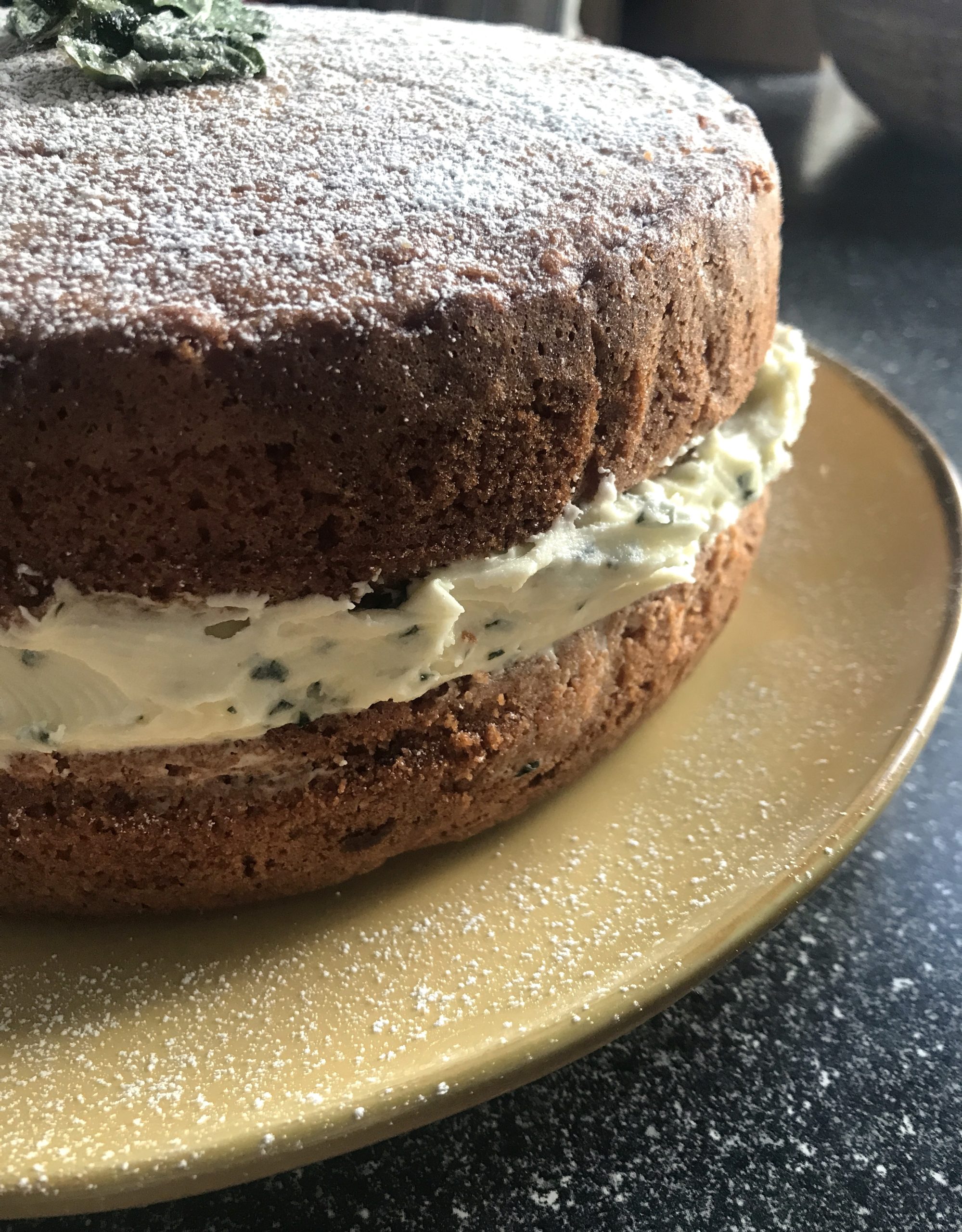
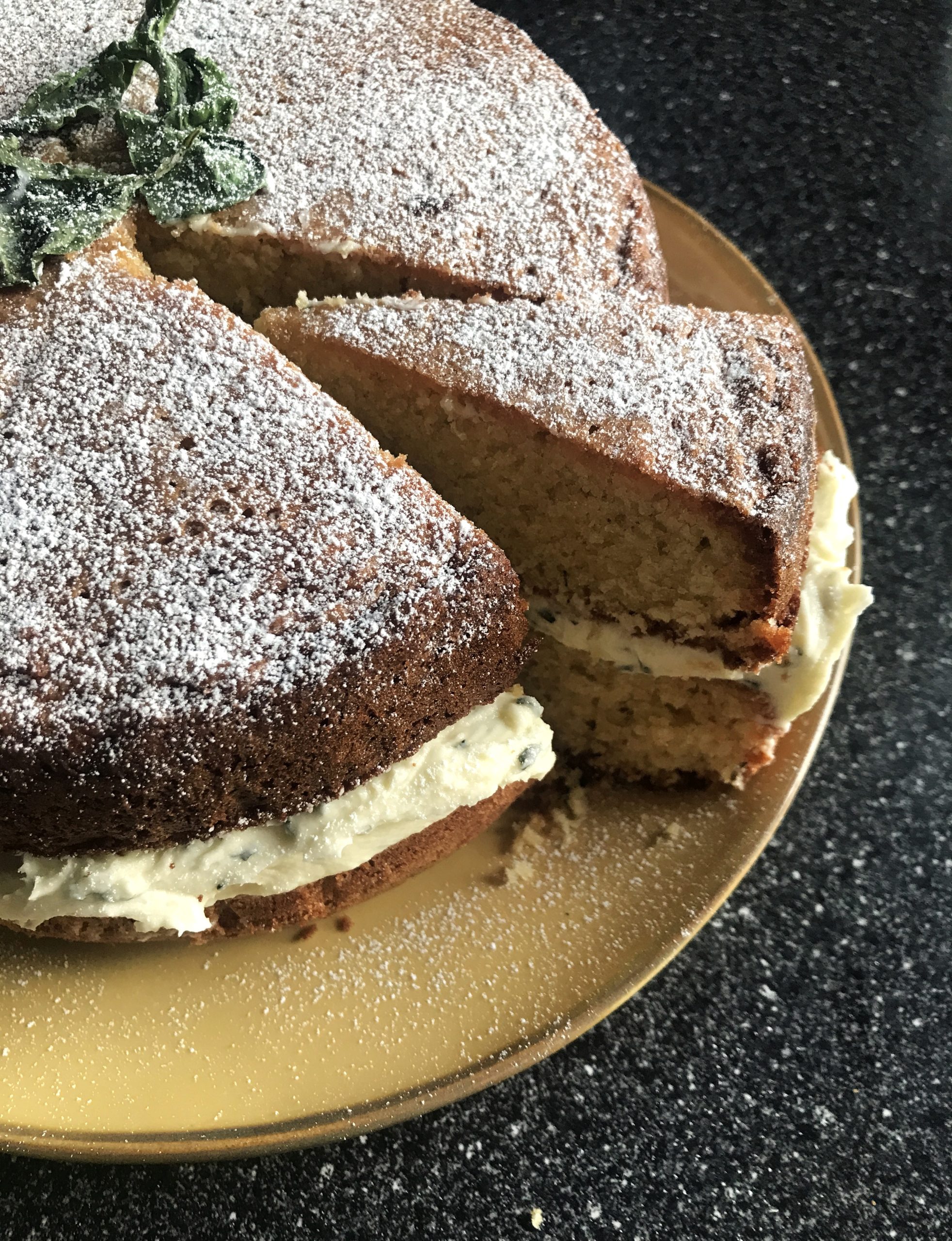
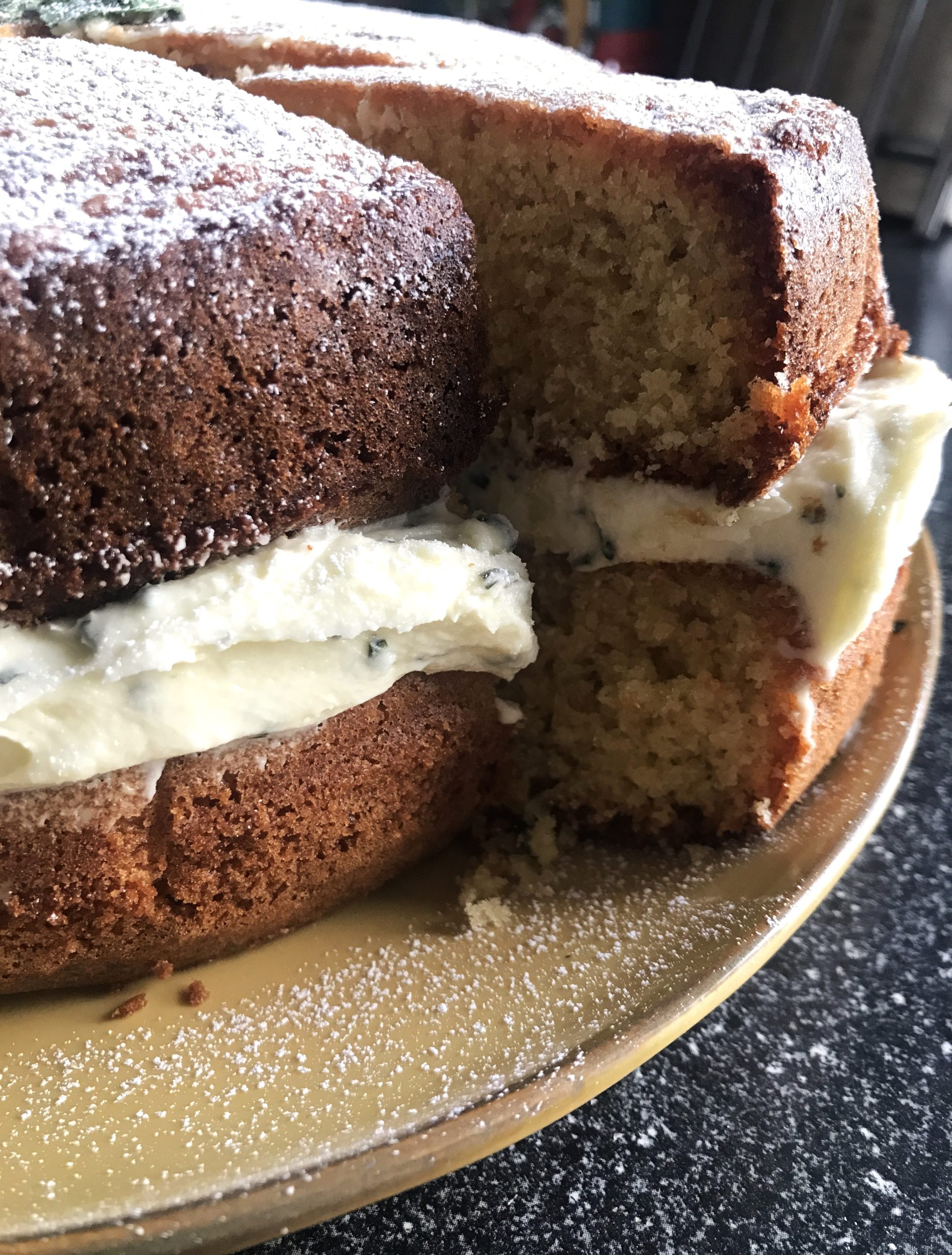
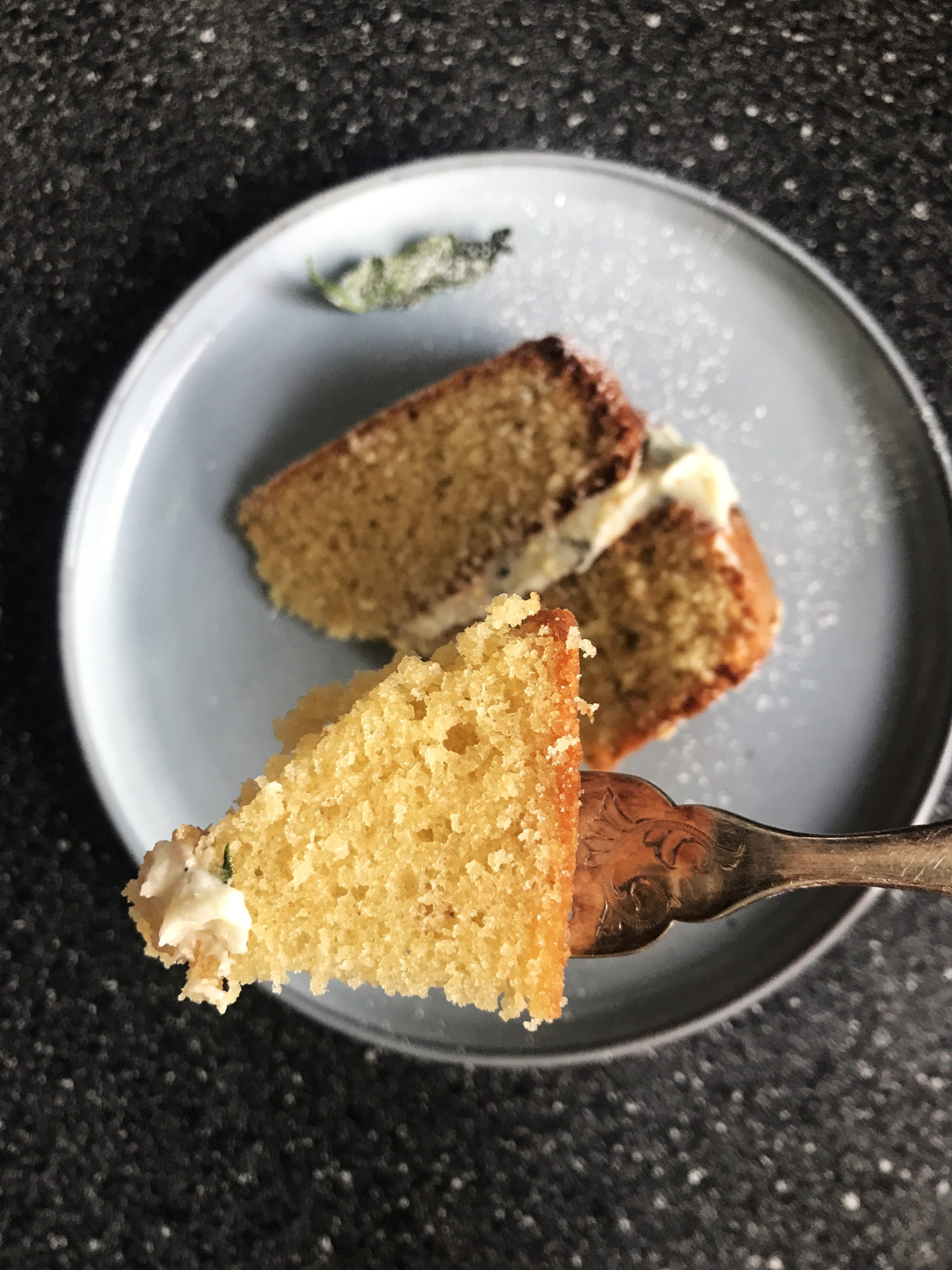
Lavender olive oil cake with basil buttercream

Still enthralled by the wonderful basil ice cream I had in Provence, I’m continuing on a theme for this week’s bake.  We’re having a heatwave here and basil is such a summer flavour that I’m keen to use it as much as possible.  It’s one of those herbs that really delivers, olfactorily speaking.  It’s scent and flavour just seem to combine in such a captivatingly fragrant way that it’s hard not to feel like you have just eaten a mouthful of sunshine or that you have been transported to some languorous al fresco scene.  Obviously basil is first and foremost associated with Italy (my favourite country) but it is in the south of France (another fave) that I had this wondrous ice cream and that I am celebrating by partnering it with that regions more famous product – lavender – an ice cream flavour I also partook of, which was also incredible but yet knocked off the top spot by the basil version. Another fragrant beauty, also captivating, also colourful, I’ve loved lavender in cakes ever since I had the most incredible lavender scone at the Chelsea Physic Garden.  Two strong flavours and ones it’s easy to understand might seem a little daunting for a sweet bake but used judiciously they combine beautifully and are nothing like a pasta dish or a wardrobe sachet.  They are mellow, warm and enveloping – much like Provence itself and this super light, super simple cake is perfect picnic fayre.
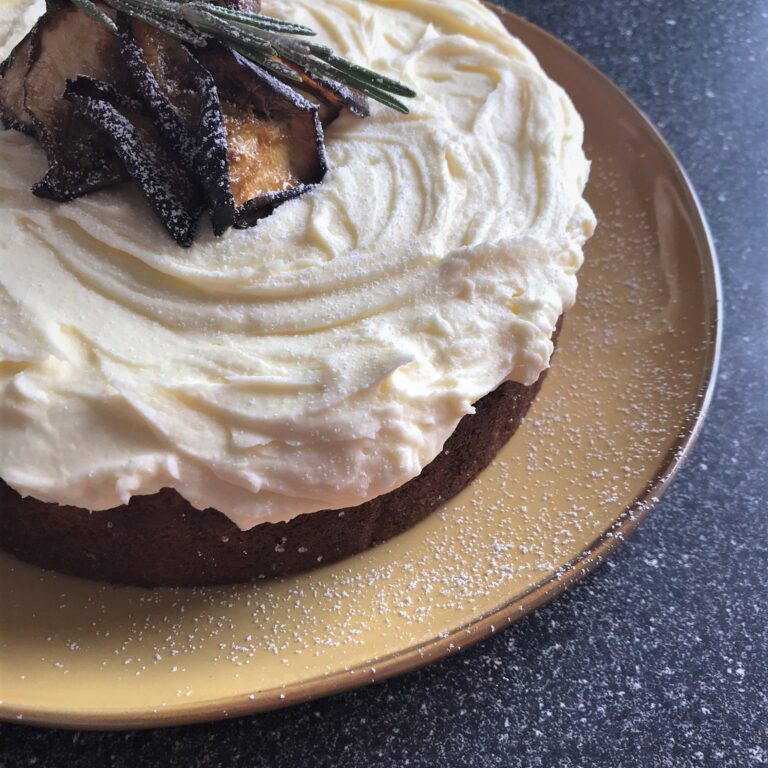
Makes: 1 bouncy cake (well, two sponges sandwiched with buttercream)

Takes: very little time. 20 mins in total 

Bakes: c. 50 mins. Preheat the oven to 180C (GM4) and grease and line two 8” sponge tins


Ingredients

For the cakes

  • 5 large eggs
  • 300g caster sugar
  • 240ml olive oil
  • 4 tblsp milk
  • c.30 drops lavender extract
  • 1 tsp lemon juice
  • 2 heaped tblsp cooking lavender (lightly crushed)
  • 200g plain flour
  • 2 tsp baking powder
  • 200g ground almonds

For the buttercream

  • 180g icing sugar
  • 75g butter (softened)
  • 25g basil
  • 2 tblsp caster sugar
  • 2 tblsp water


Method

For the cakes

Beat the eggs and sugar in a large mixing bowl for a couple of minutes or so until light and airy.  Next beat in the oil, milk, along with the lemon juice and lavender extract until well-combined.  Fold in the lavender, followed by the flour, baking powder and almonds until just combined (don’t over mix).  That’s it.  Pour the batter evenly into your prepared tins and pop into the oven to cook until starting to turn golden brown.  It should take c. 50 mins but check after 30.  The cakes will still likely be a little wobbly in the centre but if they are browning on top pop some foil over the top of the tins and pop it back but check after a further 10 mins – they will be cooked when a knife inserted in the centre comes out clean (if not, keep going for 5 mins, then a further 5).  When you are happy they are cooked, leave to cool in the tins a little before transferring to a cooling rack. 

For the buttercream

Firstly make a basil syrup.  Pop the water and sugar into a saucepan and set over a medium heat.  Bring to the boil then drop in about 6 sprigs of basil.  Let it boil for 3 mins then simmer for 5.  It will reduce to a syrup.  Turn off the heat and leave the basil to infuse until you are ready to make the buttercream.  You will be able to remove the leaves (carefully) from the stems and pop them onto a piece of baking parchment to crisp up – these you can then use to decorate the top of the cake. 

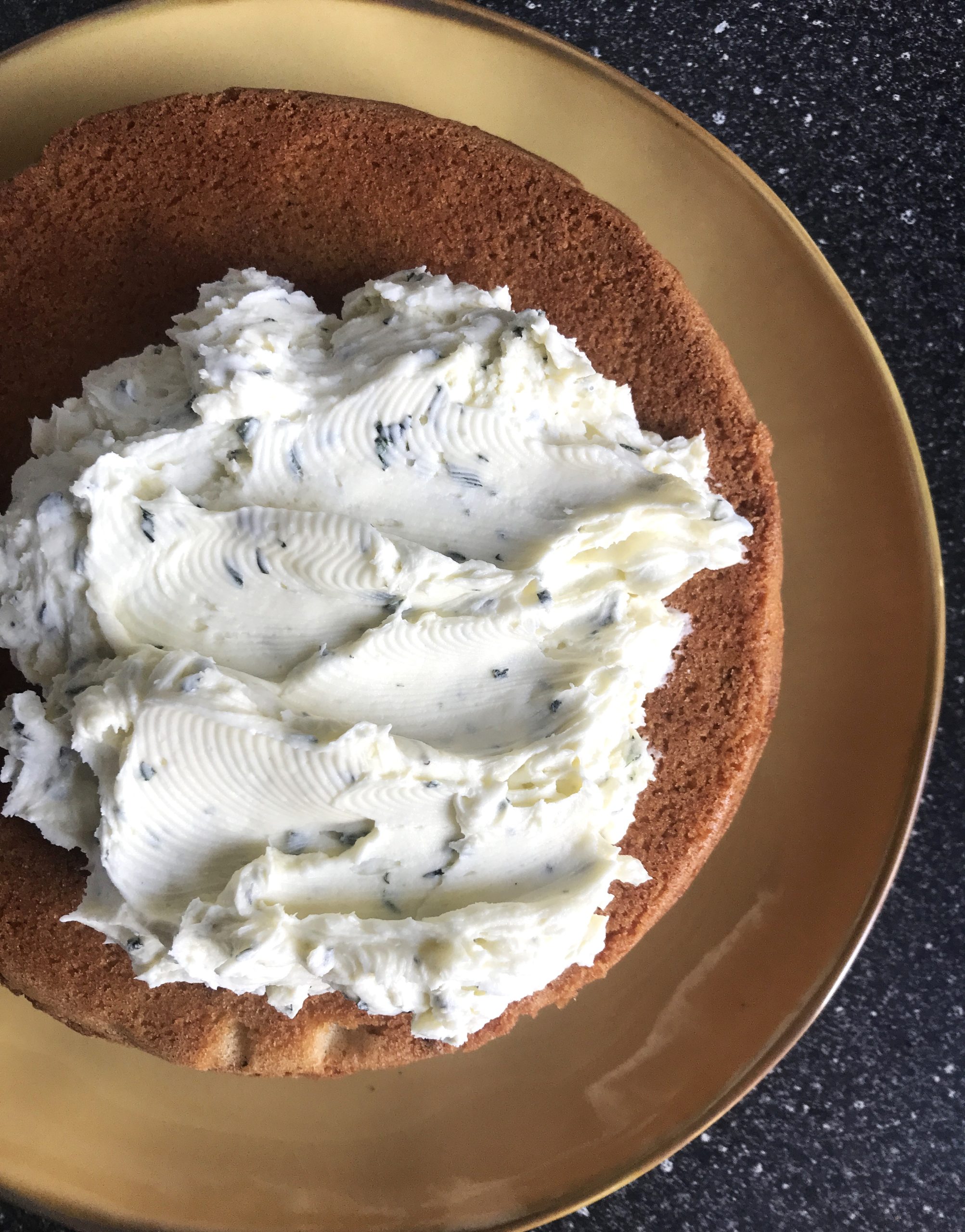
To make the buttercream, beat together the butter and sugar until light and fluffy then pour in the syrup and beat again.  Finally beat in the remainder of the basil leaves after finely chopping (this gives a bit of colour).

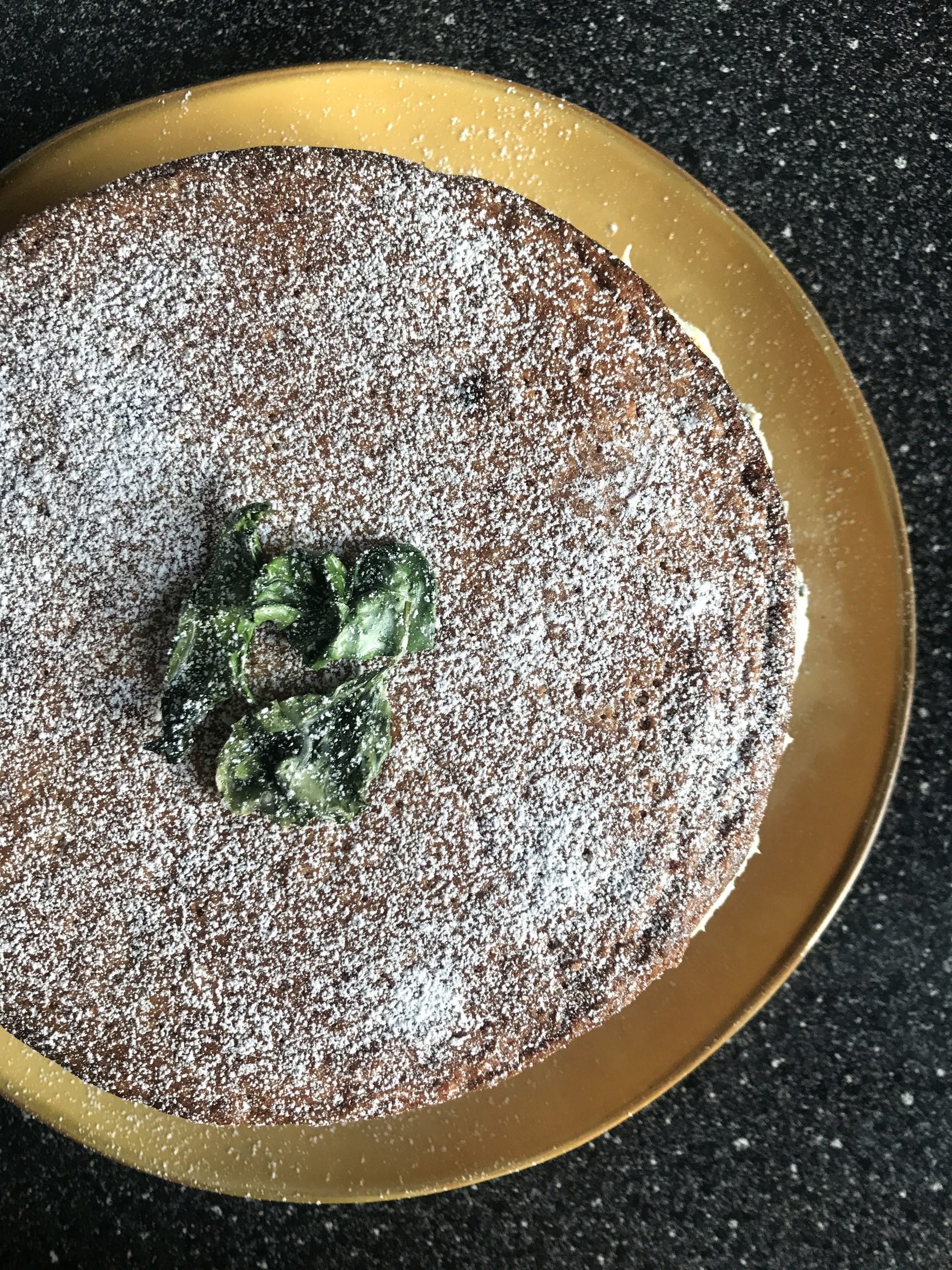
When the sponges are cooled, spread the cream over the underside of one then sandwich the cakes together.  Dust the top with a little icing sugar and add a few of the preserved crystalised basil leaves to finish it off.  Pop it in your picnic basket, find a shady tree and enjoy.

Comments

Hit me up with any variations you've got for these ingredients.

Leave a Comment