Keeping fit away from all the kit – Mariam Al-Roubi
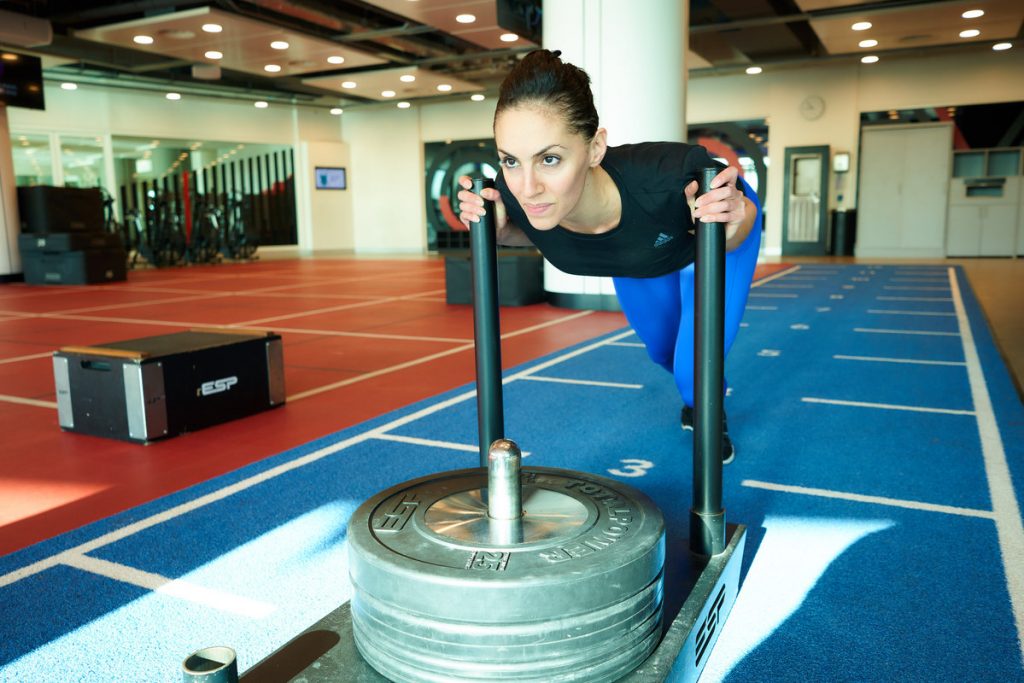
Mariam is a PT, coach, nutritionist and, quite frankly, lifeline! Her generosity towards her clients is second to none. It is matched by her enthusiasm for her work and a mind-boggling ability to come up with an inexhaustible supply of bullet-proof exercise involving simple accessories which she then tweaks until they achieve maximum effect. Variety is the spice of life! She drives you for sure but always kindly (although you may hate her at some point during a workout ;)) through motivation and inspiration. She has recently been helping me with injury rehab and not only have her exercises worked their magic, but we have had a lot of fun in the process and that's important, particularly when you are feeling down and struggling to get back on track. Mariam has your back. Her workouts will work you and... will work. Whilst most of her training is normally done in the gym, she is here to convince you don't need a gym to keep fit, toned and strong. As a climber herself, she understands what muscles etc need to work and, as a PT, she knows exactly how they work so that you can optimise your recruitment and make quick gains. Most importantly, her primary considerations ahead of any exercise are always body alignment and good posture. I'm delighted she has agreed to share some tips here for how to keep yourself fit and strong with home workouts. She is posting new workouts daily, yes daily, on Instagram and I strongly advise that you check these out!
Climbers, DON’T Just Train Fingers!
As a personal trainer I get all sorts of questions from “how do I lose weight NOW?” to “how can I train to lift a car above my head whilst spinning on one leg”. Well, maybe not quite the last one but I have certainly been asked some bizarre questions in my time and one of the craziest questions lately has been, “how do I keep 'climbing fit' and maintain my strength during a lengthy time of quarantine that may not have an end?”. I know, you couldn’t make it up but here we are.
The first thing I’ve said to anyone who has approached me during these uncertain times, is change your goal to suit your environment. You must make your goals achievable within the climate we’re experiencing otherwise you’ll forever be chasing a shifting goal-post and never achieve your goal. This is a dangerous cycle that can lead to you sensing a level of failure and feeling that you’re not good enough and spiral into depression and self-loathing.
If your goal was to achieve your first 8a by the end of the month, change it! By keeping the same mindset you had when you were climbing, you are creating an unrealistic situation that will never become your reality, and this, more often than not, leads people into serious levels of demotivation which can then result in depression. If you’re a perfectionist in general, yes, this may aid you in many levels but when it comes to being realistic you need to loose the tight grip that perfection has on you a little bit and approach your training differently to make it more realistic to achieve. Train smart and use what you have by working with your environment efficiently.
In case you’ve forgotten, it takes a lot more than strong fingers and hours on the wall for a great climber to climb at their best ability. Climbing training doesn't just involve finger-boarding and waterfalls, so your time in quarantine is, in actual fact, a godsend.
This time away from climbing will help avert your attention from climbing technique practice to functional skills training which will play a big role in your ability to reach the top of the wall even better than before. With power, dynamism, agility, coordination, stamina and strength your grades will improve solidly and surely when you get back to it – and you will so don't panic.
So, stop feeling sorry for yourself and set your mind on finding new ways to maintain strength and gain new skills that will fill-up your time, and help you build on what you’ve been working for before Lockdown. With the right mindset to tackle these things, when you’re able to climb again, you’ll surprise yourself with how much better a climber you’ve become by taking time to develop areas that you may otherwise neglect in favour of just climbing.
So, get up and get to it because you have a lot of training to do to improve your:
Power
Strength (especially around joints to make them more bulletproof and prevent any injuries)
Stability (especially if hypermobile)
Fitness (you'll be amazed at how this will help)
Stamina and Endurance
Conditioning
Coordination
Dynamism
Flexibility
Feel free to reach out to me and get some advice on how to work on these elements at home without the need of any gym equipment. Getting a bespoke program would be ideal but there are many general training programs that I can provide to help you achieve these goals.
How to Approach Training at Home
Climbing demands a lot from so many muscles, from the biggest muscles in the back and legs to the smallest of muscles that tend to be neglected (causing injuries if left unconditioned) in the shoulders and hips. Groups of muscles such as the rotator cuff group in the shoulders and the piriformis and hip flexors of the hips, for example, need a lot of attention to help maintain good fluidity in these joints and prevent injuries or difficulty in movement.
Here are a few examples of what you can do to help improve strength in:
| BODY PART | EXERCISE | REASON |
| Hips | Lunges | Unilateral movement of the legs help identify weaknesses in the hips and trains them accordingly |
| Shoulders | Medial Rotations | Stretching rotator cuff muscles that tend to tense up when not stretched sufficiently |
| Elbows | Stretch Fingers | Bring back full range flexion in forearms without muscle tension when fingers in use |
| Knees | Step Ups | to improve Vastus Medialius Oblique |
| Neck | Lie on a rolled up towel behind the neck – 5 mins | Release overly pulled muscles when in a forward head position |
| Thoracic Spine | Stretch - Lie back on a foam roller on the thoracic spine and perform sit ups without coming off the roller | Decreasing an exaggerated kyphotic curve of the back in the thoracic region of the spine - |
Little Time? No Excuses!
The most common issue many people have approached me with is having little time to train, especially when currently at home and balancing family time with work. My solution for that is always very simple: little and often. If you want to, you’ll always find time and the space to do it; and you can, even if it means to escape the kids in the bathroom, sitting on the edge of the bath and working on the shoulders with a Theraband or getting a 5 minute HIIT circuit done every day during your lunch hour. I promise you, every little bit helps.
Being a keyworker, working from home, coping with childcare, home schooling and general family life issues can take a toll very easily but always remember that you don’t need hours a day to keep up the most vital compounds of training a part of your daily routine.
Here is an example of a 5 minute HIIT workout that will keep you heart rate up and provide the burn you must be missing when once upon a time you were in the gym or climbing.
5 MINUTE HIIT WORKOUT – No rest between exercises – Repeat twice through:
30 seconds Squats (Legs)
30 seconds Squat Jumps (Cardio)
30 seconds Push Ups (Chest and Triceps)
30 seconds Pull Ups (Back and Biceps)
30 seconds Diving Bombers (Shoulders and Back)
Performing this workout with maximum effort on every interval will sure have you gasping for air and experiencing a great burn. I tend to group certain muscle groups together and dedicate a day to a different muscle group. Don't leap into it though, please make sure you always warm up and mobilise for 10 minutes and cool down and stretch for 10-15 minutes. Here are a few examples of what you can do at home to mobilise.
Exercising releases endorphins that will help boost your mood and help you cope with difficult days where you might be feeling a little low or anxious. By de-stressing via exercising, you’ll find it easier to cope with your work, tight-knit situation at home with family and negative thoughts of being away from climbing for so long. No matter your age, responsibilities and time available, you can always find the time to fit in at least 5 minutes of exercise to raise your heart rate, increase strength and focus on weaknesses by conditioning.
We could re-frame it and consider that this time now is nature’s way of encouraging you to introduce periodising training into your life! If professional athletes adopt periodising into their training so should you to avoid imbalances and over-worked and fatigued muscles that may cause you more harm than good.
On my Instagram page I cover all body parts and work all energy systems. If you manage to follow even just 3 workouts a week (I post daily… without fail) you will manage to cover all muscle groups in a manageable time.
Checkout my page at @mmfitlondon
Training sensibly
Before you run off and search for home workouts, and risk injuring yourself by over-training and performing every workout you find online, this is where you need to start learning and understanding your body. What training do you need? What should you be targeting and combining in your workouts? Are you a little stiff and need more mobility?
It’s very easy and a common mistake to think that working on the “climbing muscles” when you are away from the wall is the answer, but this is wrong. Knackering your agonistic muscles by over-working them will result in imbalances and very tight muscles. Remember, a tight muscle is a weak muscle! You heard (read) that right. A very tough to the touch muscle from over-training is the opposite of what you should be working towards. A muscle should be soft to the touch up until it flexes and knocks out anything in its way providing that powerful tough feeling you’re after in a muscle.
This is where training sensibly is paramount to any athlete to avoid injuries. By always training your back (climbing) muscles, whether it is a crazy number of pull ups or too much time finger-boarding, remember that other muscles in the body are in use to help support the ones you are focussing on and enhance your performance. Quality over quantity is what will keep your body in tip top condition.
Antagonist muscles such as chest and triceps (and, to some respect, the shoulders when used in a push motion) need to be strengthened and conditioned to help maintain a holistic physique and give the agonist muscles a rest as-well.
An antagonist training session might look something like this:
| EXERCISE | REPS | SETS | REST |
| Chest Press | 8 | 10 secs | |
| Chest Flyes | 15 | 4 | 2 mins |
| Shoulder Press | 10 | 0 secs | |
| Lateral Raises | 15 | 3 | 2.5 mins |
| Triceps Extension | 20 | 4 | 1.5 mins |
Looking at this brief workout you might be thinking, “But, Mariam, in case you hadn’t noticed, all the gyms around the world have shut down due to this virus called “Covid-19” and I’m not a rich celebrity with a gym in my outhouse”. I hear you; but this is where the magic happens... Let me tell you that you’ve been going home every night after work, when we all had normal lives, ‘to a gym’. Mic drop! Yes, ladies and gentlemen; with a suitcase full of stuff to increase the weight to lift, or a robe belt tossed over a door hooked to a bag full of heavy stuff, for example, you can work any muscle needed and target them very well.
Check-out my Instagram page for training tips and tricks to create your home gym at no cost. You will see me demonstrating short and long sessions working your entire body. Exercises are varied and fun to do when you see through the pain of performing them (and if it makes you feel better, I look a bit like I'm in pain in some of them but it feels good!). Keep your workouts enjoyable and look forward to doing them otherwise they become one more anxiety or chore that you are adding to your life and that’s unnecessary. Try to re-frame your approach to it with positivity. Plus, my sessions are short so the pain is over with fairly quickly and then you can enjoy the endorphins.
Many times, when training clients in the gym at the wall, I’ve spotted some very poor form from other climbers who have very confidently swaggered their way over to a weight x3 too heavy for them. Ego only injures and I’ve often had to stop my own session to try to improve someone else’s form so they avoid injury. I can’t bear to watch others trying to squat like they’re giving birth and drinking a cup of tea at the same time.
If you’re not very familiar with the gym, have facial hair and muscles for days, it is still ok to ask for help and advice for good form. Those who have approached me in that manner have only proven their confidence and the value and respect they have for their bodies.
Here are my top 5 faults I’ve seen in the gym that you can try at home with good form:
Pull Ups
Depress your shoulders as you lift yourself upwards
Look upwards to encourage the full range of the pull up i.e. Chin above the bar
Engage the core. Sounds silly but try it and see how much easier it is to perform a pull up
Squats
Push your hips backwards
Keep your chest visible – don’t let it drop down or look down to encourage this
Transfer you weight on your heels – try lifting your toes to encourage this
Embrace your core and tighten it more as you come back to standing by exhaling
Stop bending the knees (lowering into a squat) if you find your back is rounding
Keep a flat lower back (this technically a rounded lordotic shape but to the eye looks flat)
Keep knees in line with toe by avoiding knocking the knees in together; valgus knees
Deadlifts
Keep your hands/bar close to your body as you bend downwards into a deadlift
Keep chest up and open
Keep knees in line with toes whether feet are wide or narrow
Push the hips back and you bend your knees
Avoid rounding the back otherwise that’s an injury waiting to happen
Keep shoulder blades retracted which will in turn help push the chest out
Never bend your elbows keep arms straight
Push Ups
Never drop your hips in a plank when performing a push up
Keep the core tight to avoid hips dropping
Push the chest out as you go down into a push up and feel the pectoral muscles contract
Avoid elbows at 90 degree (in line with shoulders). This causes shoulder impingement
Squeeze your glutes to encourage a proper plank without hips dropping
Biceps Curls
Move only the elbow joint when performing this exercise
Drop the weights to a lighter number if you need more than one joint to move the weight. When fatiguing you may lose form a little but don’t do the Mexican wave with your body
Don’t over-grip the weights with your hands
Make sure you feel the burn in the biceps an not your shoulders or little toe. Target muscles!
I know it can seem daunting to think there are so many elements to think about when it comes to putting together your program but this is your time to approach the right people who can help you find what is best suited for you. Never be too proud to reach out to professionals and there are plenty suggested in this HK series.
So stop your circuits around your kitchen cupboards and focus on your fitness levels and power, dynamic and strength skills.
Be smart and realise climbing is more than just pull ups and hanging upside down!
More than just shoulders
I can't stress enough how easy it is to fall into the trap of working on the obvious muscles that help you perform the sport you enjoy and neglect the less obvious muscle groups.
Importance of Core Strength
Your abdominal muscles can be thought of as the motherboard of the body. Whether you’re performing a pull-up or a squat, be sure that if you did not have a significant amount of core strength, you would not be able to perform these exercises well. In most cases if the core is weak, injuries tend to arise especially in the lower back (and, if you are hypermobile then you need to work this even more to stave off lower body injuries).
You might hear it all the time, “lift with your legs not your back”. In actual fact, when you lift a weight properly in safe form to avoid back injuries, it’s your core that steps in to save the day. As the TVA (Transverse Abdominals) covers your anterior and posterior mid of your torso, be sure that some element of a strong core is a strong back.
You can work your core specifically for climbing by imitating some moves you must perform on the wall on your mat. Don’t forget that when your on a vertical wall, the major muscle group that helps keep your presence on the wall is your core as you keep yourself close to the wall. For example, when you’re above a clip and reach down to clip in your rope, sometimes the position you’re in can seem a little precarious and a strong core would certainly help your endurance while you clip. An exercise that can help condition your core for situations like this can be the Bicycle Crunches (with ankle weights optional).
"Be like a lion. Chill when you need to rest; power-up when you need to crush."
Importance of Leg Strength
Do not underestimate your legs when you climb. Remember all the high rock overs that make a climb that little bit more interesting (and not to mention take the pressure off your poor old shoulders), or when you’re on a slab wall on a small foothold and your calf muscles get a chance to perform a big solo. Your leg strength can sometimes determine what grade you can climb on a wall just as much as your upper body strength. Just because you use your hands to grab on and pull upwards, don’t forget that your leg strength can not only also spice up your moves but also prove invaluable for certain hard to reach holds as you drive power through your lower body. It often looks like it but it's really not all about the arms.
Importance of Mobility
Climbing has many beautiful elements that make it a unique sport. Not only do you need skills and strength, but mobility plays a big role - consider just how many twists and interesting positions your body needs to endure to get through difficult sequences in a climb.
To be able to perform such movements well, mobility in the hips and knees is vital alongside strength in the gluteus. Whether you’re a man or a woman, make sure you never neglect the strength of your gluteus to help encourage strength in your hips. Hip thrusts with a weight on your hips is a great exercise to strengthen these. By using the larger muscle groups in the body during climbing such as gluteus muscles, back muscles and legs with the mobility it needs, you’ll be assured that the smaller muscles such as your shoulders during climbing will not be loaded with excessive strain that should ideally be dealt with the other bigger muscle groups.
Importance of Stability and Balance
You do not need to be a rocket scientist to realise that balancing on tiny holds is a skill that takes time and “tuning-in” to master. Balance is definitely up there when it comes to the top set of skills a climber needs to manoevure well and maintain stability while performing difficult moves on tiny footholds without peeling off.
There are plenty of stability and balancing exercises you can try and you can even practise some very simple ones throughout the day, for example, while you are standing waiting for the kettle to boil. Yoga is a functional way to train for climbing balance due to the many poses that tend to be performed on one leg, ranging from levels of difficulties.
Importance of your Posterior Chain
When climbing on the wall, especially on steep walls, your entire posterior chain is what fires-up in order to get you moving your arms and legs naturally. This consists of your:
- Trapezius
- Rear Deltoids
- Rotator Cuff (Infra/Supraspinatus/Teres Minor)
- Latissimus Dorsi
- Erector Spinae
- Gluteus
- Hamstrings
- Calves
- Ankles
Perform these exercises at home to improve the strength of these muscles:
- Front Squat
- Deadlift (with Bands)
- Hip Thrusts
- Dorian Deadlifts
- Calf Raises
- Heel Drags (on a slippery floor)
- Back Raises
- Plank
- High Face Pulls
- Internal Shoulder Rotations (with Bands)
- Prone Flyes
- Bent Over Row
It’s important to make sure that you do not over-train and make sure all exercises are performed safely. You can go to my Instagram page to find more guidance or contact me directly.
Finally, a bit about Diet and Food
Many people who train with me query what they need to do about “dieting”. Recently, since the whole world came into lockdown and the usual daily chores and frequent gym visits came to a halt, a lot of you have been petrified of food and what it’ll do to you if consumed without the usual daily energy expenditure. Worrying about “putting on 'climbing weight'” is not healthy and is not a good use of mental energy.
First of all, please do not start to starve your body of very much needed nutrients and energy to simply keep alive. The last thing you want to do is send your body into starvation mode. This is when the body panics that it's not getting its daily dose of energy to keep going so it starts to hold-on to everything you eat and not burn it. By eating frequently and eating the right foods, your metabolism will increase and help you burn energy without you doing much.
The types of food that you eat right now are of course important and aside from needing to boost your immune system and keep it healthy, it is important not to fatigue your system with ridiculous diets. Know your body and find out the macros you need to eat with the decreased number of hours of training you are currently experiencing. By adjusting the ratio of carbohydrates,Protein and fats during this isolation period, you’ll be ahead of the game and will less-likely put on fat-weight.
Understand your food. Take the time to read more about your body, the foods you’re digesting and allow yourself the pleasure of relaxing with a better knowledge that you can adjust your intake according to a climate without the anxiety of witnessing unwanted changes.
So be assured and know that with the times and climate changing around us, we can always find a way to get around it with a healthy mindset and less negativity and self-hating by simply understanding the basics of exercising and dieting.
End Credits
Feel free to approach me on www.mariamfitness.com or @mmfitlondon for more advice and guidance on program writing, online 1-2-1 sessions with me and some inspiration on how to get started at home with a physical and diet program.
Q & A
Weirdest thing you have done during ISO/Lockdown?
Add raw garlic to all my dishes to keep my immune system up
Speak to the world through a bl**dy screen! (probably a good thing though after all the garlic!)
What else is on your Covid to do list, apart from training?
Get to know my family better
Most surprising thing you have discovered during ISO/Lockdown?
Even the most successful of people can be broken. We all have weaknesses indeed. Quarantining hasn’t served many people well. It’s ok to show and express emotion
Best climbing film/video recommendation?
One of my clients climbing her house first week in quarantine! (I don't really advocate that you try this at home though!)
The first place you are going to climb (or go to) when you can?
Everest. Seems it’ll be the only 5G-free place to roam. Hahaha ;)