Staying positive and steering clear of rabbit holes - with cognative hypnotherapist (& climber), Rowenna Clifford
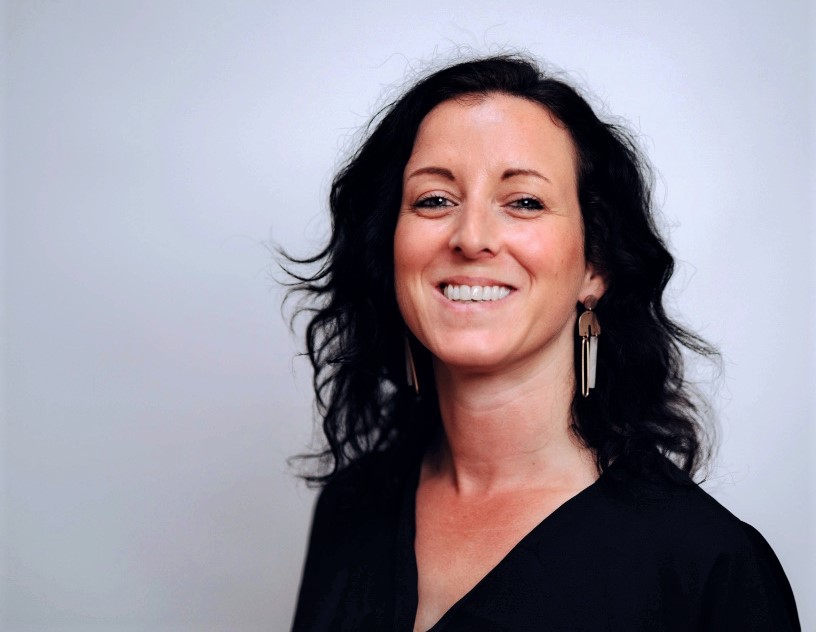
As a Cognitive Hypnotherapist, Rowenna focusses on helping to free her clients of limiting beliefs, negative thoughts and behaviour patterns that are holding them back so that they can create lasting change in their lives. Her compassionate approach draws on her own experience with therapy as well as her background as a teacher. She has also been climbing for over 10 years so she understands the climber's mindset and the various ways that not being able to climb can affect you. Mindfulness and visualisation are proven powerful tools deployed by a lot of athletes but their calming benefits can also be used therapeutically on a day to day basis and can certainly help soften the anxiety and negative chat that many of us will be experiencing currently. The instability brought about by extreme changes in circumstances can often be all-encompassing and it can be hard to know where to begin when it comes to managing stress (particularly if your usual outlet for stress – exercise (climbing) is unavailable to you). Stress takes its toll on the body and the mind in manifold ways not just sleep and diet. If left unchecked, anxiety can inveigle and affect just about everything, including your physical abilities/performance. Some of us are better at “coping” than others its true, but all climbers will be experiencing a level of anxiety that sits somewhere along the many marked metric of not being able to climb to when will I be able to climb. Having had a couple of extended periods out from injury where I've had to wrestle with a more negative mindset, this struggle is a side of our sport that warrants conversation (so I asked Rowenna a lot of questions). Like working a hard route, it takes effort and practice to overcome mental challenges Rowenna has kindly agreed to share some tips for coping in times when you feel like you don't have control of the reins. She's also recorded a 10 minute guided exercise which you can try to help rid yourself of unwanted feelings and emotions.
Cognitive Hypnotherapy is a combined approach to therapy which incorporates a range of therapeutic modalities such as NLP, Gestalt, Evolutionary Psychology, Positive Psychology and elements of CBT together with modern and traditional hypnosis. As well as being a powerful form of therapy which can help people to free themselves from life limiting beliefs, behaviours and thinking patterns, it can act as a transformative coaching and self-help tool for creating rapid change in any area of life, changing our perspective of challenges and setbacks and enabling us to take ownership of the narrative of our lives.
It’s no doubt that right now is one of the most challenging times any of us have ever lived through, and as a climber myself I understand the difficulty of not having our usual outlet for dealing with stress, and finding the mental and physical release that climbing provides us.
The climbing scene provides much more than just a means of physical fitness, for many it is a source of social connection, personal development and travel and much more. While it can be a healthy outlet in this way, it can be unhelpful if it is our only source of mental and emotional freedom, particularly when this privilege has been removed outside of our control.
But, just as the Chinese word for crisis also bears the meaning of opportunity, there are hidden gems to be found in this challenge if we look for them and use our time wisely, so my aim here is to highlight a few ways we can do this as well as maintain our mental and emotional health, and potentially our climbing focus and performance, as best we can during lockdown, or any time where we must surrender our control.
1. Managing self-applied pressure
As climbers, we tend to place a lot of pressure on ourselves to stick to our climbing goals and, if you’re anything like me, can be pretty good at beating ourselves up when we don’t. There’s nothing wrong with leveraging success with a bit of self-criticism, it can be a good motivator at times, but in a time like this when we have no way of fulfilling these goals, too much self-pressure can leave us feeling demoralised and inhibited.
In Cognitive Hypnotherapy, we tend to focus on “un-hypnotising” the client from beliefs they may have adopted or placed upon themselves developed during particular, usually emotionally charged situations. Beliefs and pressures can also be picked up from the language other people such as parents or other significant people in our lives use about or around us, so we can find ourselves repeating phrases which subconsciously programme us to believe that we are less worthy or loveable if we don’t meet these certain criteria.
Whenever we use terms such as “I need” or “I should”, we are implying that if we don’t do the certain action or behaviour, then we are less of what we are expected to be (either to ourselves or others).
If you’re finding yourself using the words, “I NEED to climb” recently, then here’s an exercise that can encourage a healthier perspective:
1. Ask yourself the question – according to who? Identifying who the “need” is coming from can sometimes help us to break free from rigid thinking. It may be that you find the statement comes from you, or a strong desire to do something you want to do, but just take a moment to explore whether there are any other “voices” involved in this “need”.
2. Identify perceived consequences – what will happen if you don’t? What are all of the worst-case scenarios? This can sometimes help to put things into perspective. Yes, you may lose some strength, maybe you won’t get that 7a/b/etc this year, but is it really that bad? Maybe the answer is that you won’t feel as good as you’d like to, but by identifying this as a reason for the “need”, it can help shift the focus onto other things you can do to meet them.
3. List desired outcomes – what is it that you would gain from doing your “need”? Create a list of all the ways you would find what you want from the action, i.e. relaxation, connection, self-respect, focus etc.
4. Identify other means – how else can you meet these desired outcomes? By identifying what this action will fulfil for you, it can help you to find other activities you can do to meet these goals. Be as creative as you can with this and try to fulfil all of the desired outcomes in some way. If it’s connection you’re seeking, can you set up a group Zoom chat or game? If it’s self-respect, can you find this through some other form of exercise or training, or maybe just by being more self-compassionate?
Being open to other options for meeting these “needs” can help you loosen the grip of anxiety around them greatly so try to be as flexible and creative about this as you can be right now.
2. Climbing for anxiety management
Climbing for some is a source of mental health management or self-help, and with all the uncertainty and restrictions in place, it’s to be expected that worry and anxiety levels may be higher than usual right now.
Meditation and mindfulness are great ways of dealing with unwanted feelings and emotions, and even just a few minutes a day can be life changing. It’s natural to want to move away from challenging emotions or internal feelings, and climbing can often be used as a way to do this. But if we can learn to sit with these feelings and allow them to pass, we soon realise that they do not have the power over us that we give them credit for.
Here’s a simple exercise you can do to allow unwanted feelings to pass through more quickly. NB - you may wish to use a timer to allocate yourself a set time – a good non-intrusive one such as the Insight Timer app is best:
1. Sit with eyes closed and an upright but not strained back – either on a chair or cushion
2. Bring your awareness to whatever you are feeling at the moment and where you feel it in your body.
3. Label the feeling/s – try to be as descriptive as possible, i.e. fear, frustration, sadness, anger
4. Bring your awareness to your breath, bring all your attention to what it feels like to notice your breath moving in and out of your body without trying to change it. Explore different aspects of the sensation with curiosity, i.e. the pace, depth, temperature etc.
5. Begin to count each breath cycle as one breath (breathe in, breathe out one, breathe in, breath out 2 and so on). Keep counting in this way until you reach 10 and go back to one.
It’s important to remember that your mind will wander at points and that this is ok. When this happens, try to gently and compassionately (without self-criticism) bring your awareness back to the breath and the counting, either the number you’re at or back to one if you’ve lost your place.
3. Stop beating yourself up
Let’s face it, we have very little control over things right now and this means we may be limited as to what we can achieve, in our personal, career and climbing goals. It’s natural in times of limited control to feel overwhelmed and defeatist, so it’s important to recognise unhelpful thinking patterns when they arise and avoid getting bogged down by them.
Some days you might just need to lay around doing nothing, chomping on packets of Haribo and Monster Munch... It’s ok!! Remember you are only human, and it’s natural to have bad days/moments. While it’s unhealthy to wallow, or get into destructive patterns or habits, beating yourself up over letting things slip a little here and there is not going to do anything for your motivation or self-esteem.
One technique for dealing with negative thinking patterns is using the ANTs method:
ANTs = Automatic Negative Thoughts
1. Write down the negative thought (i.e, “I’m turning into a mess without climbing”, “I’m going to be so weak when this is over”, “there’s no point even going back to climbing as I’ll be shit”… etc)
2. write down your answers to the following questions:
- Is the thought true?
- Can you know for certain that it is really true? What alternative outcomes are there?
- How do you feel when you believe the negative thought?
- How do you treat yourself and other people when you believe this thought?
- Who would you be or how would you feel if you didn’t have the thought, or if you couldn’t have the thought?
- Flip the thought to the opposite (i.e. “I’m doing the best I can with the resources at my disposal”, “this is good time to focus on other things in my life that I love”, etc).
"Human beings are much stronger than we think. There are reserves of resilience inside us which we only become aware of when we are challenged or face difficulties. Even if you think you can’t cope with a situation, you will be surprised to find that you can" Steve Taylor, Senior Lecturer in Psychology, Leeds University
4. Marginal gains – little by little, a little becomes a lot
There’s been a lot of stuff flying about the internet regarding lockdown goals since this started. It’s tempting to load ourselves with idealistic things to have achieved by the time this is all over, but when your mental and emotional bandwidth is already stretched thin by the enormity of the situation we are in, too much is the enemy.
Right now we are faced with a challenge far greater than most of us have ever had to deal with, so overloading ourselves with ambitious aims and pie in the sky plans of grandeur is only going to make you feel even worse. As my hypnotherapy teacher (the founder of Cognitive Hypnotherapy), Trevor Silvester used to say – there’s only one way to eat an elephant, one bite at a time.
Looking too far into the future can invoke feelings of anxiety and grief (particularly when everything is as uncertain as it is right now). So focusing on the here and now can help us to stay grounded and in control, and by breaking things down into manageable chunks can help avoid feelings of overwhelm and keep us moving towards our goals. Try doing the following if you’re feeling like you’ve bitten off more than you can chew:
1. List 2-3 things that you would like to achieve/improve by the end of lockdown and prioritise them.
2. Break these down into smaller tasks
3. Break them down even further into super-easily manageable tasks – as small as you can, so small that they’re almost so negligible it would be ridiculous not to do them i.e. 2 push ups/1 pull up, 5 min reading/meditation etc.
4. Find an easy place to fit these into your day – eg. Each time you wash your hands you do 2 push ups etc, or every morning you go for a 5 min run around the block, etc.
Assess your progress at the end of each week/month etc. If you’ve reached a level of ease with the task then you can consider increasing the load and adding one more push up etc, but keep them low as the idea is to keep things super easy so that you hardly notice them until you realise the progress you’ve made over time.
This can obviously be applied to many things, including climbing a route. Next time you are climbing (and it will happen!), break down the route and try to be more present in the climb by focusing on going clip to clip. Obviously, ultimately you want to get to the top of the route but you are working your way up and as you climb it's is helpful to maintain focus by concentrating on the here and now rather than worrying that there's a really gnarly crux coming. You deal with the crux when you get to the crux. Hopefully you will be in so much of a flow, that the hard part becomes more manageable because your body and mind are more relaxed and not tense with worry about what is coming and whether you will conquer it.
5. Visualise
It may sound like American hype and conjure up images of motivational speakers spouting quotes from The Secret, but research into visualisation and the effects on the mind and body, have shown huge impacts on our ability to make progress, heal our bodies and even get physically stronger!
As someone who has had to take periods of time away from climbing due to injuries and heavy work commitments in the past, I understand that one of the key concerns is losing technique, as well as strength.
In David Hamilton’s book, How your Mind Can Heal your Body, he pointed to one study where a group of candidates were asked to build strength in their little fingers over a period of 12 weeks. The participants were split into 3 groups, one training their fingers physically for 15 mins per day 5 days per week, another using mental training (visualisation techniques) for the same amount of time per week, and one group without training acting as a control group. Although the group using physical training improved their strength by a larger degree - 53%, the group using visualisation as a means of training were not far behind them, increasing their strength in this muscle by 35%!! Countless other studies have shown that athletes who visualise themselves scoring goals or winning races etc. have a far greater chance of making these goals a reality.
This demonstrates that the mind has a huge influence over the body, and we can tap into this natural ability to support our physical and overall development. According to Hamilton, the most important thing was regularity rather than length of time spent doing the visualisation, although a suggestion of a minimum of 5 mins per day was given.
Try the following meditation/visualisation for 5-15 mins per day to keep your climbing focussed:
1. Sit/lie down with your eyes closed
2. Imagine yourself at the base of a climb you know well or have been working on (in the gym or outdoors but outdoors can be more relaxing)
3. Work your way through the climb in your mind, try to remember each movement in as much detail as possible and take time to get the image/idea as vivid as possible
4. Pay particular attention to what you would feel when doing the route, how would your body need to move, what muscles would you be using, how will it feel on your hands and feet. Be as detailed as you can with every move, Sharma screams and all!
5. Imagine yourself working all the way to the top of the route, see yourself sending it from ground up with no falls (visualising success helps with motivation for the exercise).
So, those are my top tips for climbers' mental health during lockdown; I hope you find them useful. Whatever you decide to do to get through it all, remember to approach each task and moment with self-compassion and remember, this isn’t a sprint it’s a marathon - slow and steady wins the race!
10 Minute Guided Exercise
End Credits
You can find out more about Rowenna's work here
If you’d like to find out more about how Cognitive Hypnotherapy can help you overcome anything that’s holding you back in life, you can reach Rowenna
info@rclifford-cognitivehypnotherapy.com
Rowenna also offers transformational workshops for businesses and schools. You can find out more about this: https://www.rclifford-cognitivehypnotherapy.com/workshops
Other useful resources for climbing and the mind are:
The traditional go-to book is Arno Llugner's The Rock Warrior's Way
He does, however, have a more distilled version, Espresso Lessons
Hazel Findlay runs a series of workshops for climbers which are centred around mental training. You can find out more here.
In addition, if you are worried that when you return to climbing your fear of falling may have returned too (this is quite common), Hazel also does a good line in how to tackle this. I have attended one of her “fear of falling” workshops and I recommend them to anyone who struggles with this. It helped me immensely and I still deploy some of Hazel's tips and techniques when it comes to finding flow or when I can feel the panic rising at the prospect of an imminent whipper.
Q & A
Weirdest thing you have done during ISO/lockdown?
What classes as weird anymore? In all honesty, if aliens were to descend from the sky and tell us it’s all an experiment, or Donald Trump were actually to turn out to be a secret agent of hope trying to put an end to world corruption I think I would be like, “OK”… well, maybe not the orange man, that would still be a bit far-fetched, but otherwise bring on the weirdness!
What else is on your Covid to do list, apart from training?
I recently took up guitar again (since not really playing since 16) so I’m hoping to be performing on the Pyramid Stage at Glastonbury Festival next year of course… Get your tickets now so you don’t miss out!!
Most surprising thing you have discovered during ISO/lockdown?
I’m actually a massive introvert! Although I’ve probably done more socialising since we went into lockdown than I have in the past 2 years… either way, staying in is definitely the new going out!!
Best climbing film/video recommendation?
I always go back to the Petzl Roc Trip China 2011, love the tongue in cheek style which never fails to raise a chuckle or two.
The first place you are going to climb (or go to) when you can?
Well considering I had a bit of time off due to injuries before lockdown started I probably won’t be crushing much more than 4a’s at the climbing gym. But I hear the crags (and dough balls) of Kalymnos calling, so when I’m outdoor fit again I’ll be booking a trip to the Agean islands for sure!