
5 flippin’ great pancakes
Now, as somewhat of a stickler for tradition, when it comes to Pancake Day, I am always swayed by the traditional lemon and sugar. There’s something inherently comforting about this combination. It marks a moment in the calendar and lends a bit of sweet comfort to the tedium that is February as winter still limps along. It also reminds me of my childhood when my mum would make the pancakes on Pancake Day and for some reason I’d take great delight in cutting out my initials in them with my knife and fork.
Speed forward a few years and away from the ’80s (when maybe a Crêpe Suzette was the height of sophistication in the pancake canon) and we are into the realms of American buttermilk breakfast pancake stacks with bacon and maple syrup; crêpes which have dared to branch out from lemon and sugar and now offering all sorts of “exotic flavours” like pear and dark chocolate; the Aussie staple – the banana pancake; and, for a while, beer batter savoury pancakes popped-up on several restaurant menus. Skip forward a bit further to now and, well, the possibilities are endless and, as with most foodstuffs, there are trends popping-up every now and then like the most recent battered darling of Instagram, the Dutch Baby. Nowadays, you don’t need to go to France to have a crêpe in the street, you can explore various version thanks to all the food markets about the place. There are all sorts of flours to use, all sorts of options to accommodate various diets (gluten free, vegan etc) and all sorts of flavours – sweet and savoury – anything goes really. A pancake is officially a meal and not an annual sweet treat for excitable kids and the promotion of Jiff lemon juice. It is of course a delightful sweet option for a dessert or a tea-time/morning coffee snack but it can also be savoury and as such works for breakfast, lunch or dinner; it can also be fashioned into a cheeky little canapé.
Rather like bread, the pancake seems to be universal. Most nations have a way of making some sort of fried batter base – whether it’s thin, super thin, fluffy, folded, rolled, lacy, piled-high, shredded, stuffed etc etc. A blini is a little pancake, of course; arguably, a waffle is a kind of pancake; a rosti is a kind of pancake and you can make lentil pancakes, sweet potato pancakes ones etc. From Vietnam to Vienna to Venezuela to, well, pretty much every country (not just the ones beginning with V) you can find some form of pancake.
It’s not all superficial either, instead of topping-off your battered stack, you can put things into the batter, or, indeed, stuff the final version (see link below). Obviously we are familiar with banana pancakes but there’s a world of possibilities really spices, herbs, pastes, zest, chocolate, fruit (aside from bananas), veg (ideally grated and squeezed out – think courgette, beetroot, tomato – that sort of thing), nuts, alcohol, juice, even colouring if you are so inclined etc etc etc. All you need really is a good base which you can then accessorise. Like most good bases though, you don’t always need to gild the lily. There’s nothing wrong with a bit of tradition – and I wouldn’t be offended in the slightest if you read through the following recipes then went off and made a plain old lemon and sugar one for Pancake Day anyway. Some combinations stand the test of time for a reason, of course but there’s no harm in experimenting.
I have to say that once I embarked on this pancake foray, I ended-up down a sort of rabbit hole with it whereby I wanted to put anything and everything into pancakes. Coffee pancakes (the all in one breakfast), blackforest gâteau pancake, beetroot dill and walnut pancake, cucumber pancakes (think English tea) with a little cheese gratin on the top, plum cinnamon and star anise pancakes, mojito pancakes… *mic drop*
Watch this space…
Big-up the beige! Read on, then get flippin’.
You will need
A good non-stick pan. Absolutely. 100%. If your pan is old and scratched then do yourself a favour and get a new one. There’s nothing more annoying when it comes to pancakes than having it all stick to the pan so you end up with something resembling scrambled eggs. Ideally a bigger pan is better, whether you are making crêpes or small pancakes, because you can speed things up by putting more of the smaller ones in at once which is great as they aren’t sitting around getting cold and wangy for too long. It makes life much easier when it comes to flippin’.
All of the following are pancakes as opposed to crêpes – a crêpe doesn’t have baking powder/raising agent in it, hence it’s paper flat feel.
In the main I tend to use plain flour + baking powder. If you prefer to use self-raising and leave out the baking powder, then go for it. Any other flour (other than self-raising) and you will need a powdered raising agent. The following recipe suggestions also take into account buckwheat, chestnut and chickpea. Obviously there are also gluten-free flours available.
Tips
My preference for pancakes of the more American breakfast-style as opposed to the flat, crêpe style, is to separate the eggs, adding the yolks to the milk (or soured cream, or beer or whatever liquid you want to use) then whisking-up the whites and folding these in. It makes for a much lighter end result. In most cases when I do this I tend not to rest the batter before folding but you can if you prefer. Obviously then fold the whisked egg whites in at the last minute after resting the batter otherwise they will lose their fluffy oomph.
Your ingredients should be room temperature so make sure that any milk/eggs etc are out of the fridge in good time.
You also need to make sure that your pan is hot enough before you start dropping your batter in. Set it over a medium heat then after a couple of minutes wipe around it (even if it’s non-stick) with a piece of kitchen paper with a little oil on it. Don’t smother your pan in oil – a light wipe is all you need. Then, obviously, re-wipe when you move on to the next pancake.
The best thing to do before you start frying is to drop a tiny bit of batter into the pan and see what happens to it – if it starts to cook and bubble, browning at the edges and quickly becomes loose enough to flip then you are good to go! Be mindful, however, that your first pancake is likely to be sacrificial – you may not judge the size correctly first time round, or get a shape you like etc. It takes at least one before you get into your groove.
If you are super-anal and want perfectly pert, round pancakes then you can use a ring mould. Very lightly oil the inside of the mould before sitting it in the pan and spooning the mix in. Personally, I prefer the rustic look as opposed to the out of the packet, made on a production line look.
Focus – most of the following pancakes cook pretty quickly and it’s not long before they burn on one side so keep a keen eye on proceedings.
You don’t actually need to toss these little guys unless you are really into that. You can easily flip them with a spatula because they are small enough. Larger ones require flipping but if you like a showboat then, by all means, do your thing.
For flipping, a metal cooking slice is best as opposed to a silicone one as it’s easier to slide under the half-cooked pancake. Metal ones are just better anyway – a mate of mine melted his plastic one the other day.
If you are eating straight away (and in most cases in the following recipes, you should), as you cook them pop the pancakes onto a plate and keep them warm in the oven while you finish flippin’ the remaining batter.
You can freeze all of these (apart from the farinata) and they will keep for a 3 months max. To cook from frozen, bring to room temperature then pop in a preheated (medium heat) oven to warm-up. Some folk suggest you can pop them in the toaster. I’ve not tried that but it seems to me that would make them crunchy!
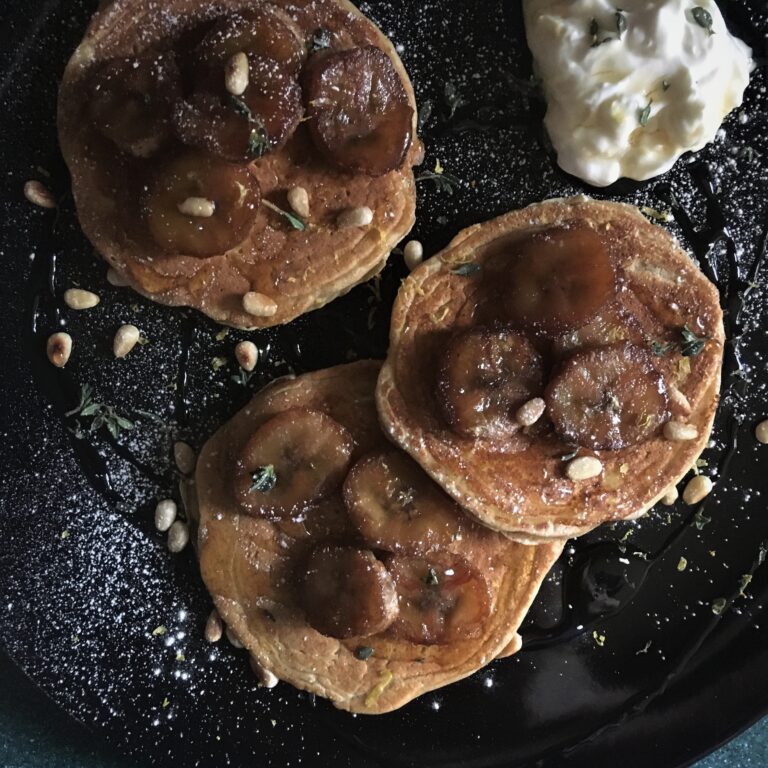
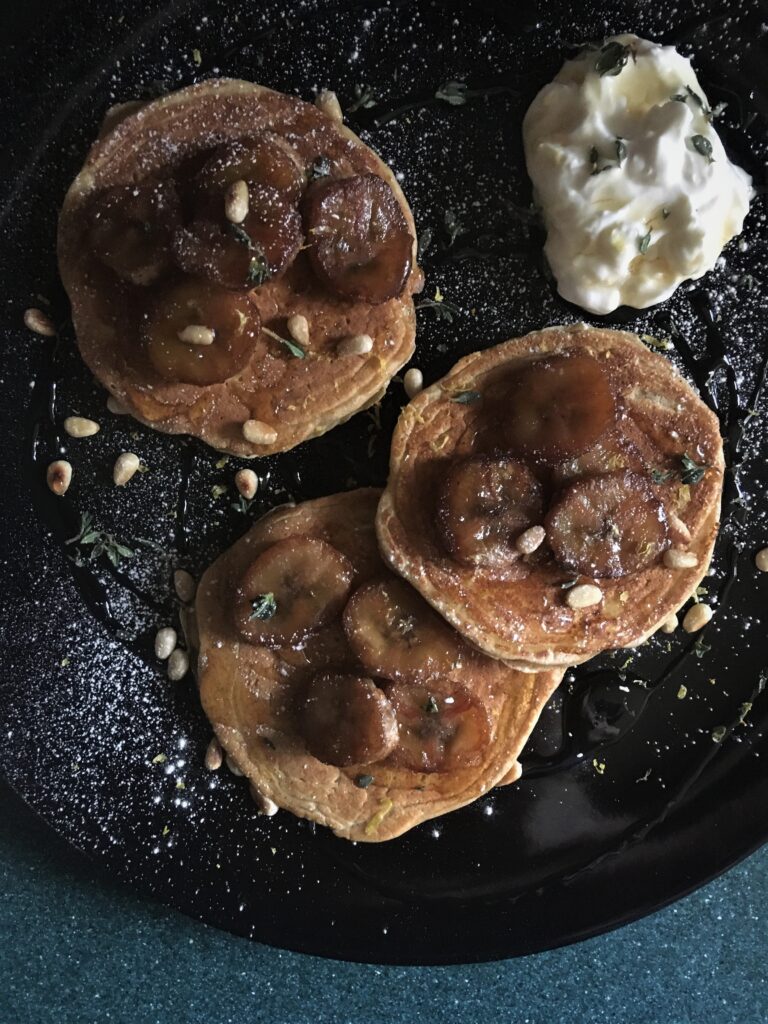
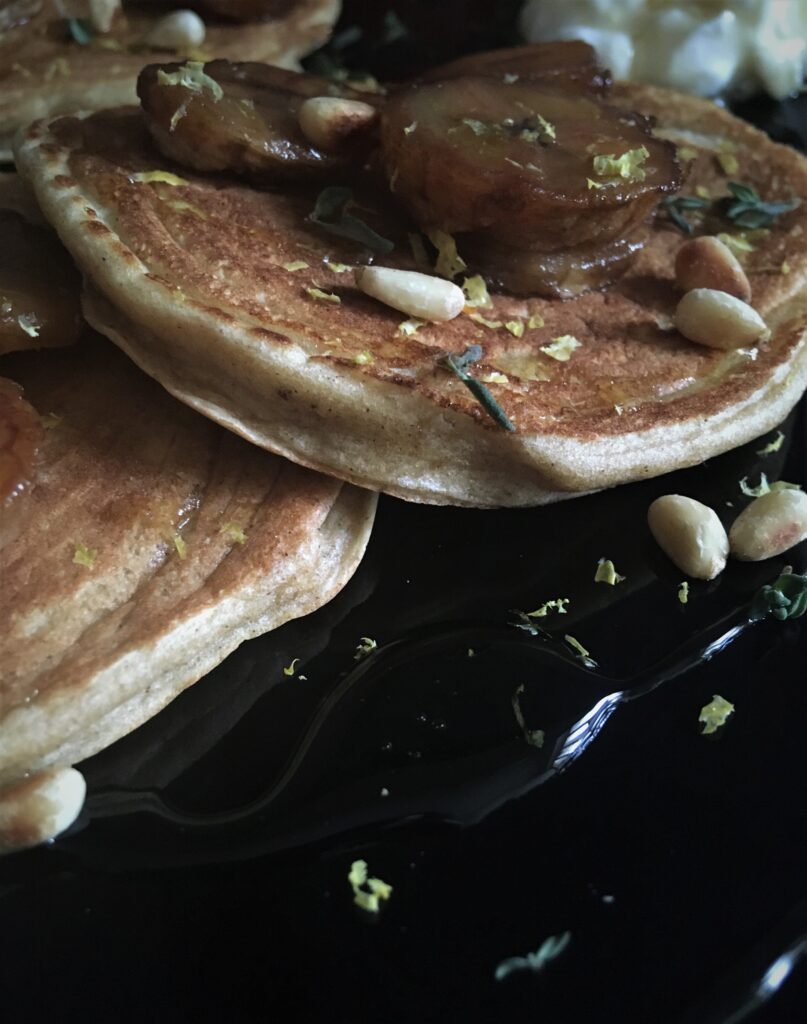
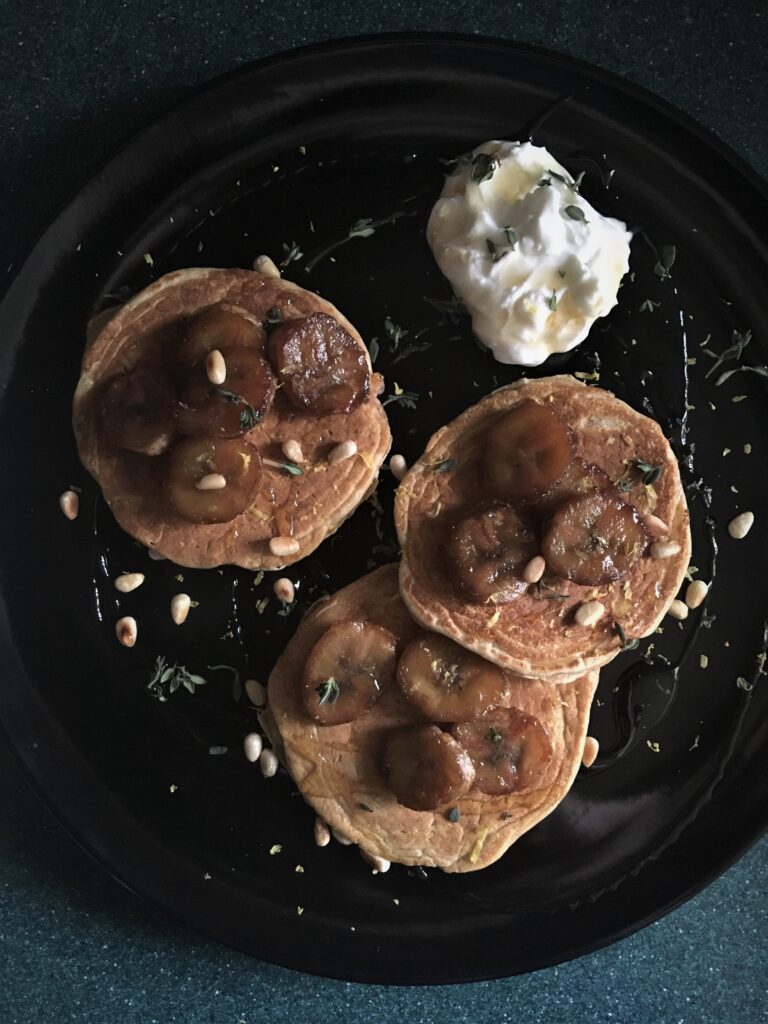
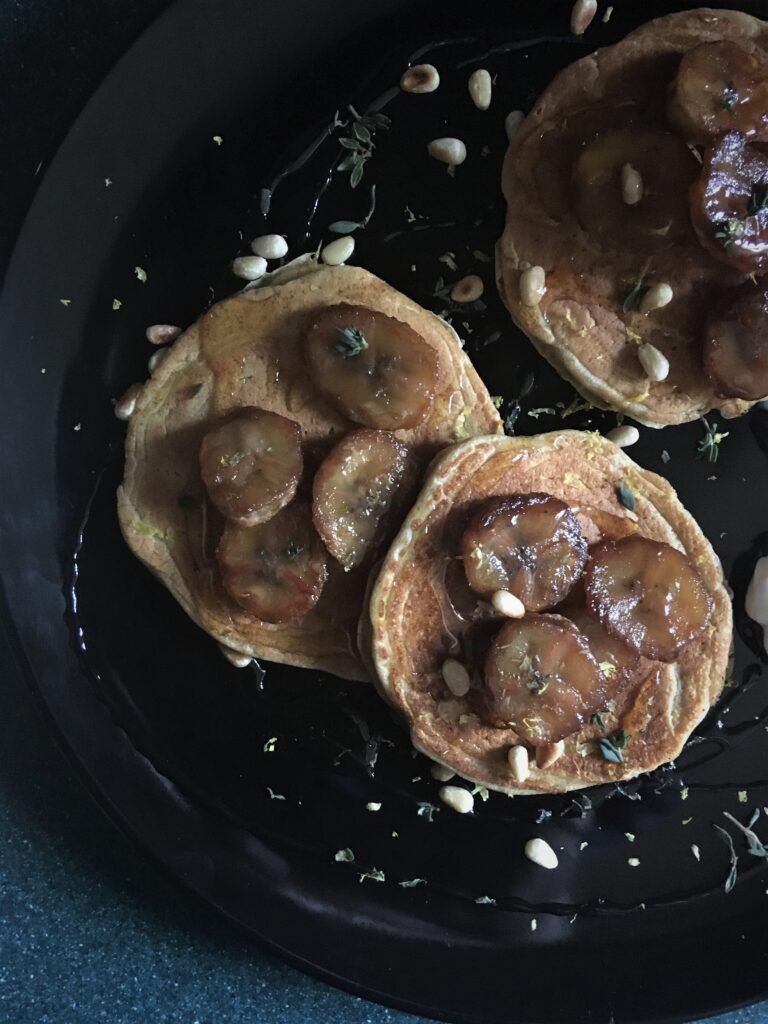
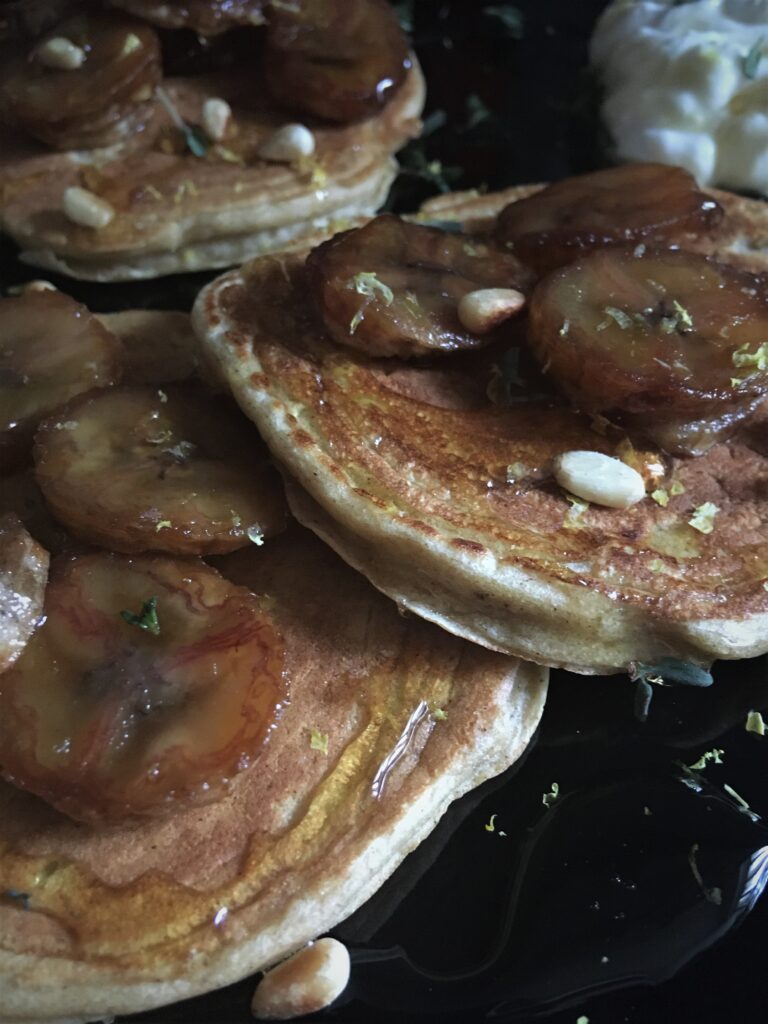
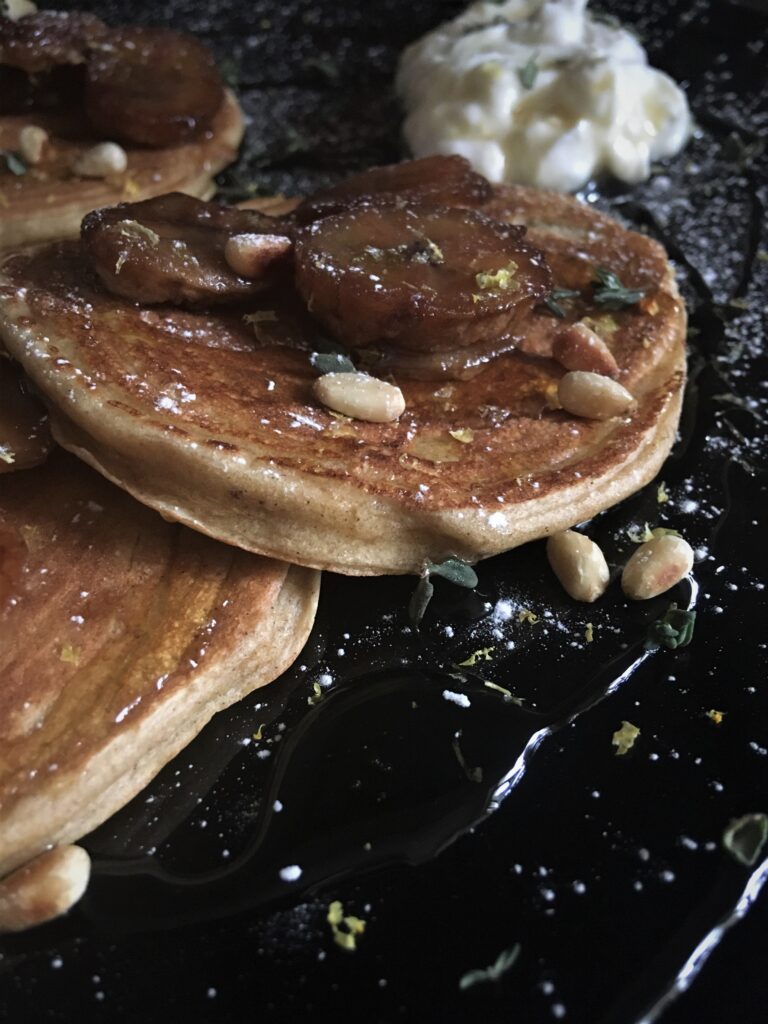
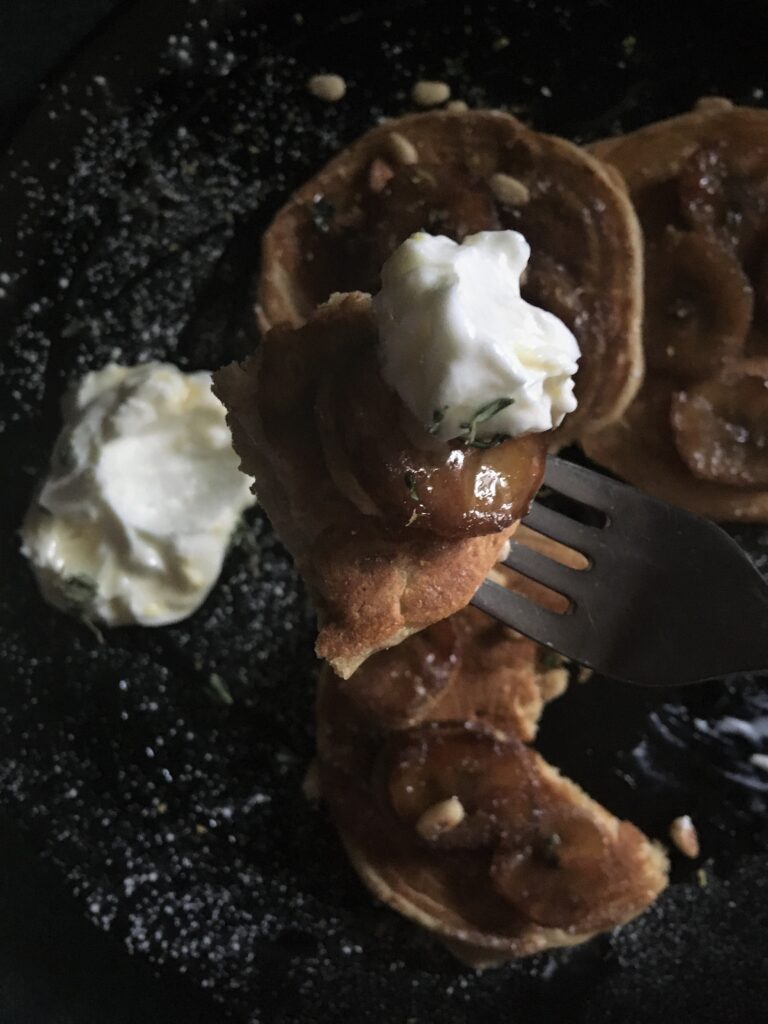
Spiced lemon and ricotta pancakes with my mum's baked bananas
Next to bog-standard buttermilk variety, banana pancakes are normally the breakfast pancake of choice in many a cookbook, Jack Johnson song etc. I’m not a huge fan of banana pancakes. I find them a bit dense, almost rubbery and I’ve never really managed to get them to be anything other than dense. As I mentioned above, my preference is for lighter, cloud-like options which you achieve by separating the eggs. Add ricotta into the mix and you gain an extra level of lightly creamy fluffiness here. As with a lot of my pancake discoveries, this cheeky addition provides a tasty way of using up any leftovers – if you’ve bought some ricotta for a pasta sauce and then have some lingering in the fridge etc.
Not wishing to dispense with the bananas entirely, I’ve added them as the topping option here. The baked bananas are a homage to my mum who used to make these for us when we were little. I was always super-excited whenever I found out we were having them for pudding. She also used exactly the same glass Pyrex dish to bake them in every time and I rather loved the ritual of that. Not sure what she uses it for now as we’ve not had baked bananas for ages… ?
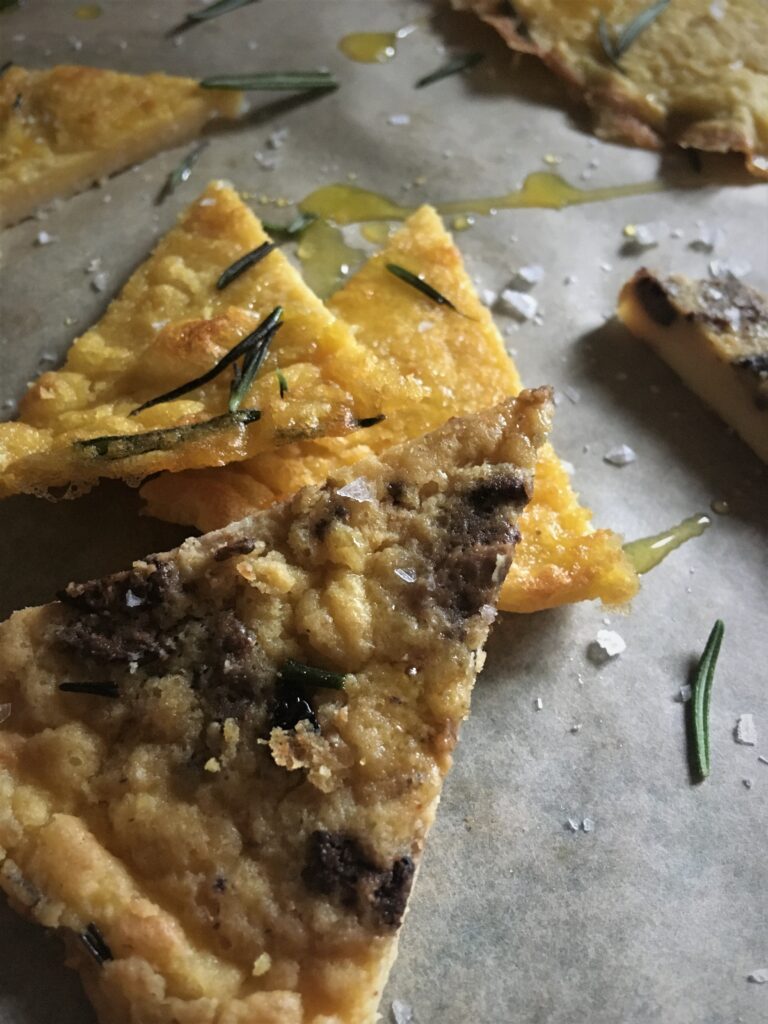
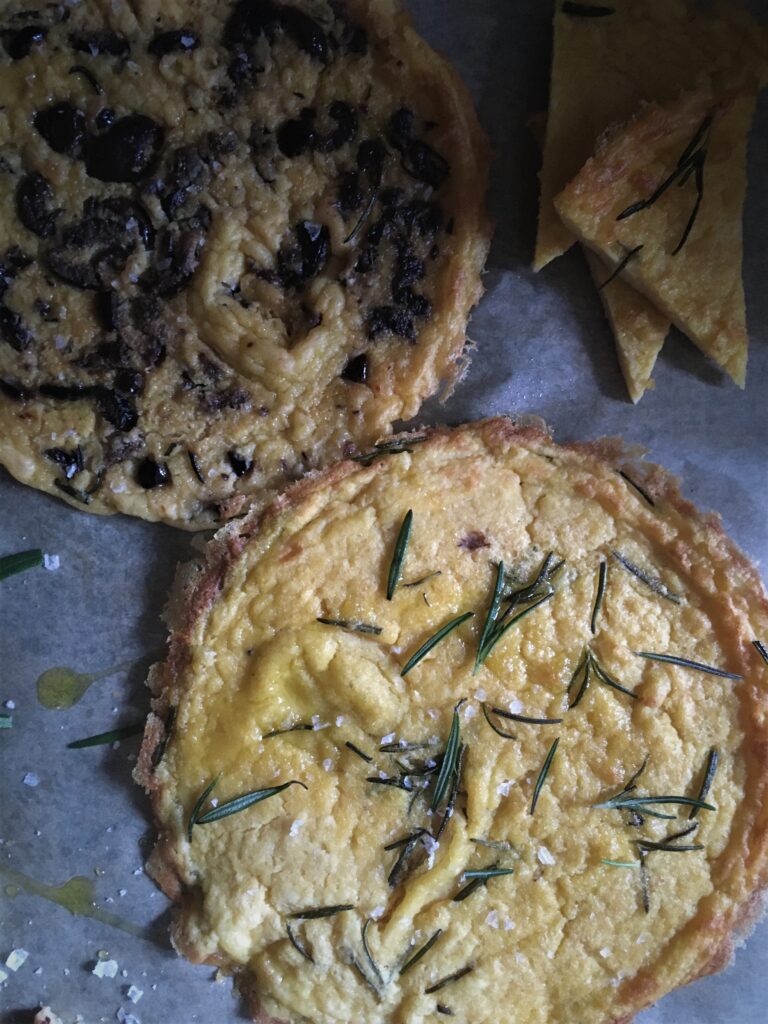
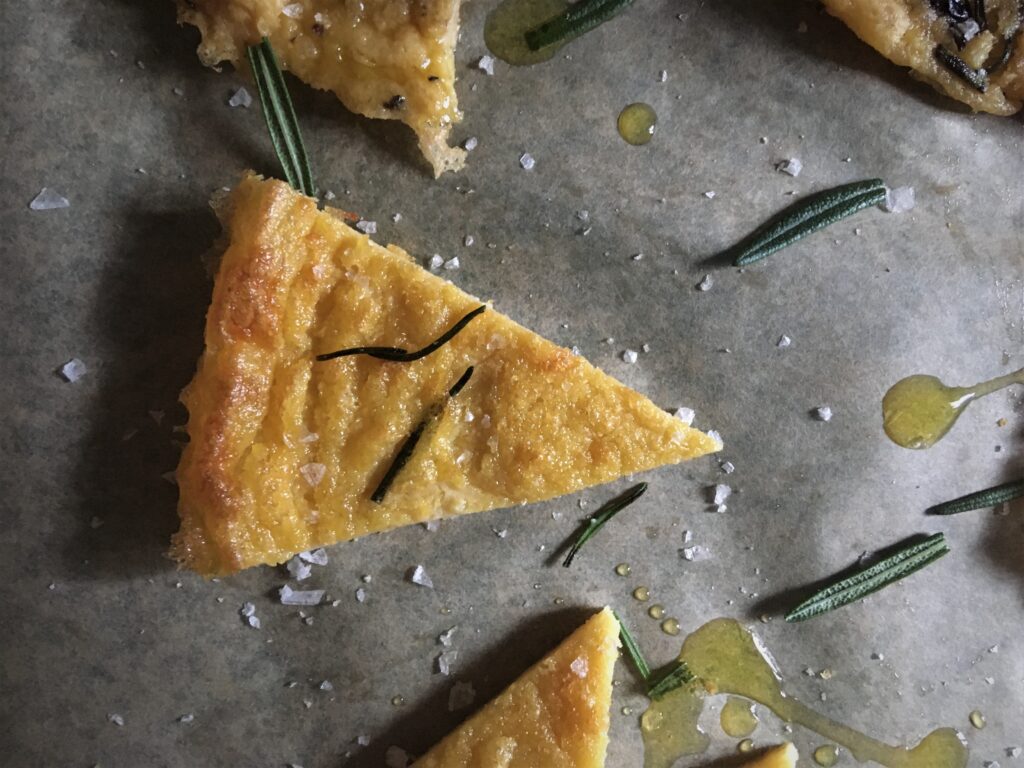
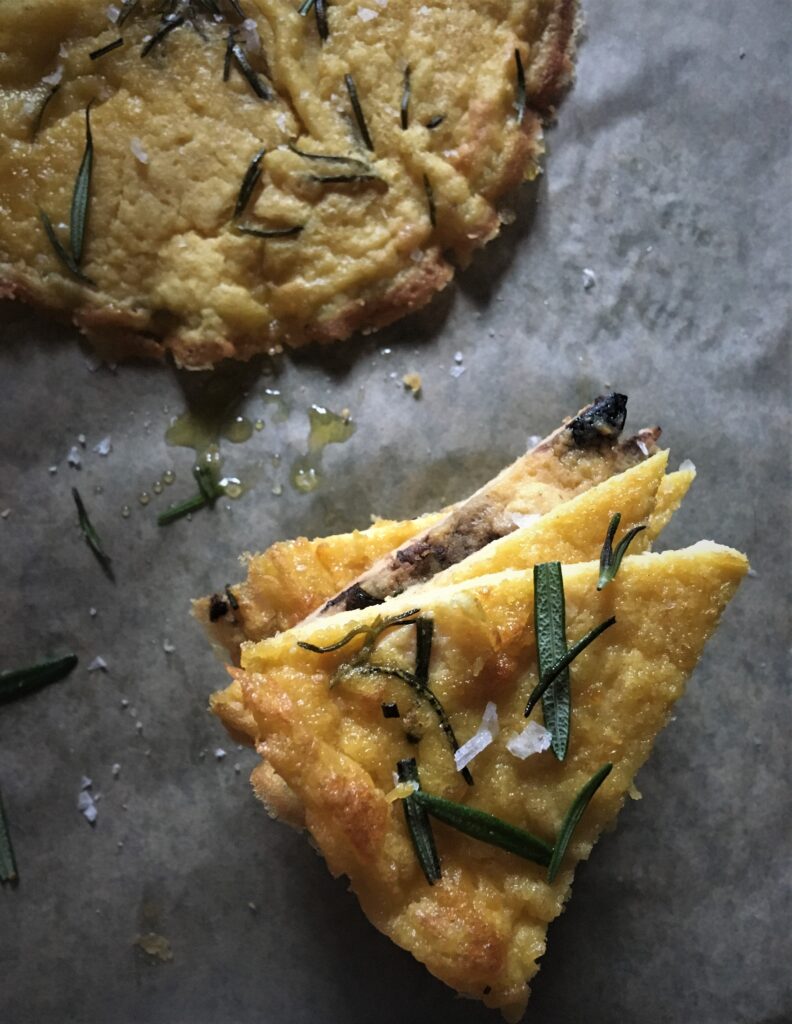
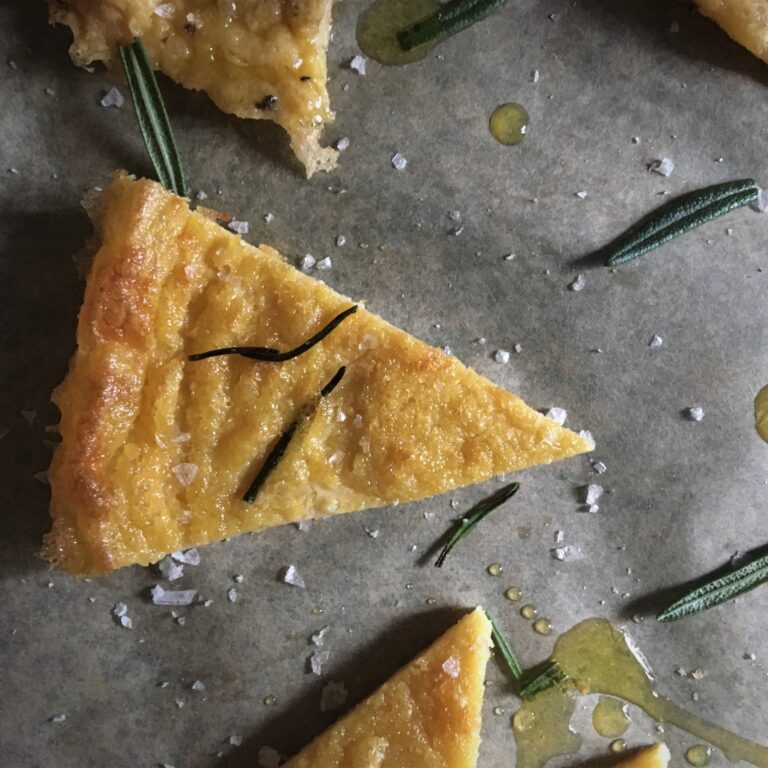
Farinata with olives, garlic and rosemary
These are humble yet fancy at the same time. Sometimes the simplest things are the most effective – I mean, as we’ve already discussed, a simple lemon and sugar “waffer-thin” crêpe done properly is a thing of beauty…. the perfect diffusion of chiaroscuro that transforms pale liquid batter into some sort of featured landscape, the happy marriage of sweet and sour etc etc. In Italy, they do a pretty good line in simple yet effective – it’s a way of life out there where humble, flavoursome ingredients are brought together simply to create something remarkably delicious. When it comes to Italian pancakes, same deal. Step forward the farinata. A chickpea (garum) flour pancake which is arguably as simple as pancakes go – just flour, water, olive oil, salt and rosemary. That’s it. Annnnd, it tastes amazing.
Because I couldn’t believe that it would be that tasty (hubris!) I decided to amp-up the Italian and make some with a bit more oomph in terms of flavour. These were great but, to be honest, you don’t really need to add anything – the plain rosemary ones are really good. Sorry for doubting you, Italy! mea culpa.
(the recipe is adapted from the Jamie Oliver recipe)
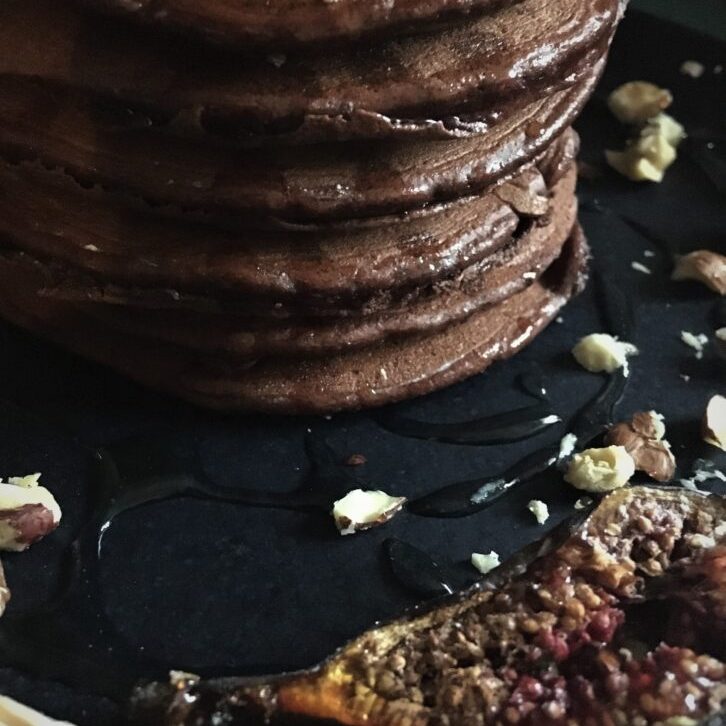
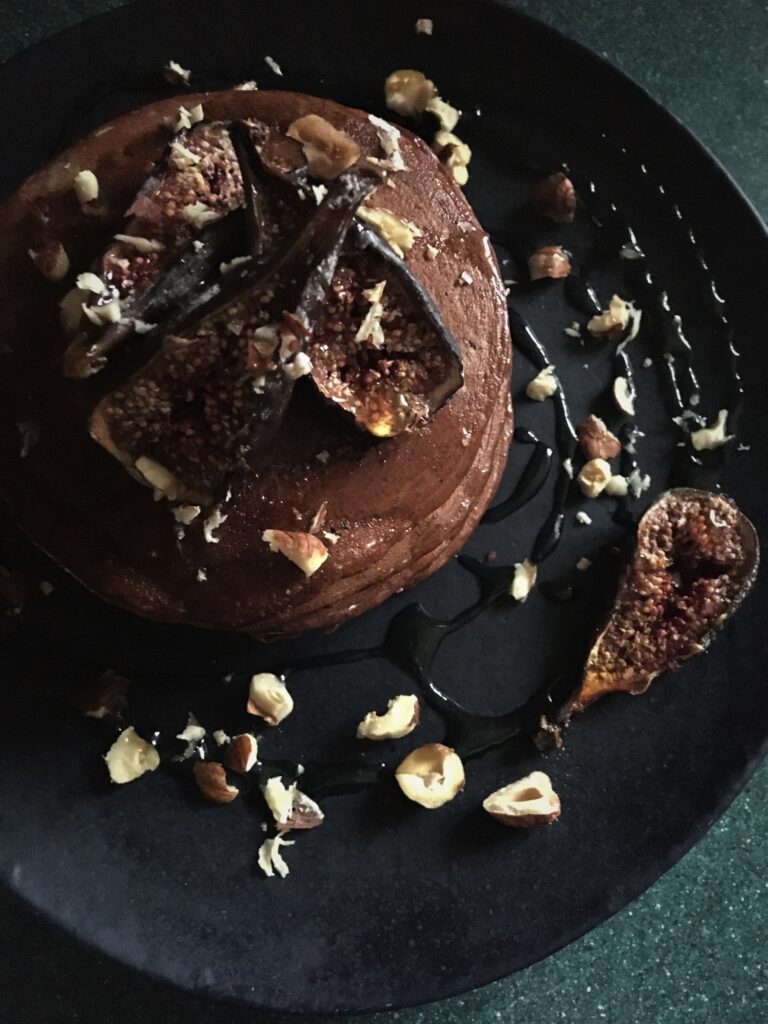
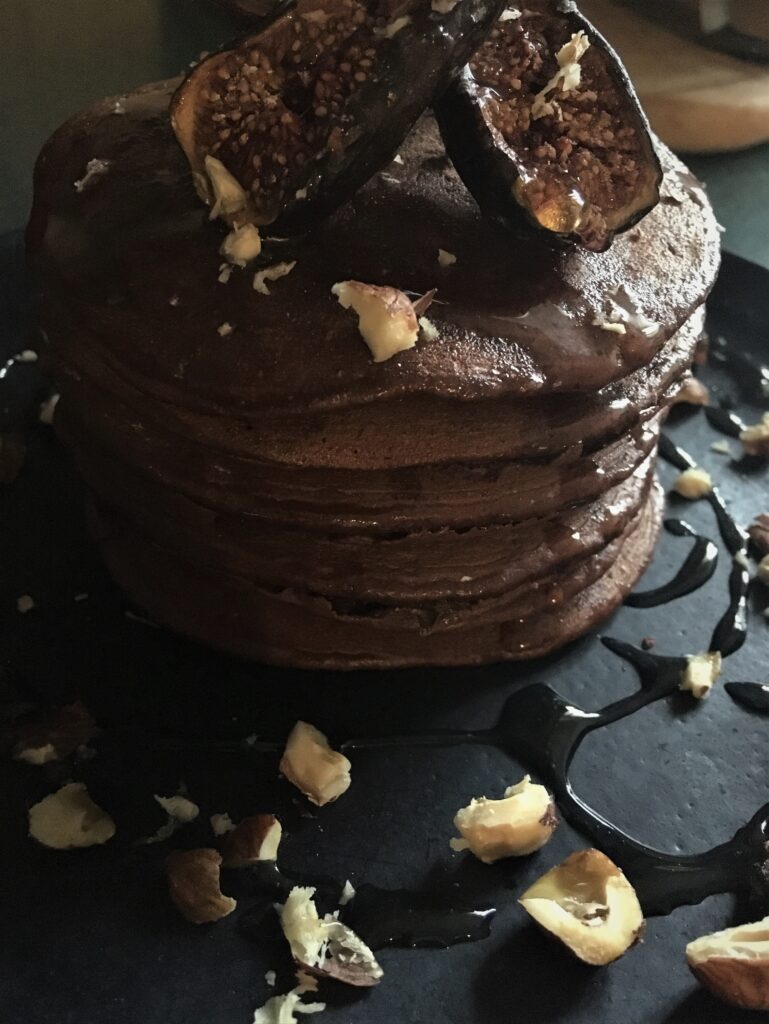
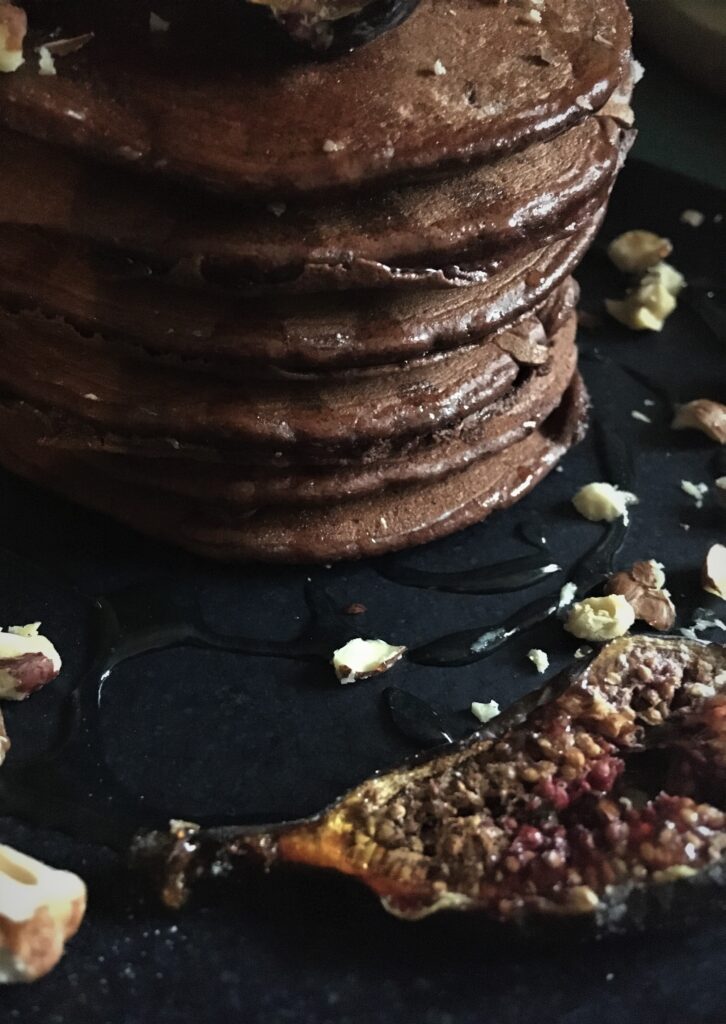
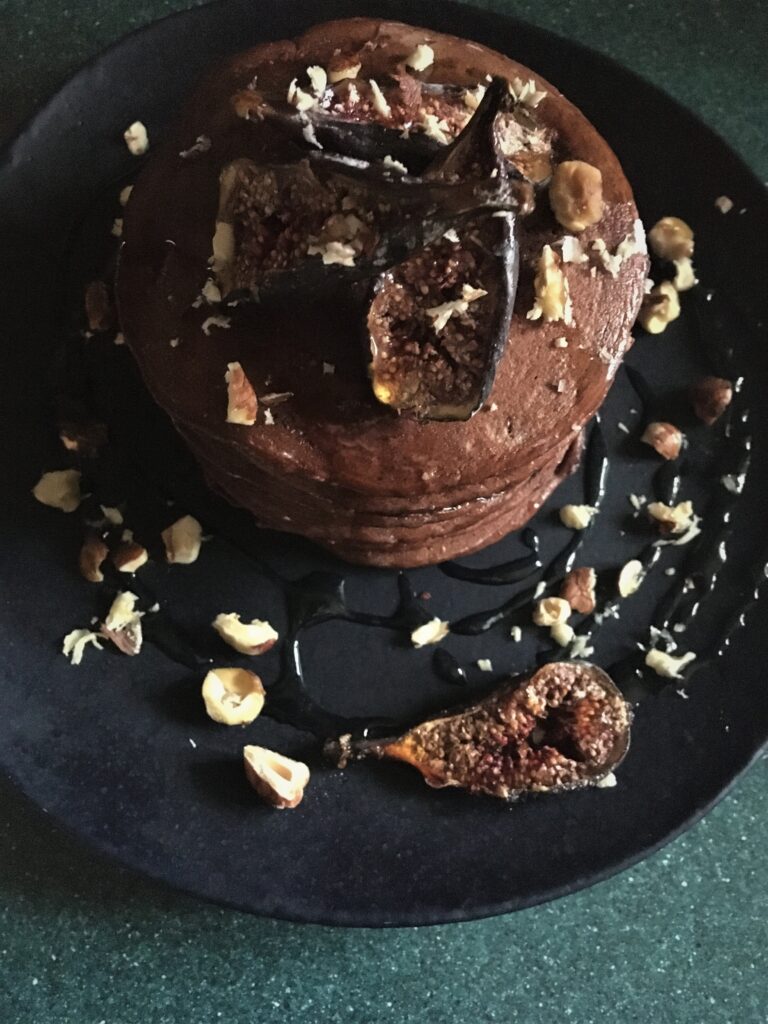
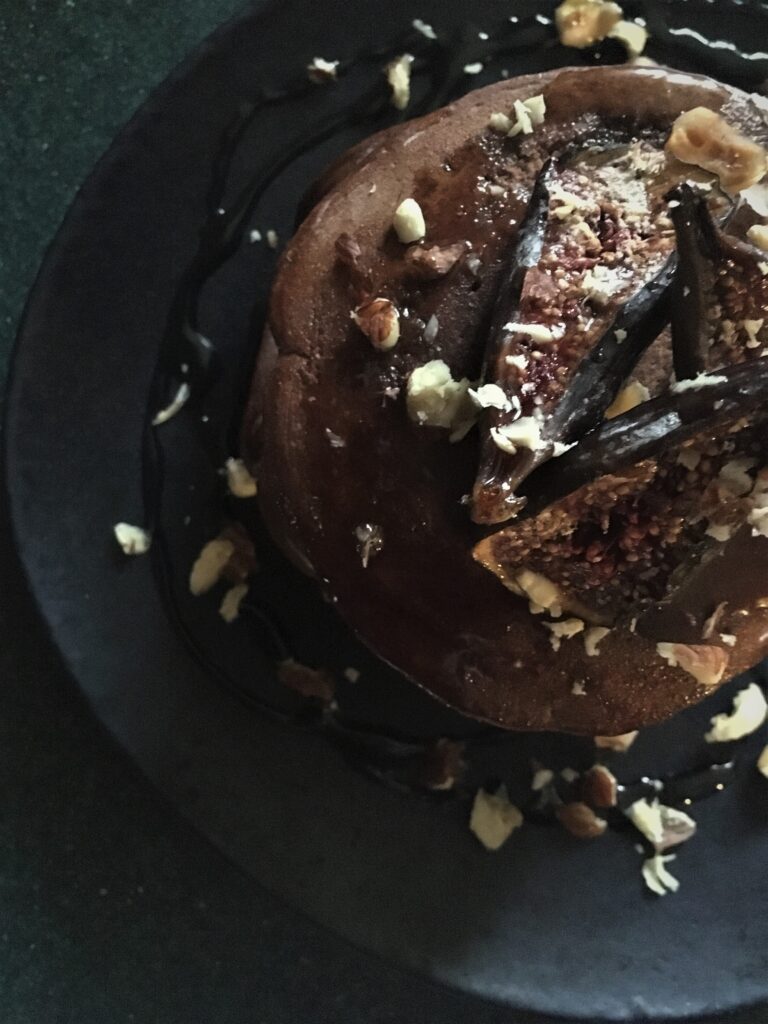
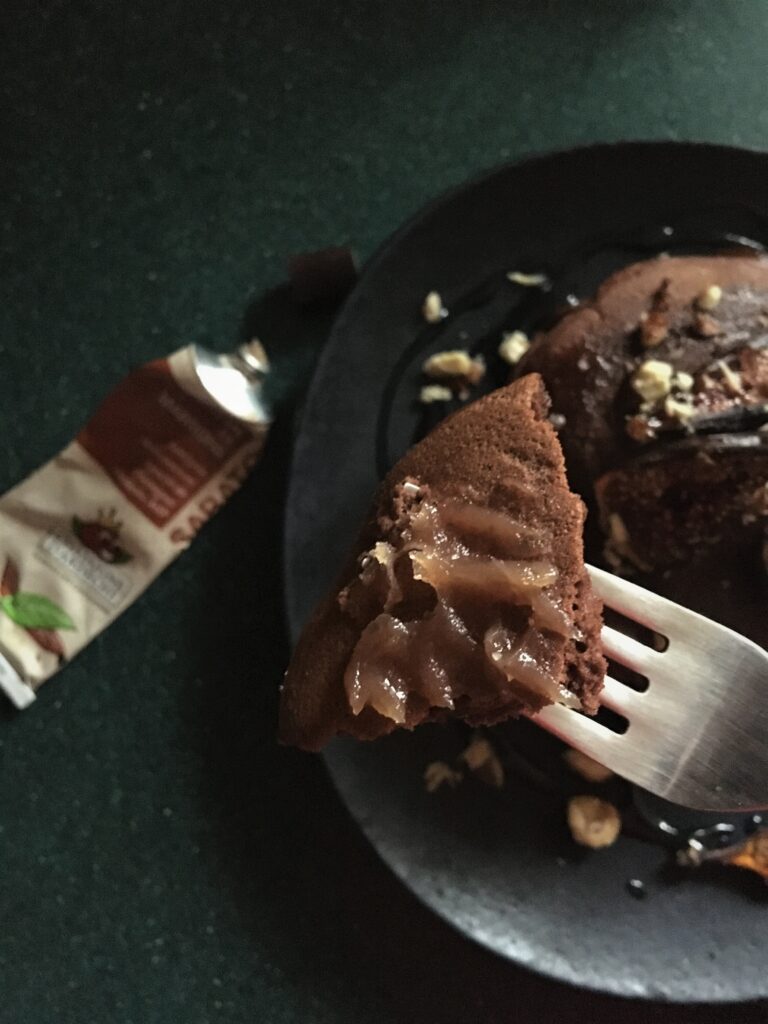
Chocolate and chestnut pancakes with roasted figs
Continuing the theme of non-plain flour pancakes here. Chestnut flour is very underused, even underrated, in this country when, quite frankly, it’s marvellous. It’s trite to say it brings a nutty flavour but it’s more than that, it’s more of an underlying warmth. Chestnuts go splendidly with chocolate and here I’ve combined the two to make a rather sophisticated dessert (or decadent breakfast depending on how you roll).
The most important thing I need to add for this recipe is that these are incredible with sweet chestnut spread. I happened to have some lurking in the fridge in a tube I had from France but I cannot recommend this combination enough if you can get hold of some. Happily, I’ve managed to track it down to Amazon – have a look for Clément Faugier chestnut spread (crème de marron de l’Ardèche) nb. this is a sweetened paste, not the purée and it’s almost sinful.
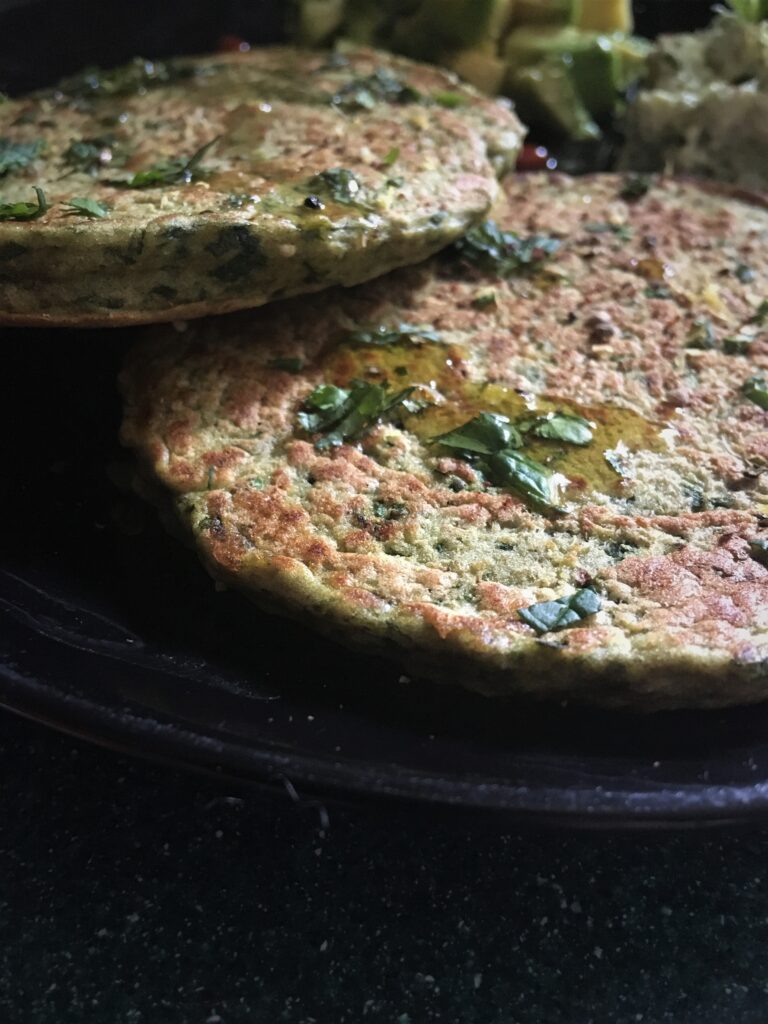
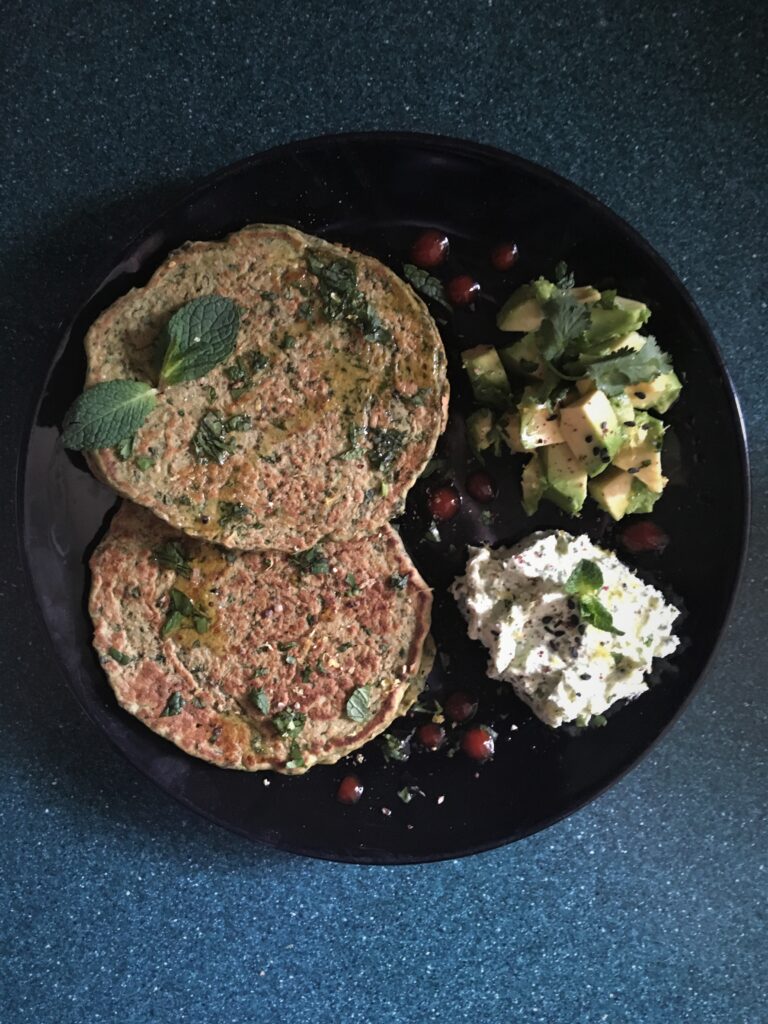
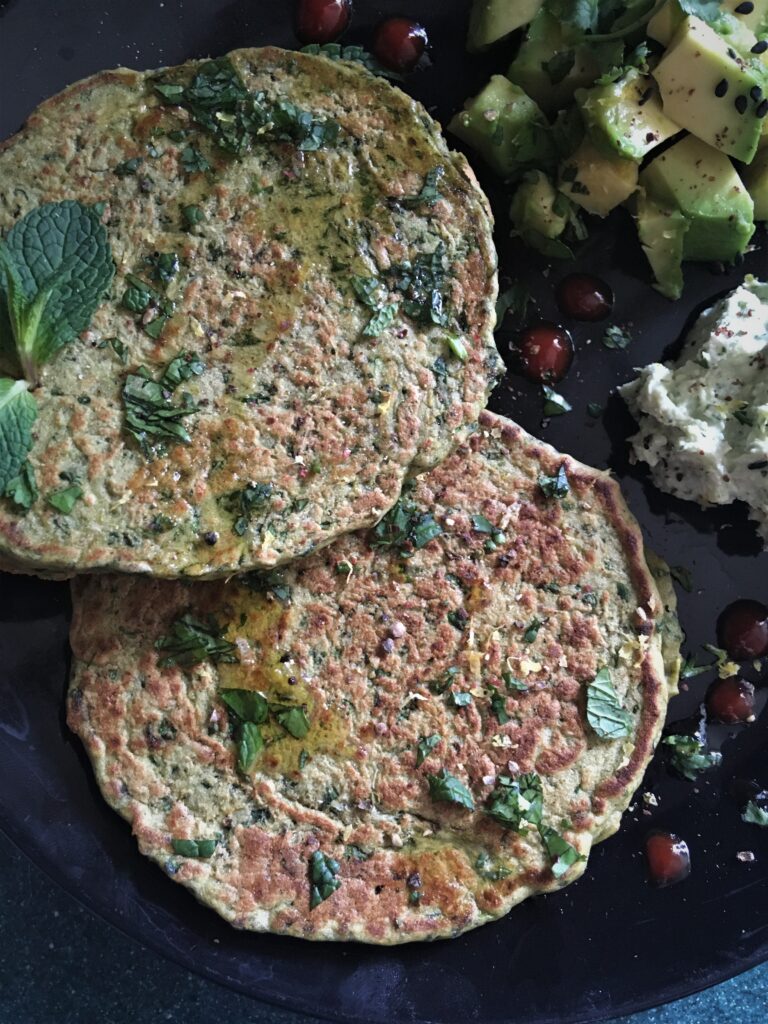
Power pancakes
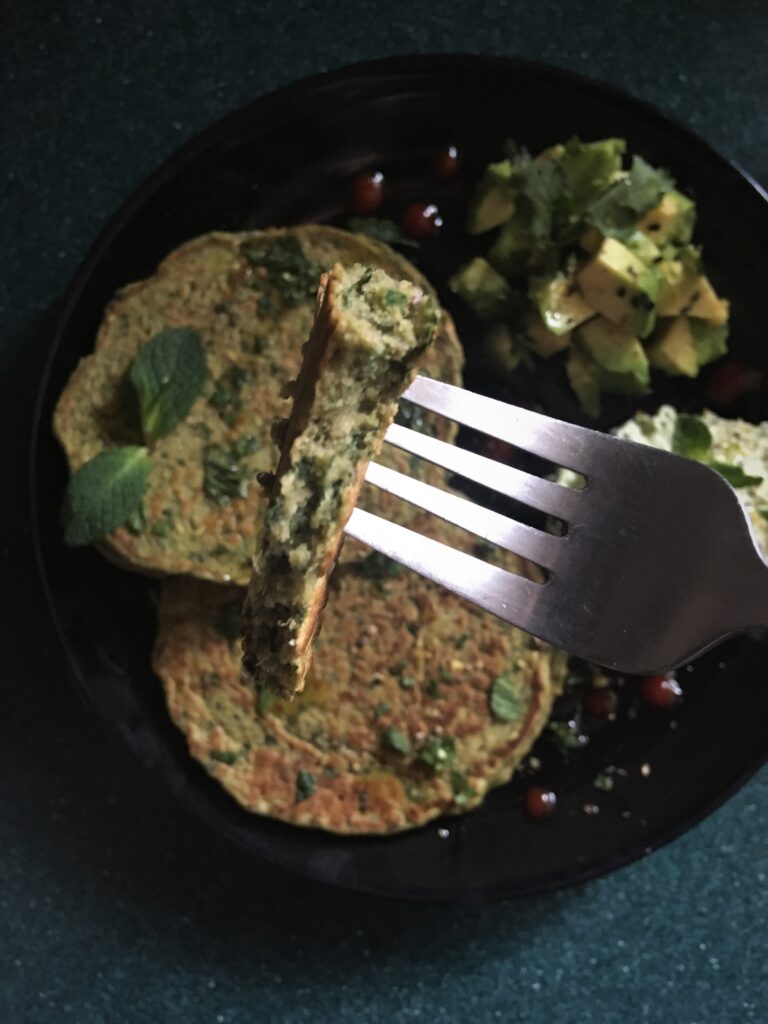
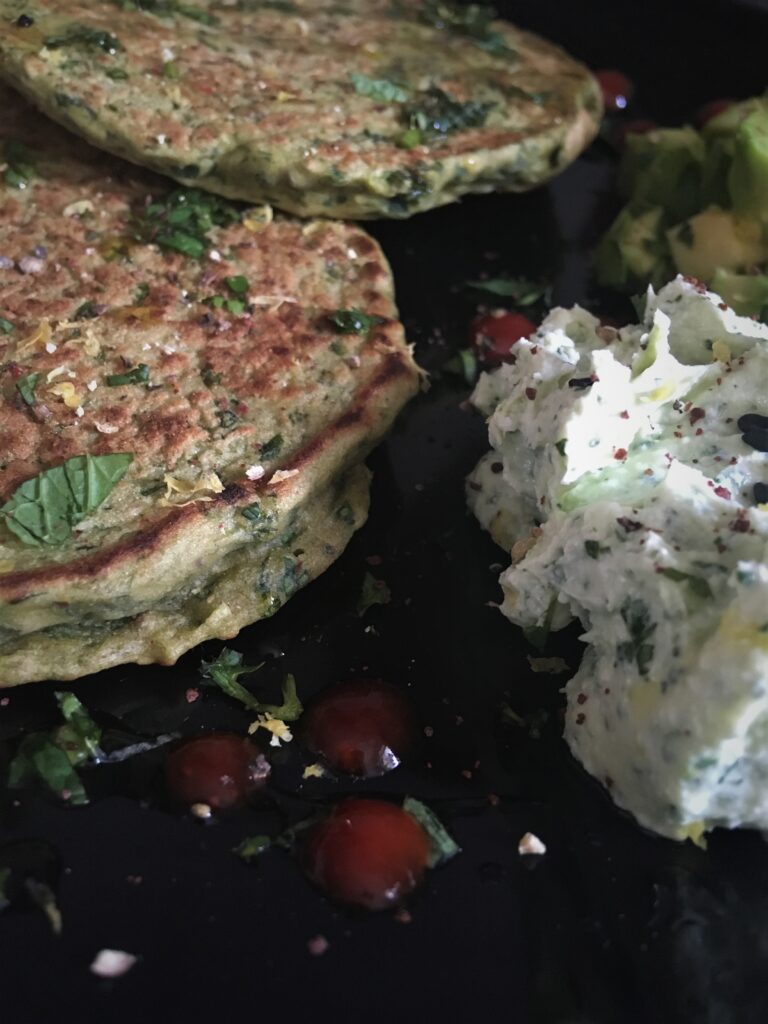
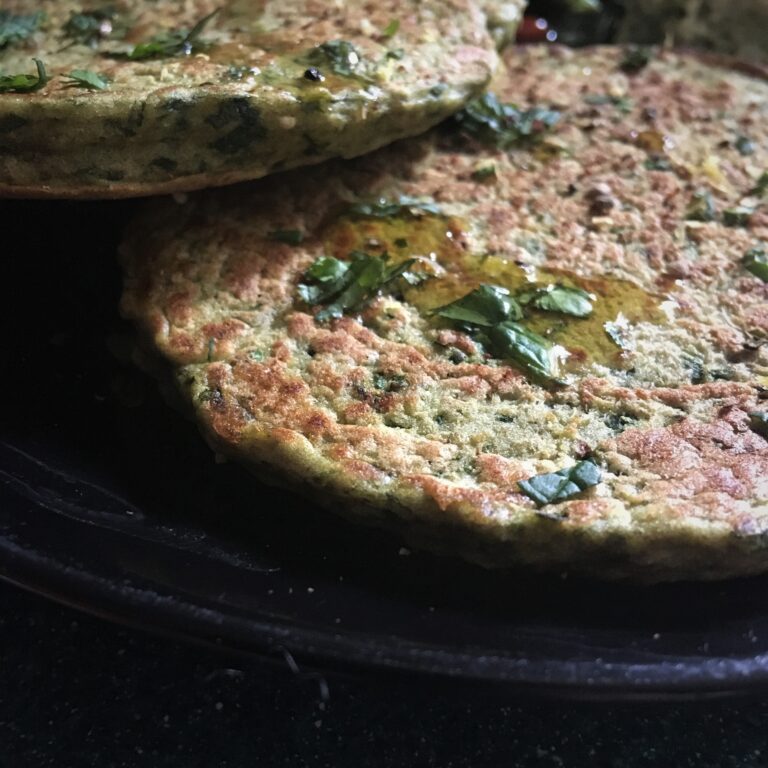
In contrast to the indulgent chocolate pancakes… the other end of the spectrum and something savoury, green and vegan! It is possible to make pancake batter without egg, using chia seeds and a little water. The mix can get a bit thick but you can add a little more milk if necessary. Chia seeds are a so-called super food and are supposed to be extremely good for you but personally I find them a bit difficult to get on with. That weird frogspawn thing they do when you add them to milk for a healthy/hipster breakfast isn’t really to my taste. Each time I try to embrace it my lips curl slightly as the spoon nears my mouth – I have issues with slimy textures. But, put them in a batter – where they will expand and do that frogspawn thing – and then cook that into a flavoursome pancake and you barely even know they are there! So, they can work their magic without you feeling like eating them is something of an unenjoyable chore. Happy days.
It is, of course, entirely fine to make these pancakes with eggs instead of chia seeds (if you don’t need the chia/don’t like them/don’t have any/don’t see the point in them). Just substitute 2 eggs for the chia and water; and I would advocate separating the eggs – add the yolks with the milk to the dry ingredients then fold the whisked whites in at the very end. You could then enjoy these pancakes as a base for avocado and a poached egg with some sumac or chilli sauce or a touch of truffle oil (or even some crisped up Parma ham). That would set you up very nicely for the day (if you aren’t vegan).
If you like the idea of putting things in pancakes, click here for my mushroom pancakes (a little bonus pancake idea for you?). Mushrooms have a crazy affinity with pancake batter, it’s unreal.
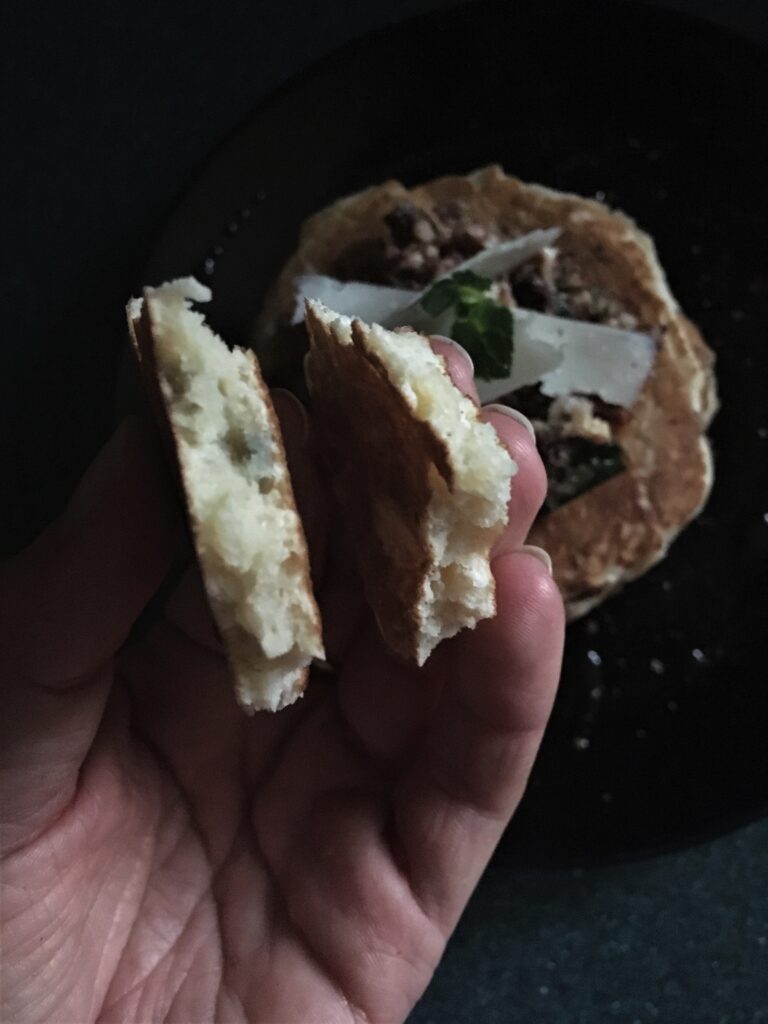
Four-cheese pancakes
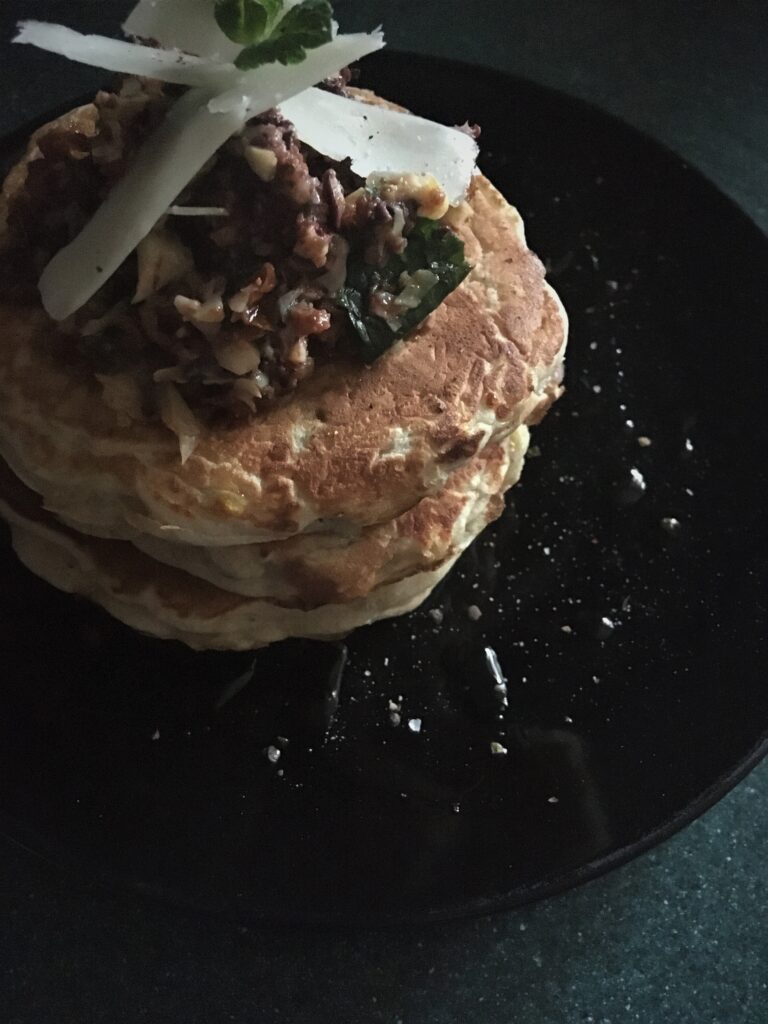
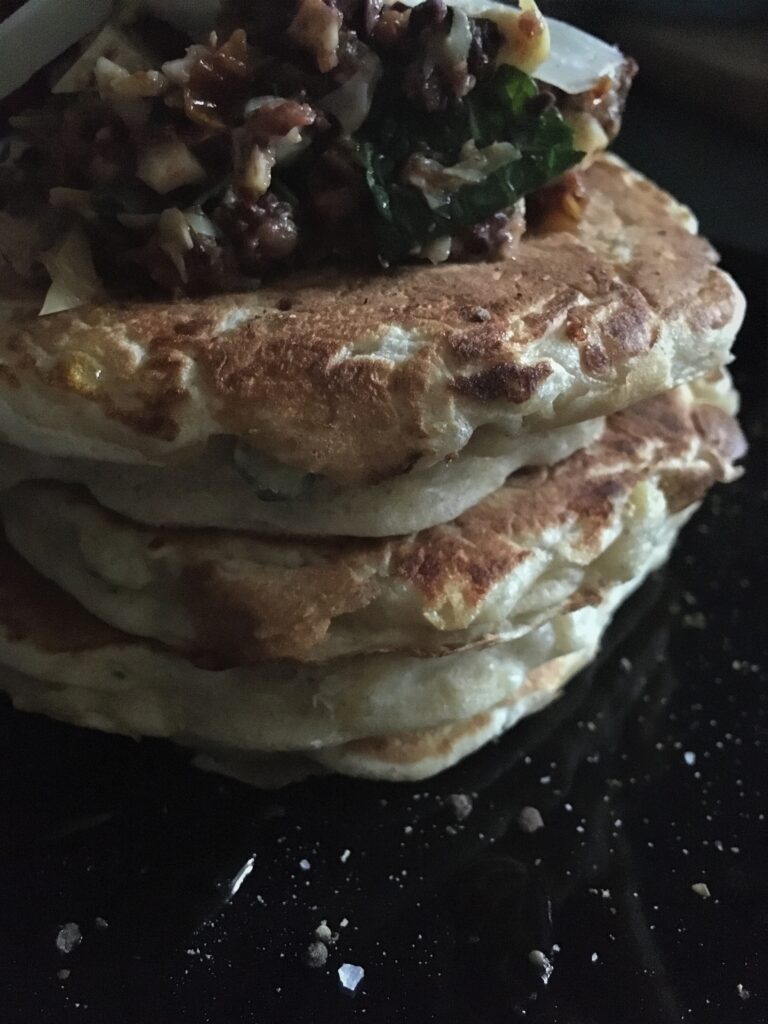
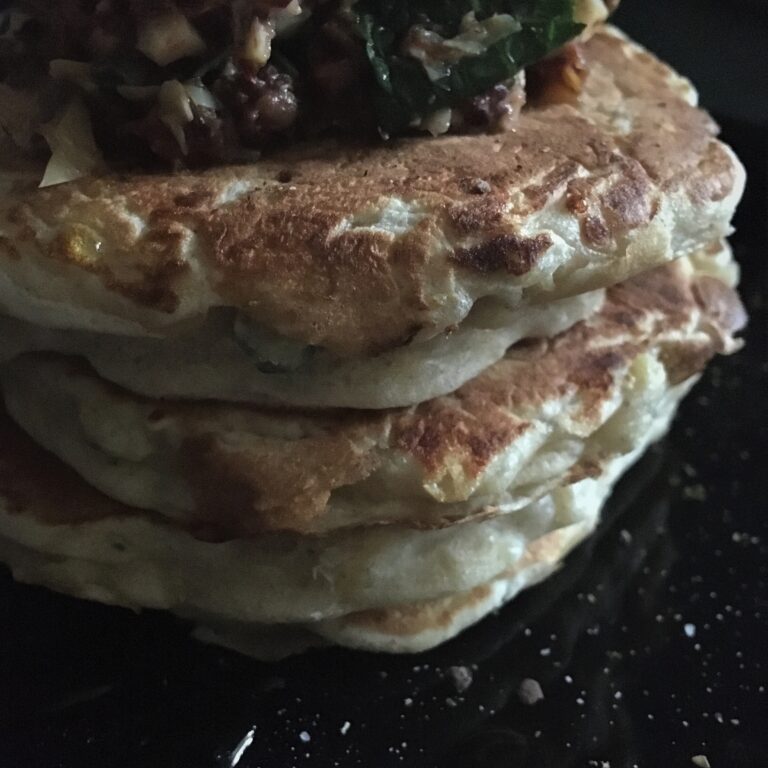
Yup – the other end of the spectrum again. I mean, why not? Again, a way of using-up bits and bobs from the fridge – mine was a random combination of cheeses but it worked. It also makes a nice base like a sort of pizza onto which you can pop all sorts of toppings. It also works, therefore as a canape base – you can cut out little blini-sized rounds of cooked pancake and top with whatever takes your fancy really – depending on what cheese you have used. You can also add herbs into the batter as well – who doesn’t love a bit of cheese and chive?
Obviously bear in mind that blue cheese is pretty pungent and won’t mix with everything so if that is the dominant cheese then maybe a walnut paste with a bit of pear for example, or a mushroom duxelle type of thing (see link below). If you have gone down the goats cheese route consider what matches with that (beetroot maybe); same with say, manchego (membrillo, piquillo peppers, chorizo, sage, chestnut); Italian cheese (sundried tomatoes, artichokes, olives etc); halloumi (almond and garlic paste, a bit of feta, tomato) etc – little tastes of the world in tiny bites.
And, on that note, I also discovered that these make great canapé bases so if you want to disappear down another pancake rabbit hole click here for pancake canapé ideas…
Finally, I’d also like to mention the Atayef pancake which I came across whilst researching pancakes of the world. It is an Arabic stuffed pancake and, as I’m always rather taken with Arabic cuisine, I wanted to share this as it’s a bit unusual. You make these little pancakes from a simple batter (into which you could potentially add some rose/orange water) then stuff them, fold them into crescent moon shapes, bake them in the oven then finish with a healthy drizzle of syrup. Sounds divine. The stuffings are mostly sweet and a combination of cream cheese, pistachio, cinnamon, fig, date etc – that sort of thing, but there’s nothing to say you couldn’t roll with a savoury take on this and make them like a sort of Arabic empanada.
There’s an excellent recipe here.