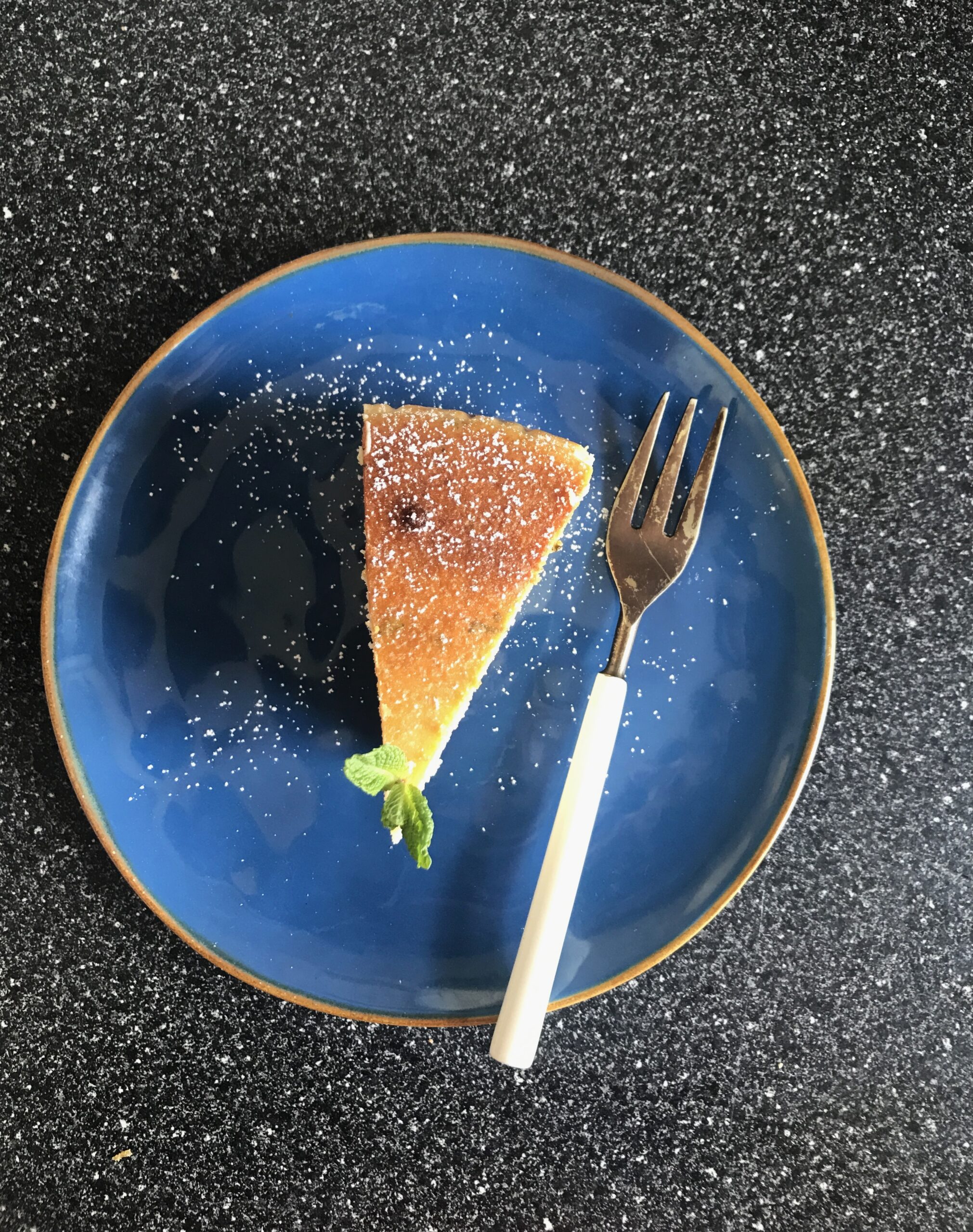
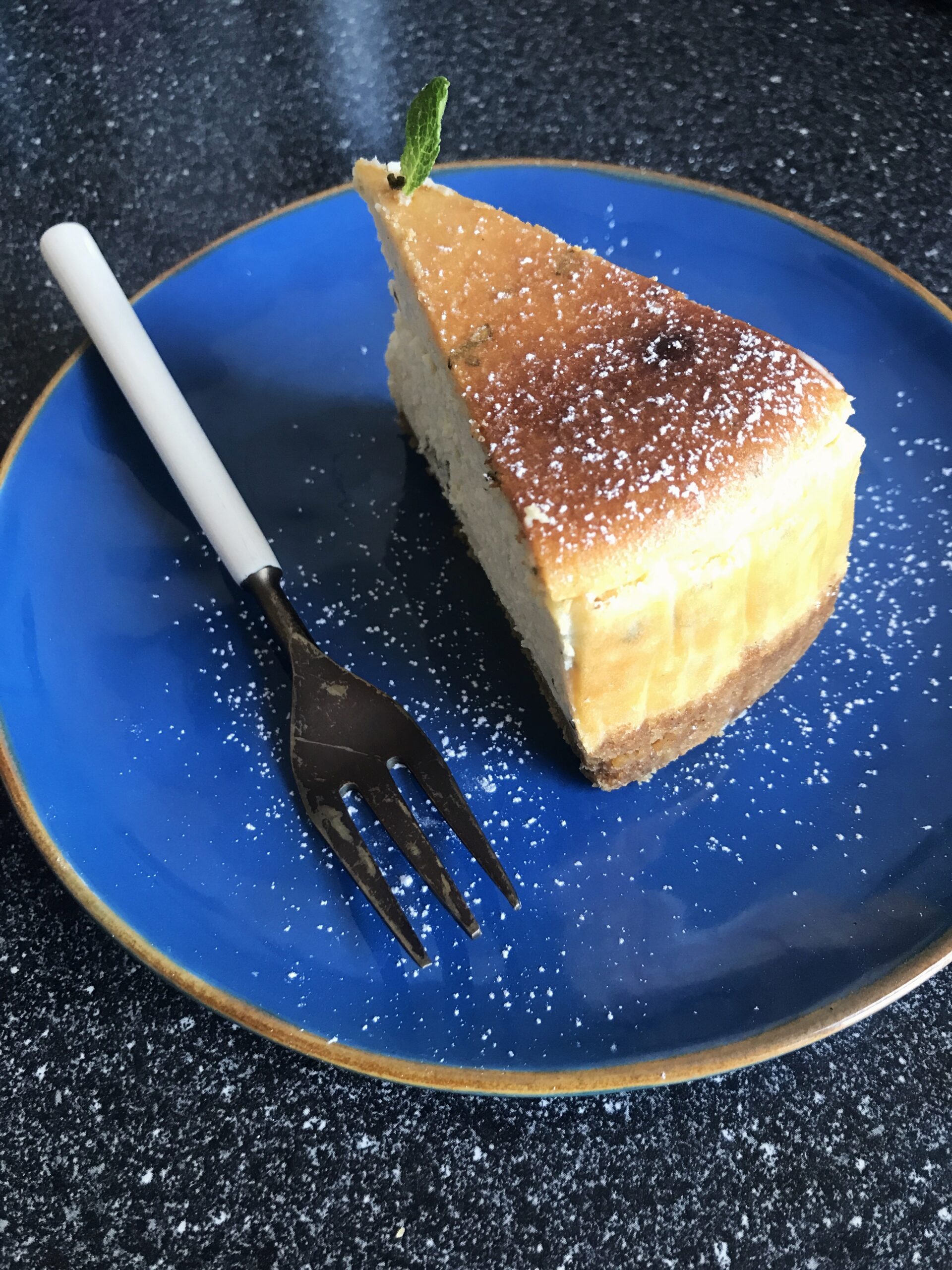
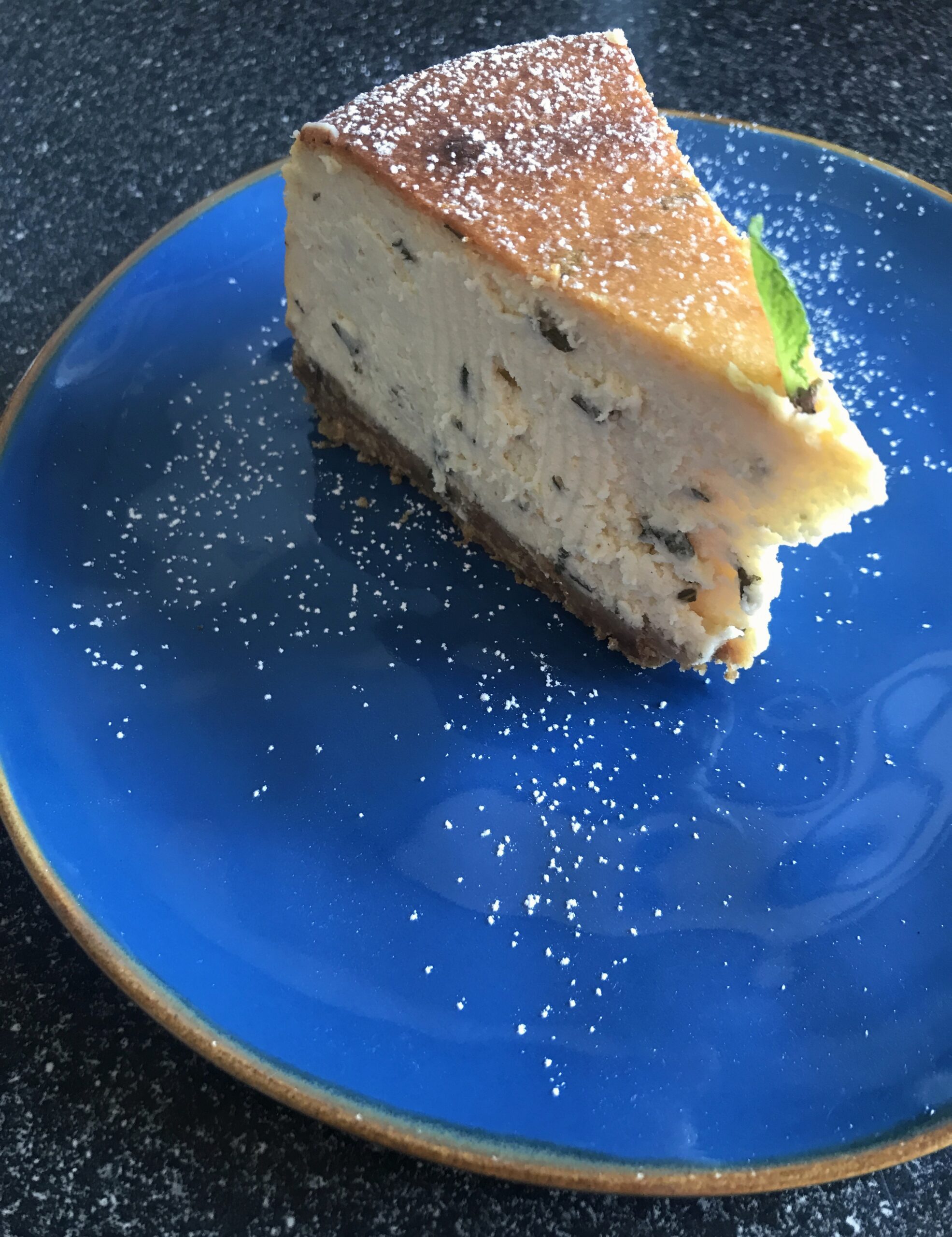
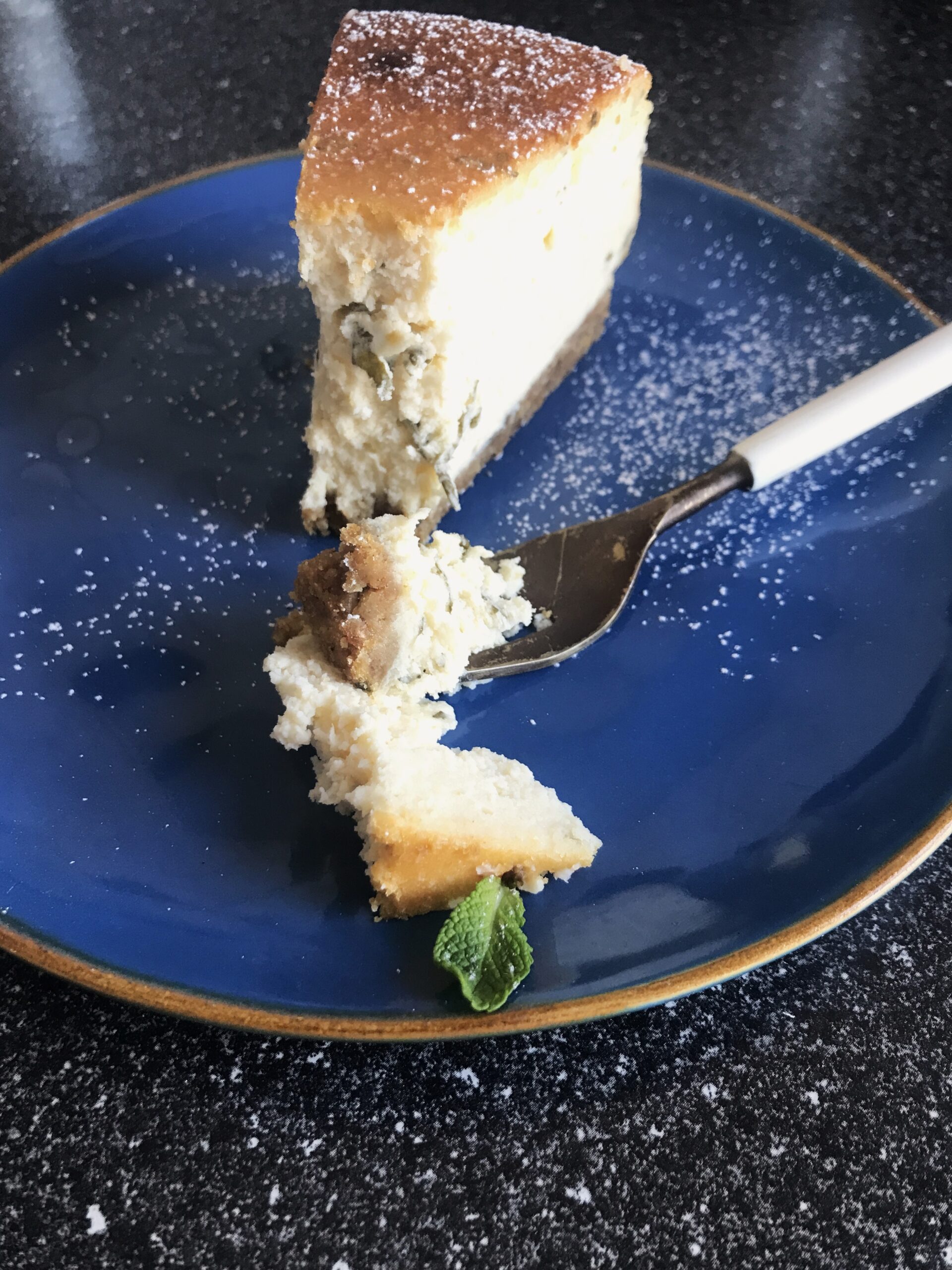
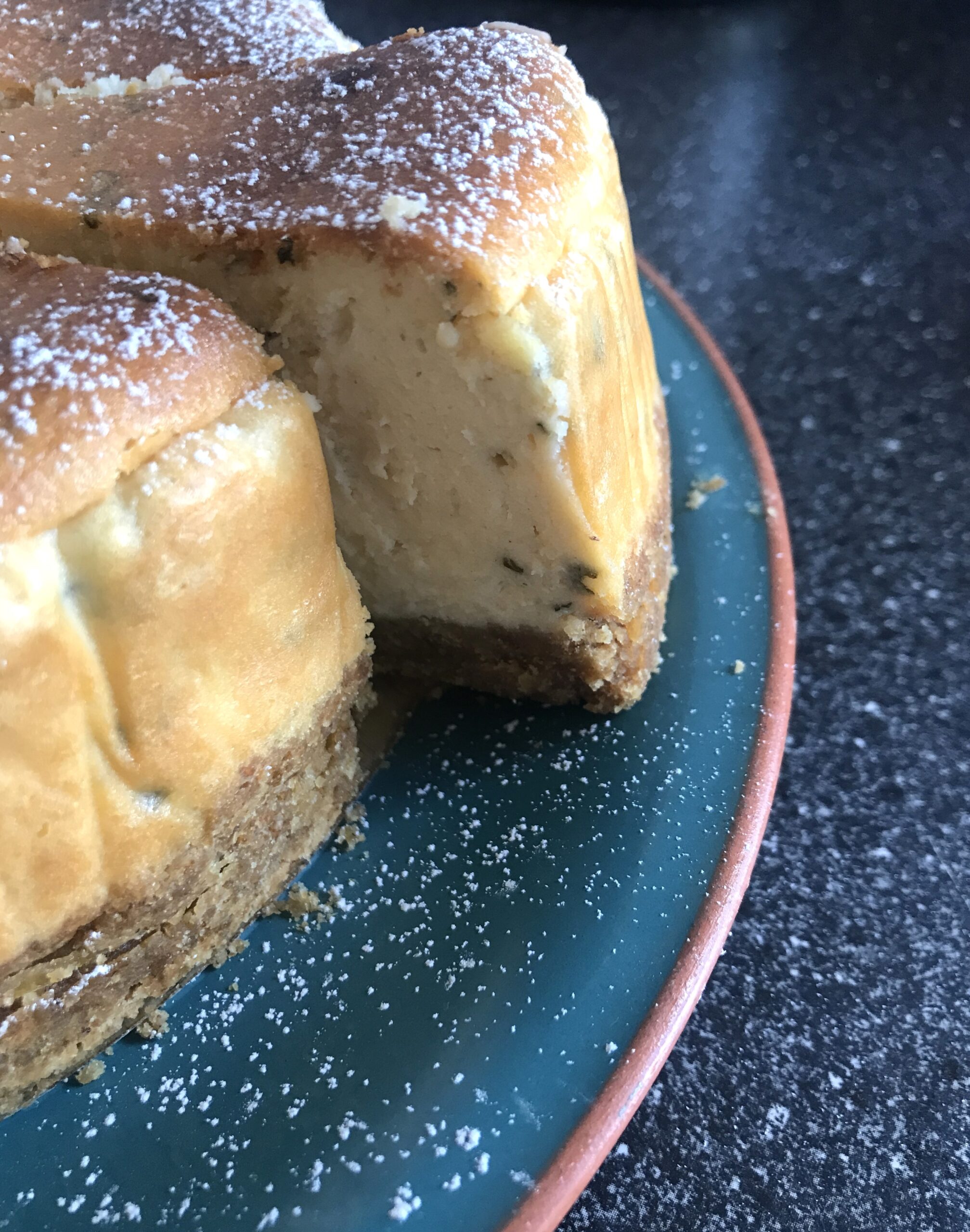
Baked cheesecake with preserved lemon, mint & basil

Every so often I do what my sister calls a “fridge reconciliation”.  There’s a shelf of jars in there in varying states of play and sometimes things get forgotten about and shoved further to the back.  Thus it was I discovered a couple of preserved lemons bobbing about and neglected in a jar tucked away in the back corner.  Thus it was that they became the genesis for this week’s recipe – an ode to a Summer that has finally arrived.  It’s now properly time to dial-up the zingy, bright seasonal flavours.

This is the time of year when ALL meals should be eaten outside including dessert, cake and snacks.  This baked cheesecake is full to the brim with sunshine – mint, basil, lemon, but with a mellow, earthy touch from the “burnt butter”, tahini and preserved lemon.  Imagine lying next to a hay bail, under the mid-summer sun supping on a chilled Lilt (or for those of you who don’t remember Lilt – lemonade or one of those fancy kombuchas.  Now, obviously preserved lemons are salty BUT if you proceed with caution, and slice them up very small, then, together with sugar and the “normal” lemon zest, they will amp up those sweet summer vibes in a most delightful manner.  In the same way that icing sugar and cinnamon work in bastilla (one of my favourite Moroccan mains), a preserved lemon (also a Moroccan favourite) can work in a sweet bake – be that a cake, biscuit or tart.  So, strap in and get ready for some meltingly mellow mouth fun.  Oh, and I discovered that this is absolutely delicious with a coffee.

Makes: 1 cheesecake which offers plenty to go around

Takes: c. 30 mins

Bakes: 10 mins for the base – preheat the oven to 180C (GM4).  The cheesecake will cook firstly for 10 mins at 200C (GM7) then a further c.50 mins at 100C (GM1) for the cheesecake in its entirety (+2 hours cooling and then overnight in the fridge).  Grease and line an 8″ loose-bottomed tin.


For the biscuit base

  • 200g sweet biscuits (smashed up into fairly fine crumbs but still retaining some texture). I used a combo of ginger nuts and digestives as this is what I had in the cupboard at the time but digestives are always good for this; you can also chuck in some chopped nuts too.
  • 100g butter
  • 1 tblsp golden caster sugar
  • 2 preserved lemons (rinse to remove the brine then remove the innards and slice the skins VERY finely)
  • 1 tblsp fresh ginger (grated)

For the filling

  • c. 900g full fat cream cheese (eg. Philadelphia is the standard but there are plenty of options in the shops – must be plain though – don’t get one with herbs and garlic!)
  • 250g golden caster sugar
  • 3 tblsp plain flour
  • the skin of 1 preserved lemon (rinsed and very finely sliced)
  • zest of 2 lemons (finely grated) or, if you fancy, you could use 1 lemon and 1 lime
  • 3 large eggs + 1 yolk
  • 200ml soured cream
  • 2 tblsp basil leaves (finely chopped)
  • 2 tblsp mint leaves (finely chopped)
  • 2 tblsp tahini


Method

For the base

Melt the butter in a pan until it has turned a nutty brown colour (you will be able to detect this by nose too!).  Then in a large bowl, stir together the biscuit crumbs, ginger, sugar and preserved lemons so that the mix is evenly combined before pouring in your melted butter.  Mix well with a fork to combine then transfer this mix into the bottom of your prepped tin and press it down so it’s tight and level. Pop into the oven for 10 mins (as per above instructions). When cooked, leave to cool and harden while you prep the filling (you can make this the day before and keep it in the fridge).

For the filling

Firstly, turn the oven up to 200C (GM7).

Put the cheese in a large bowl and cream for about 2 minutes until smooth. Next beat in the sugar, then the flour until well-combined. Gradually beat in the eggs (and yolk). Combine the zest with the sliced lemon and add this to the mix, followed by the herbs, tahini and soured cream.  Give the whole thing a good whisk. Don’t over work it though; you want a smooth light batter.

Pour this into the tin and pop into the oven for 10 minutes. After 10 minutes, reduce the heat to 100C (GM1) and bake for a further 50 minutes. You may need to cover the top lightly with a sheet of foil if it is browning too quickly.  The cake will be cooked by the following signs:

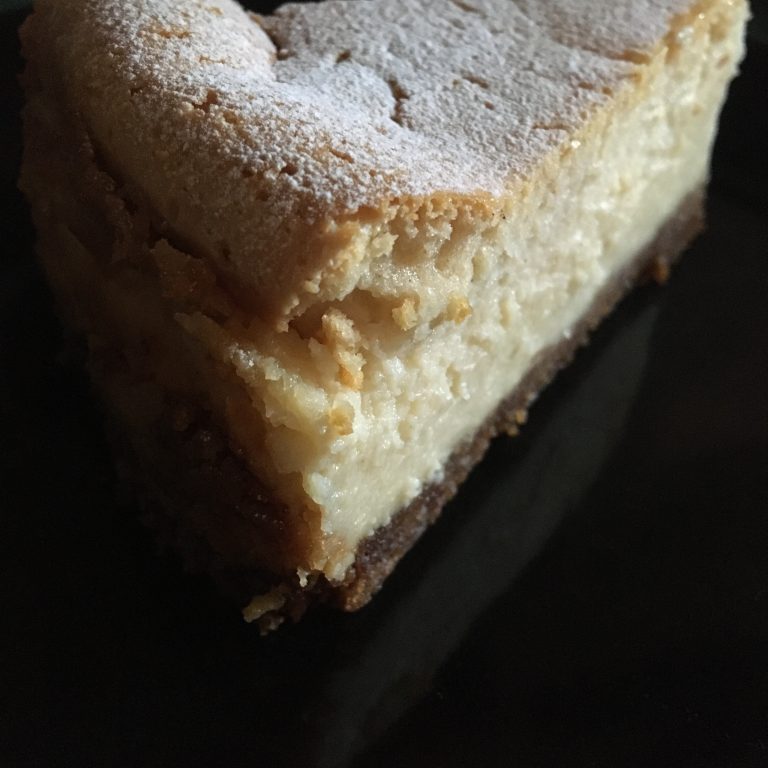
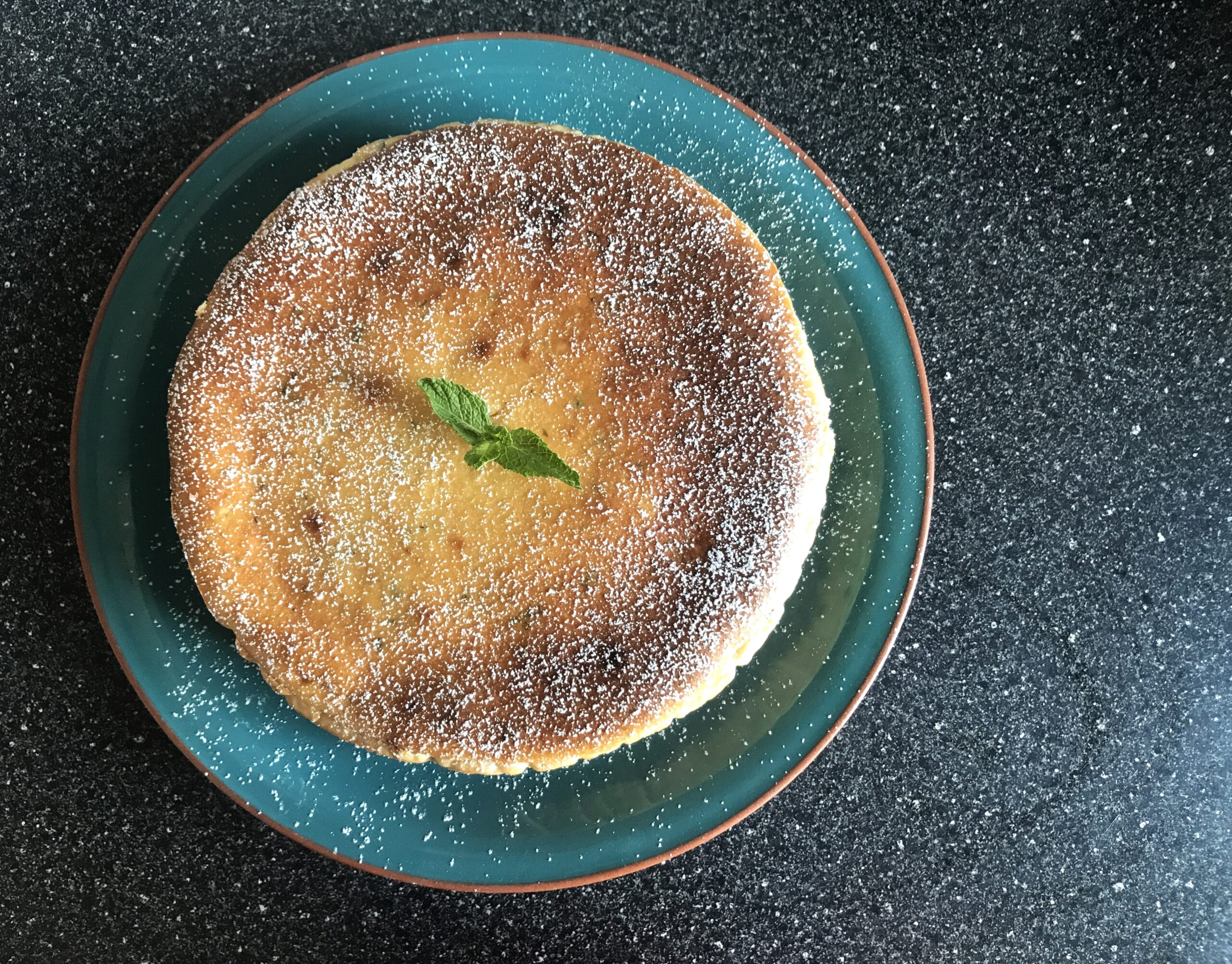
  • the top will be a golden yellow and will be springy to touch;
  • it may have cracked a bit; and
  • there will be a slight wobble in the centre still when you shake the tin.

If too wobbly, cook for a little longer. Then when cooked. Turn off the heat and leave to cool/set in the oven for a further 2 hours.

Finally, cover with foil and chill it overnight in the fridge. If you are feeling brave you can remove it from the tin before chilling but if not, wait until the following day and carefully loosen around the edges with a knife and remove from the tin (depending whether it’s a loose-based tin/spring-form) – it should come away perfectly.  Transfer to a plate and dust with a little icing sugar.  It will keep in the fridge for a couple of days for sure and is better served at room temperature otherwise the flavours clam up if it’s served chilled.


Comments

Hit me up with any variations you've got for these ingredients.

Leave a Comment