




















or, more precisely, walnut vinegar in Fresnay-sur-Sarthe
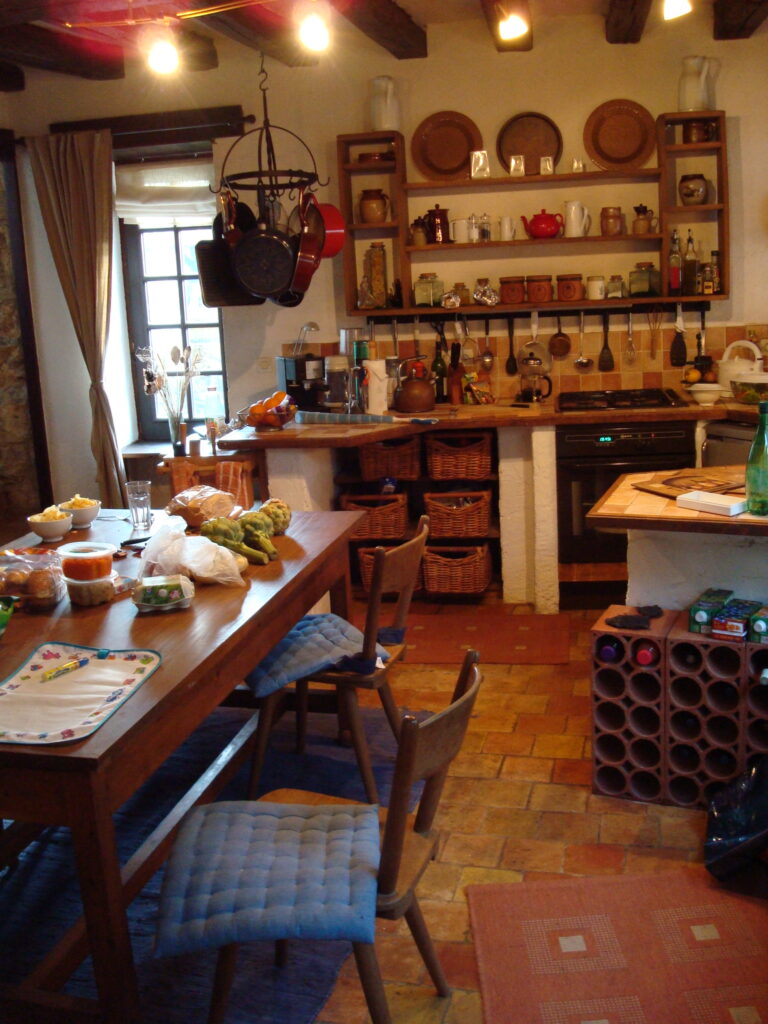
Oooh Fresnay (it’s really only anyone who grew-up in the UK in the 80s who will appreciate that lame nod to one of our erstwhile and very, very dated sitcoms). The town of Fresnay isn’t somewhere I would necessarily have picked to visit in France, unless it had been via a pin randomly popped in a map or if I’d gone off-piste trying to navigate and drive, but a few years’ ago some very good friends of mine invited me to go and spend a few days with them in their folks’ house there. The opportunity to hang out with Nat and Pat is one I never pass up, partly because they are two of my oldest (and most cherished) friends but also because there will always be time set aside to natter, giggle and generally talk nonsense around the kitchen table (a hangover from our uni days) and in France they know a thing or two about kitchen tables. French kitchens also offer a rather lovely take on open plan. The kitchen is my favourite room in the house (unexpectedly); for me, it’s the heart of any home, and, as someone who loves cooking for friends, it’s always a pleasure to be able all to be in the same room while you cook.
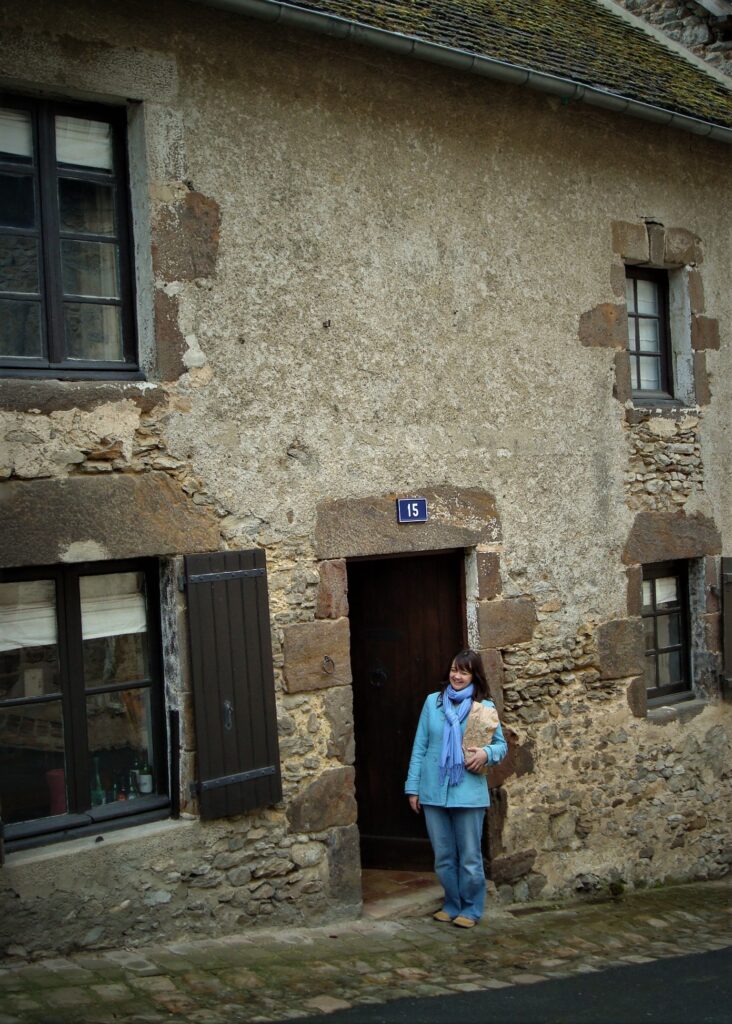
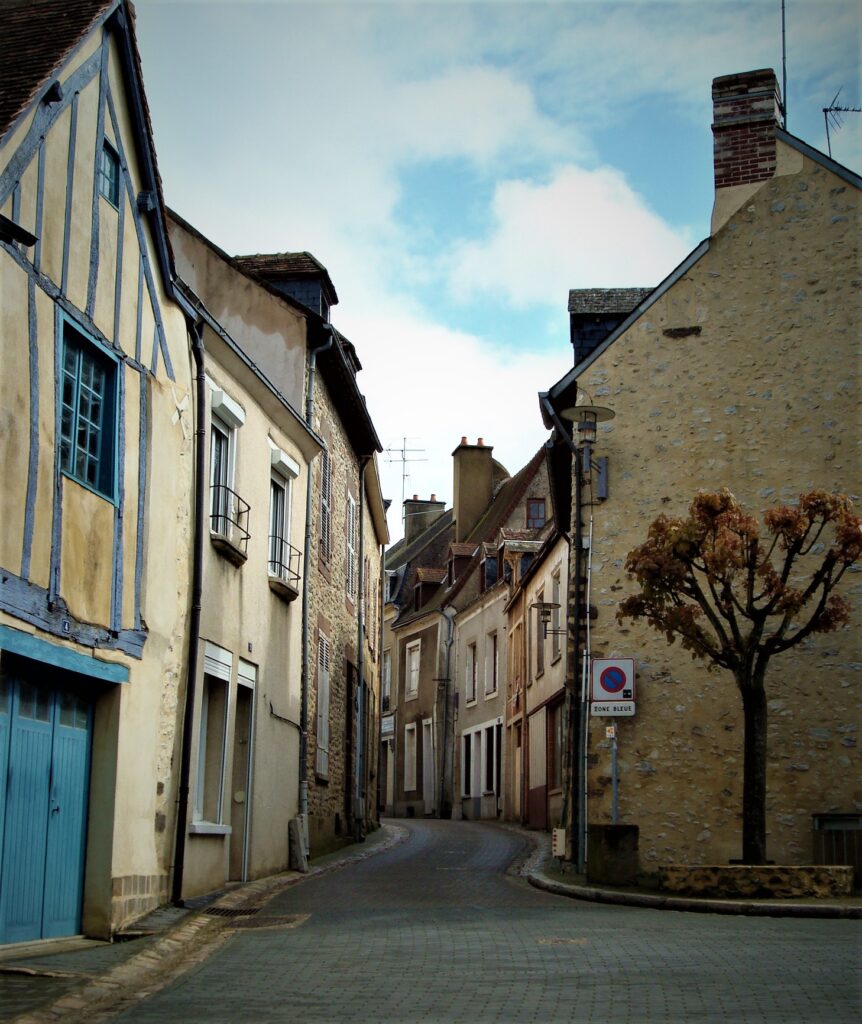
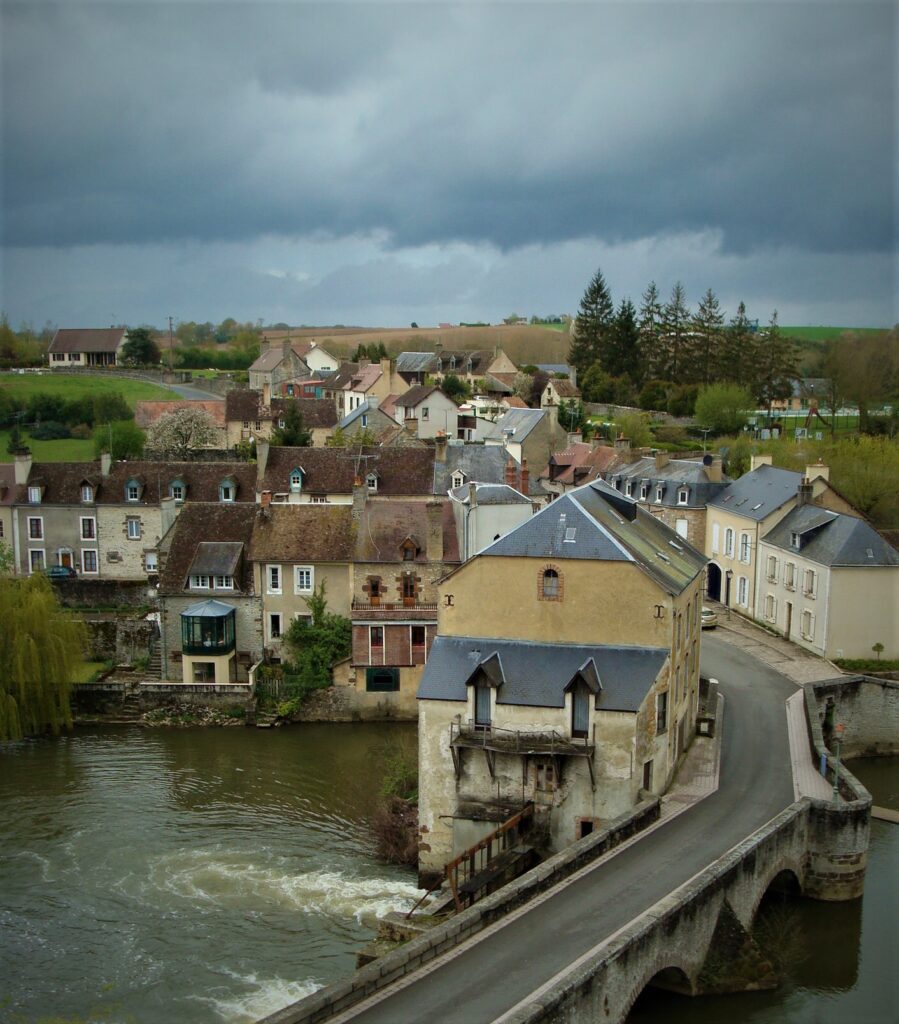
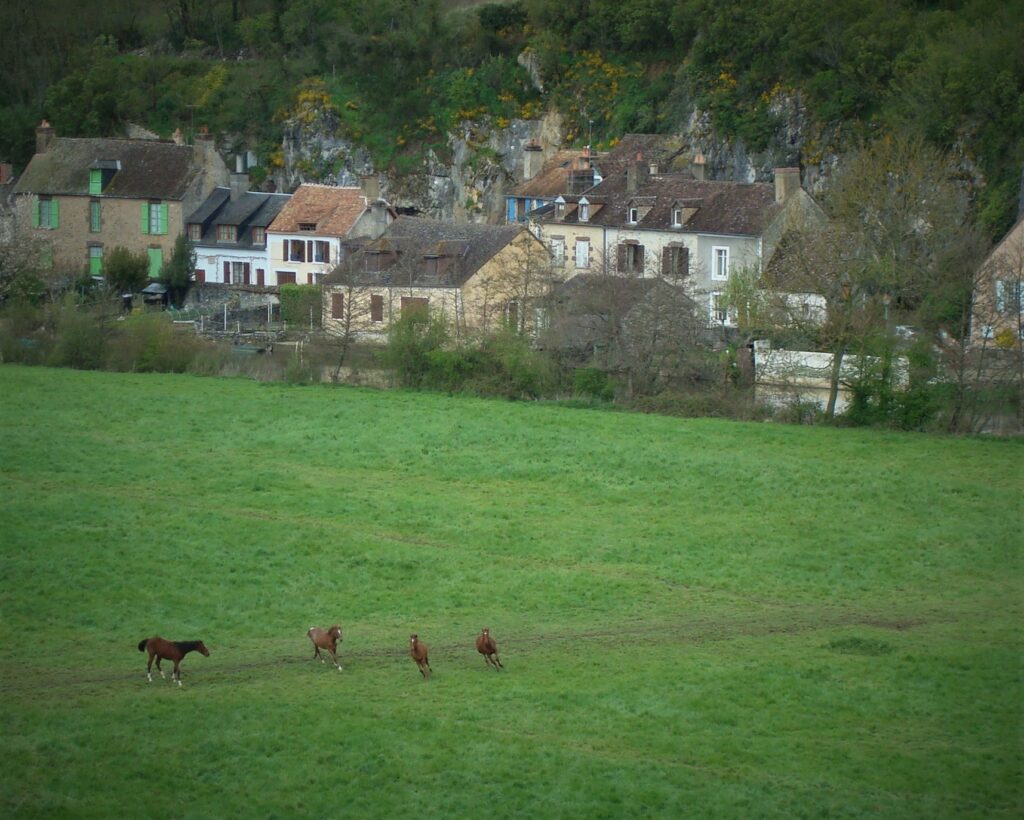
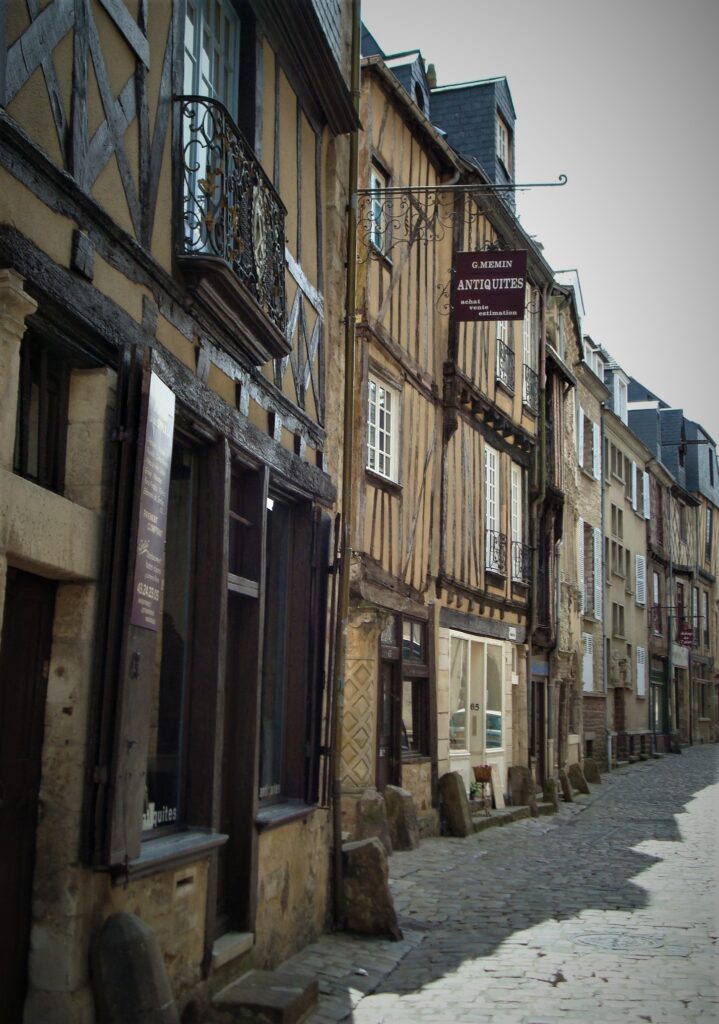
Fresnay-sur-Sarthe is in the Pays de Loire. It’s a pretty place with a river running through it and the standard neatly pollarded trees and creaky timber buildings with jaunty angles. The old townhouse we were staying in sits on one of those intriguingly sleepy French streets where you can walk up and down and all around the neighbouring rues, in fact, and see no one; no one at all; personne. Where are they all? This little mystery never ceases to intrigue me whenever I go to France. The Sarthe region offer lots of nice walking, a great deal of attractive medieval architecture to drink in and also lies just south of Normandie which I was super excited about, having studied it for part of my French A-level (but you may be more excited about it when it comes to cider, cheese and Monet to name a few of Normandie’s enticements).
One of the things I was most excited about, however, and which I’m always excited about when I go to France, frankly, is the morning visit to the boulangerie and it’s particularly nice when it’s only a little stroll away from your front door. When we were at university together in Bristol, we used to treat ourselves occasionally to a French breakfast at home. Baguettes, croissants and pastries, jams, butter and lots of coffee. We’d sit at our rather modest kitchen table and take our sweet time generally just working our way through a lot of tasty carbs. I have always had what might be described as surprisingly hollow legs when it comes to bread and le pain français is no exception.
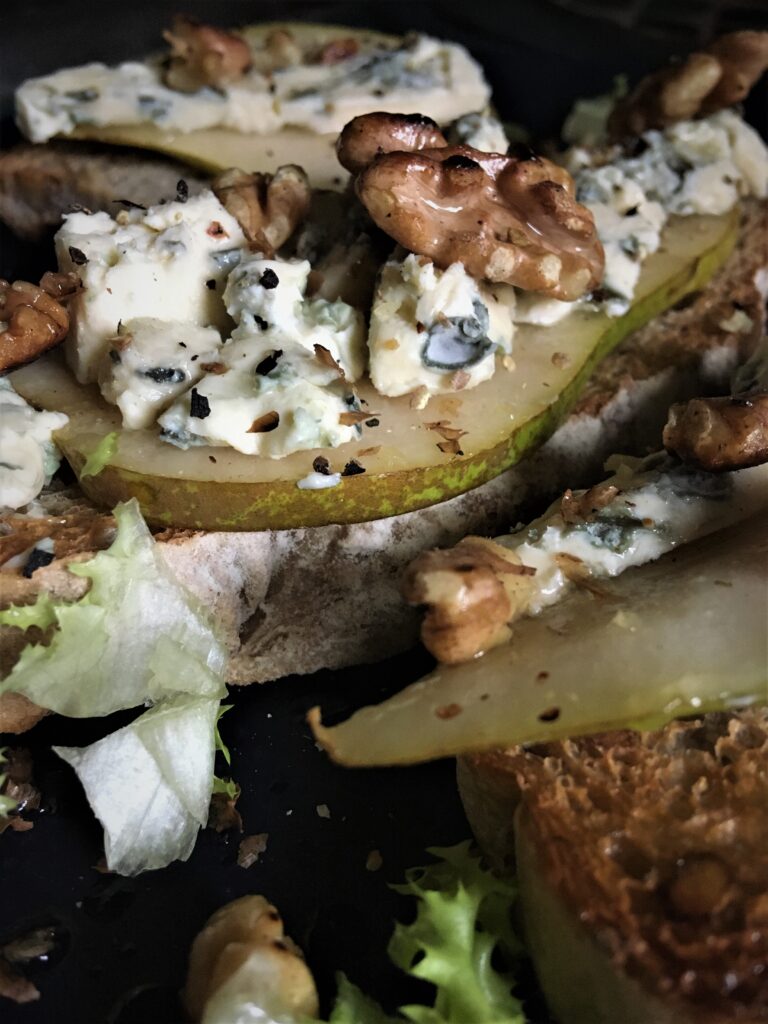
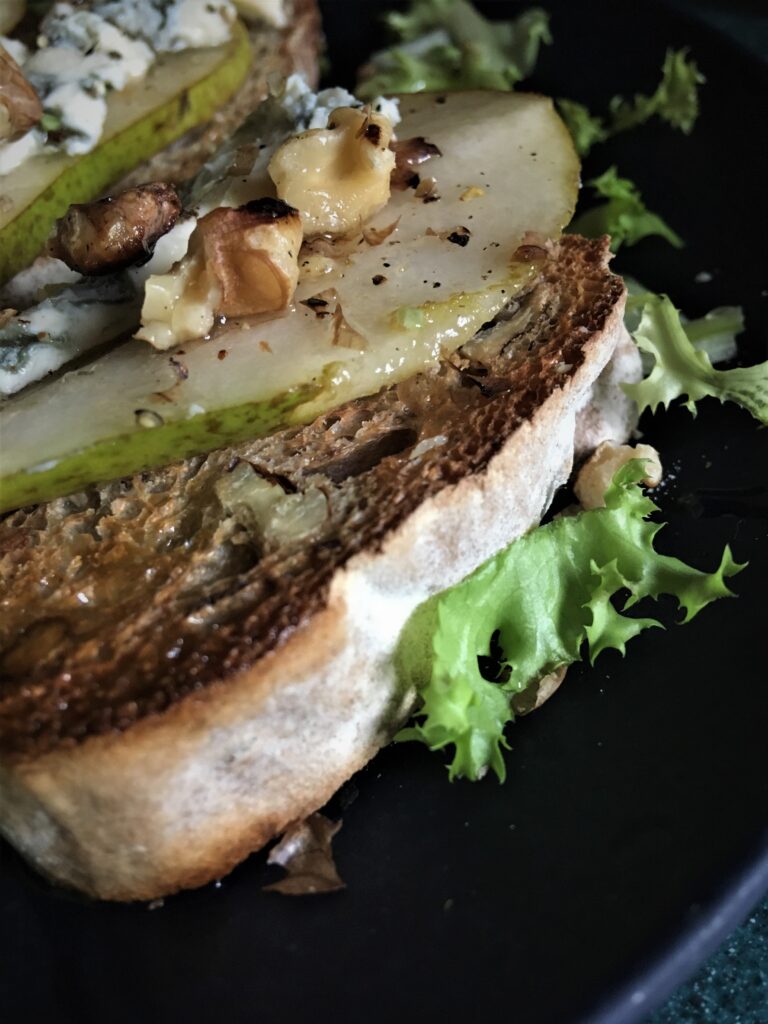
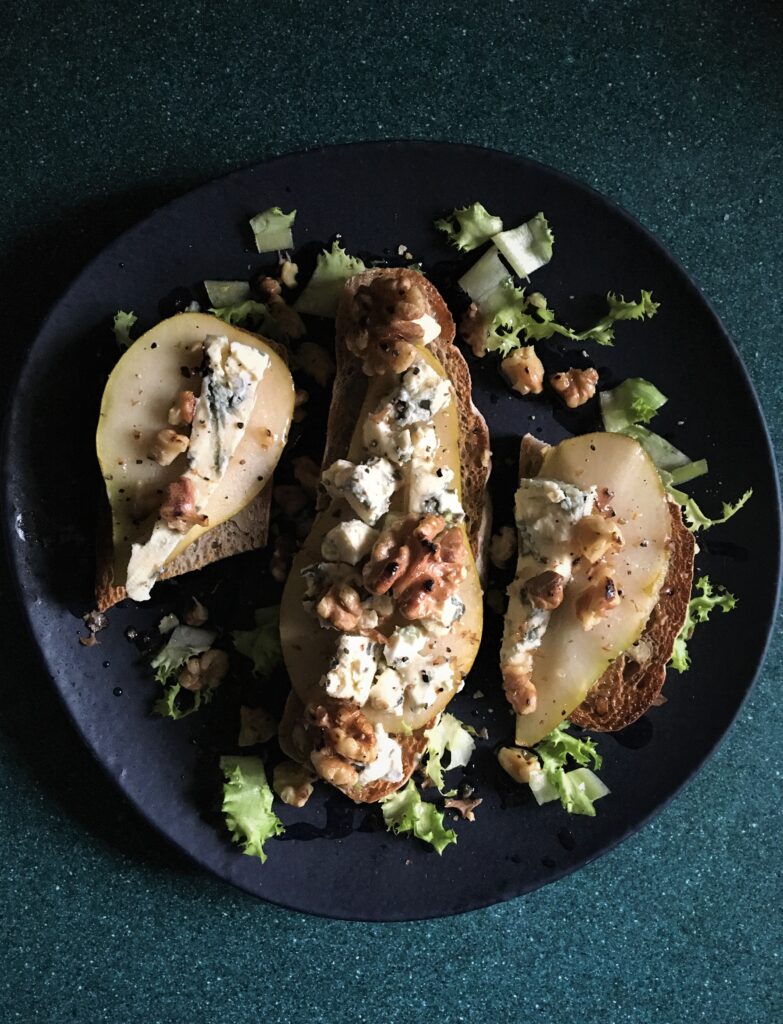
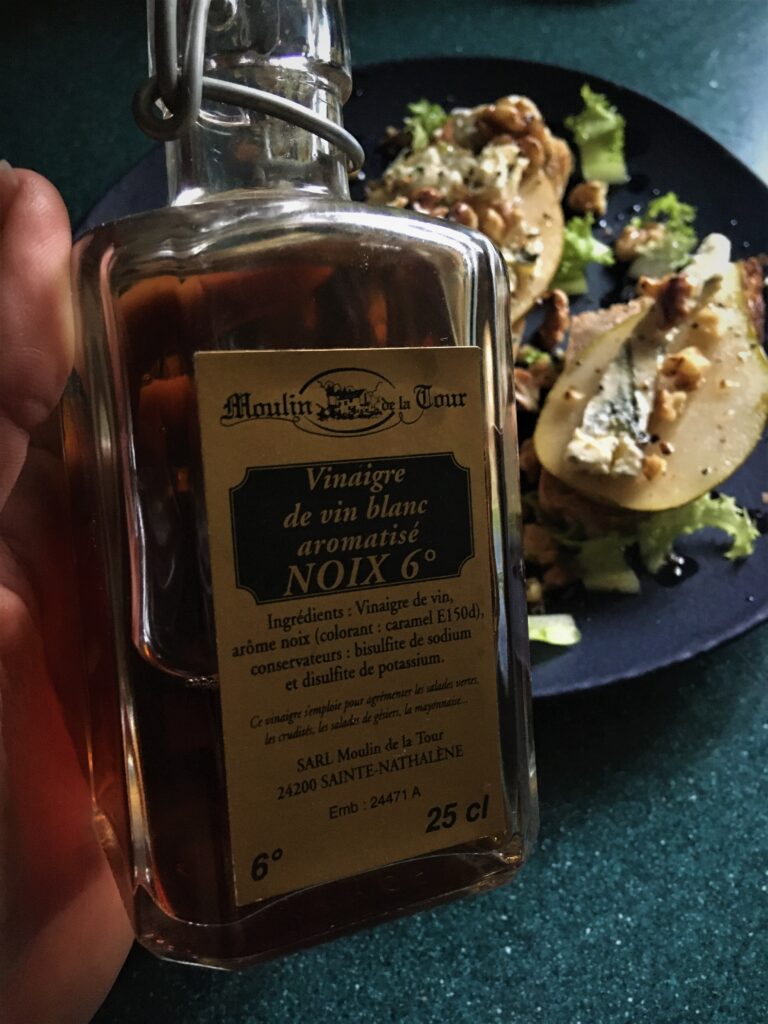
This week’s recipe pays homage to my love of bread, in part, and also to that French skill of putting together simple, beautiful ingredients to create something magnifique. It’s actually a recipe from another old friend (and francophile), who produced it as a starter at a dinner party I went to at hers ages ago. She was recreating her most recent trip to France and this beautifully simple yet delicious dish was one she herself had fallen in love with while she was there. The other homage I’m paying here is to the humble walnut. Last week it was chestnuts and I’m continuing on a nutty theme because the key to this week’s dish is walnut vinegar which is, a secret that needs to be shouted from the rooftops. I adore this stuff because it satisfies three of your senses (which is a pretty good tally): sight – it’s a gorgeous deep mahogany; smell – the aroma is incredible… when you open the bottle it’s like being pelted by raisins and figs while supping a rich dry sherry sitting on an old wooden barrel next to a fireplace… so rich, so deep, so enthralling; then, of course, taste. This is the clever part. When you marry walnut vinegar with walnut oil (which you do in this recipe) what can only be described as some kind of holy transformation takes place and it’s like drinking liquid toasted walnuts. Don’t be put off by the vinegar. It’s aroma leaps out of the bottle but the flavour is softer. This little dressing melts into the components of the dish, bathing everything in a warm, walnutty glow. The way it caresses the blue cheese is, frankly, to die for.
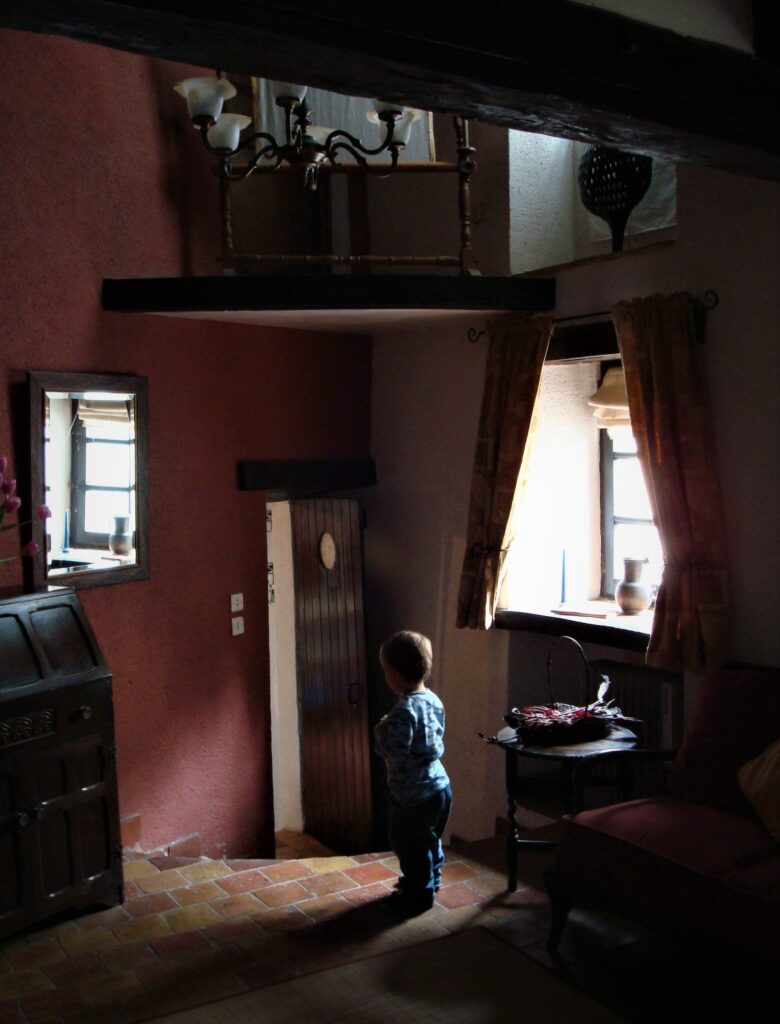
The other reason we spent a lot of time in the kitchen on our trip was that Robin (their son; my godson) was very little at the time and so home-cooking was more the order of the day. Not only does that make life easier but in a lovely big French kitchen, it was a delight. I’m a sucker for a market or, in fact a supermarket. We had to keep it vegetarian and, apart from this cheeky little walnut number, we enjoyed making some classic dishes like rich French onion soup, gooey quiches crammed to the max, and goat’s cheese salad – I mean, let’s be honest, there’s nothing quite like a warm, supple chèvre when it yields to a forkful of frisée.
We ate very well indeed with the fam all tucking in around the kitchen table. I don’t have kids of my own and so being an extra arm of this truly lovely family means the world to me. Robin (and his brother – who wasn’t around at the time of this trip…) are an absolute delight and I am a very proud auntie. In France, Robin had just learned to cycle and was razzing around cheerily “bonjouring” anyone and everyone he passed by. He’s now a teenager; a skater dude who is into punk and died his hair pink during lockdown. He and his bro are just awesome; total legends who make me laugh a lot. Hopefully Covid will eventually allow a long overdue visit so we can all sit around the table nattering, drinking (not the boys) and giggling into the night.
This dish is so simple to prep but really delivers on flavour (and aroma). Effortlessly elegant and understated… very French, in fact, it makes a great starter. I also shrink this recipe and use it for festive canapés as it’s provides the perfect winter nibble that transports you to a cosy fireside in one delicious little bite.
I’ve also included a recipe for Walnut Bread which is taken from the awesome Richard Bertinet’s book, Dough. This is a must-have recipe book for anyone who loves bread. My copy is very well-thumbed, somewhat dusted with flour and a bit encrusted with dough around the edges but I love it and return to it again and again.
If you liked this recipe, you might like...




- « Previous
- 1
- …
- 10
- 11
- 12