




There are plenty of croissant recipes out there.  The one I used was from a well-thumbed book of mine, Exceptional Breads by Dan Lepard and Richard Wittington.  It worked amazingly well and I’ve copied it below (although I’ve adapted it for kneading by hand as I don’t own a mixer).


Makes: c. 16

Takes: well, not gonna lie, takes a little while – you make the dough on one day, rest it in the fridge overnight, then carry on the next day – so, you need time but it’s actually not that long.  A bit of an afternoon then the following morning, say.  There are resting times too 2hours on day 1 then up to 3 hours again on day 2 (if you are an early riser, then you could easily make these in time for breakfast – or at least to have in the car on your way to a climb ?).

Bakes: 10 mins at 200C (GM6), then 20-25 mins at 150C (GM2)


Ingredients

  • 7g dried yeast (fast action)
  • 500g strong white flour (+extra for dusting the worktop)
  • 110ml water (warmed to 20C)
  • 110ml milk (10C)
  • 20g Maldon salt (finely ground)
  • 70g caster sugar
  • 250g unsalted butter (firm but not rock solid)
  • 1 egg yolk mixed with a little milk (for the glaze – this doesn’t go into the mix)


Method

Make a sponge: in a bowl, whisk together the yeast, 100g of the flour and the warmed water.  Cover the bowl with cling film and leave in a warm place for 2 hours, or until the sponge has risen by at least one third and is clearly active, with lots of bubbles.

Put the remaining flour, the milk, salt and sugar in a mixing bowl and add the sponge (when it’s ready).  Mix together to combine then drop the dough out onto a clean, lightly floured worktop and knead for 8-10 minutes until soft and pliant.  Return the dough to the (cleaned) mixing bowl, cover with cling film and put in the fridge to rest overnight.

The next day, put a sheet of cling film on your worktop and dredge with flour.  Lay the butter, which should be firm but not hard from the fridge, on top – if your butter is too soft, you will not be able to control it.  Sprinkle a little flout on to the butter and, with a rolling pin, knock it out into a rectangle about 1cm thick.  Wrap with the cling film and place in a cool part of the kitchen (if your kitchen is hot, return the butter to the fridge for a few minutes).

Take the dough out of the mixing bowl and put it onto a lightly floured worktop.  Knock back with the rolling pin.  Scatter more flour on top of the dough and on the rolling pin, then roll out, turning frequently, into a rectangle about 1cm thick.  Brush off any obvious flour, then put the butter in the centre.  Fold the edges of the dough over the butter so that they slightly overlap at the top and the butter is completely enclosed.

Scatter some more flour over the top.  Rolling always away from you, roll the dough out into a long rectangle about 67cm x 40cm.  Fold one end in by a sixth and then the other end in by a sixth.  Fold both ends over again by a sixth so that they meet in the centre.  Now fold the two together, as if you are closing a book.  Turn the dough so the fold is to one side.  Roll it out gently away from you again into a long rectangle about the same size as before.  Fold one end of the dough in by a quarter and then the other end in by a quarter so that they meet in the middle.  Now fold the two together, as if you are closing a book.  Seal the edges with pressure from the rolling pin.  Wrap in cling film and refrigerate for 30 minutes to 1 hour.

Make a triangular template 17.5cm x 17.5cm x 15cm from card.  Roll the dough out on a floured surface to as neat a rectangle as you can, about 75cm long, 30cm across and 4mm thick.  Trim to give straight edges, then cut into two pieces lengthways.  Using the template, mark out and cut 8 triangles from each piece of dough.

Lay the triangles, one at a time, on the lightly floured surface with the narrow point away from you.  Roll up, finishing with the point in the middle and underneath.  Lay the croissants on large baking trays lined with non-stick baking parchment, leaving space around them to allow for expansion.  Cover with cling film and leave in a warm place to rise until doubled in size, which should take 1-2 hours.

Preheat the oven to 200C.  For the glaze, whisk the egg yolk and milk together.  Brush lightly onto the croissants, brushing from the middle outwards so the glaze does NOT get between the dough layers (this could cause them to stick and would impair the uniform rise).  Bake in two batches in the centre of the oven for 10 mins, when they will have expanded and started to colour.  Reduce the oven setting to 150C and bake for a further 20-25 mins, or until risen and golden brown.  Cool on a wire rack, arranging the croissants so they aren’t touching.


Or, if you are impatient like me, just have one hot from the oven with a coffee (and maybe a spoonful of jam).  I cannot stress enough how much these a) looked like the real deal – I got so excited when I saw them rising in the oven; b) tasted like the real deal; and c) made my kitchen smell like a boulangerie.  Massive win!

France, or more precisely, Fontainebleau, or, more precisely, Font… and the all-important pastries

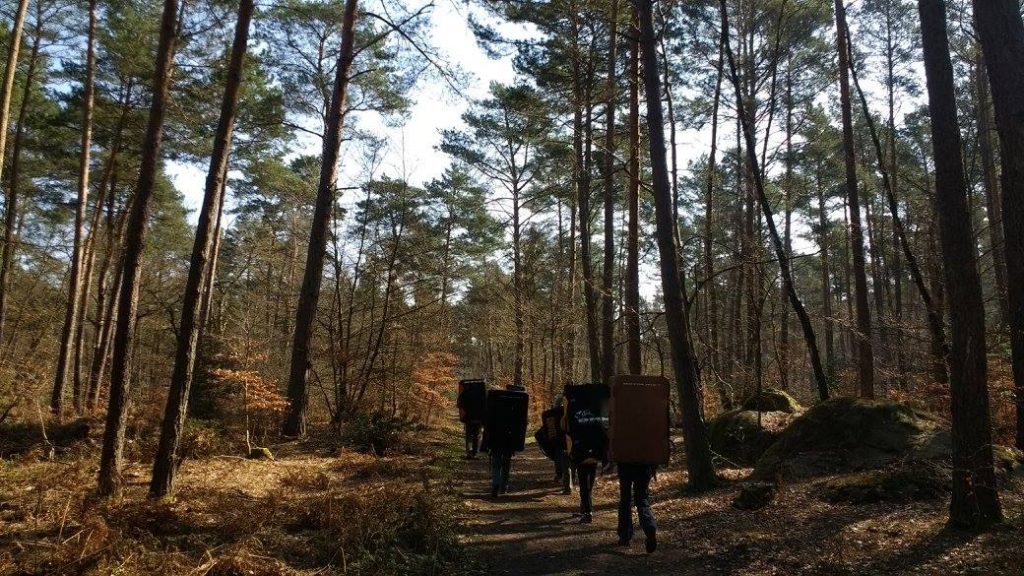
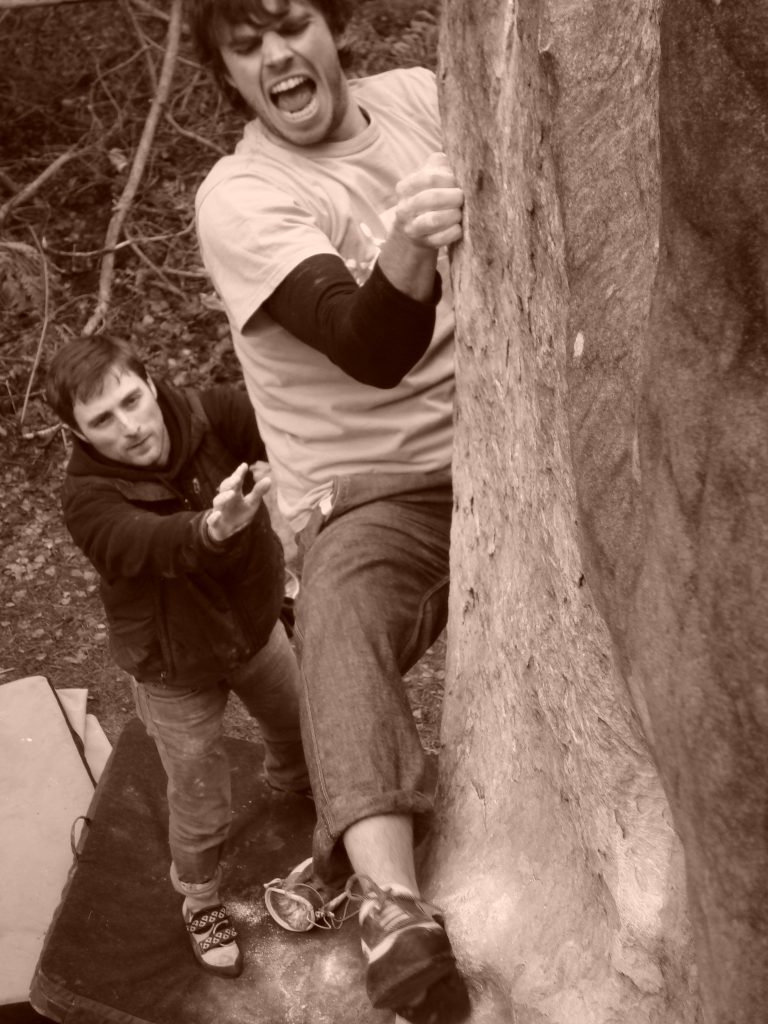
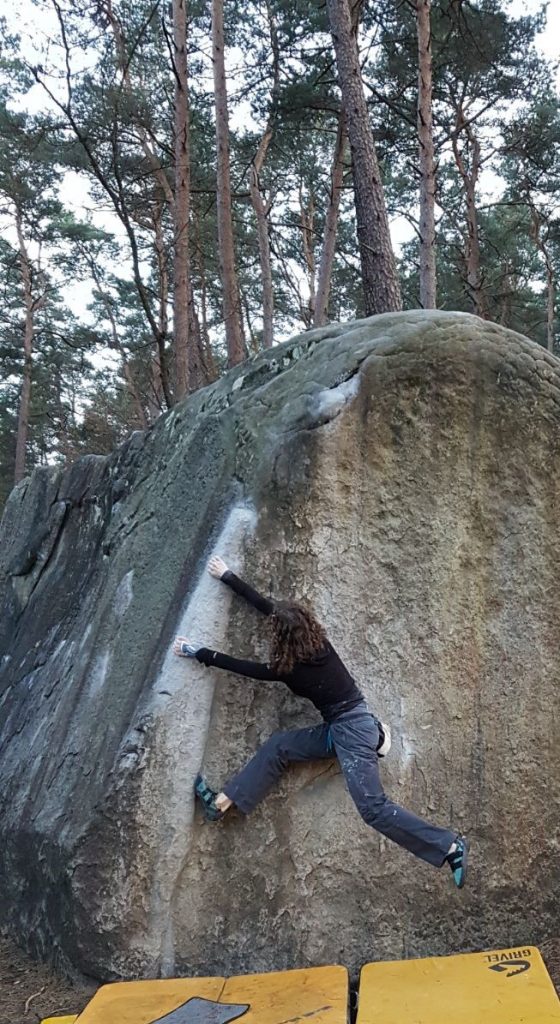
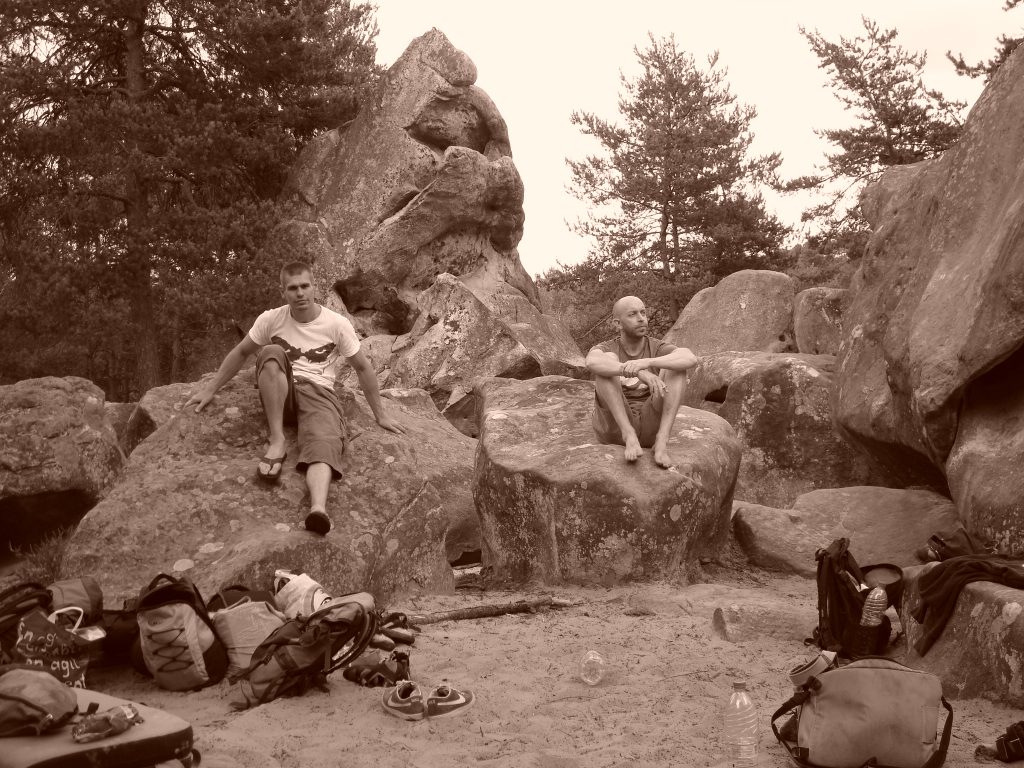
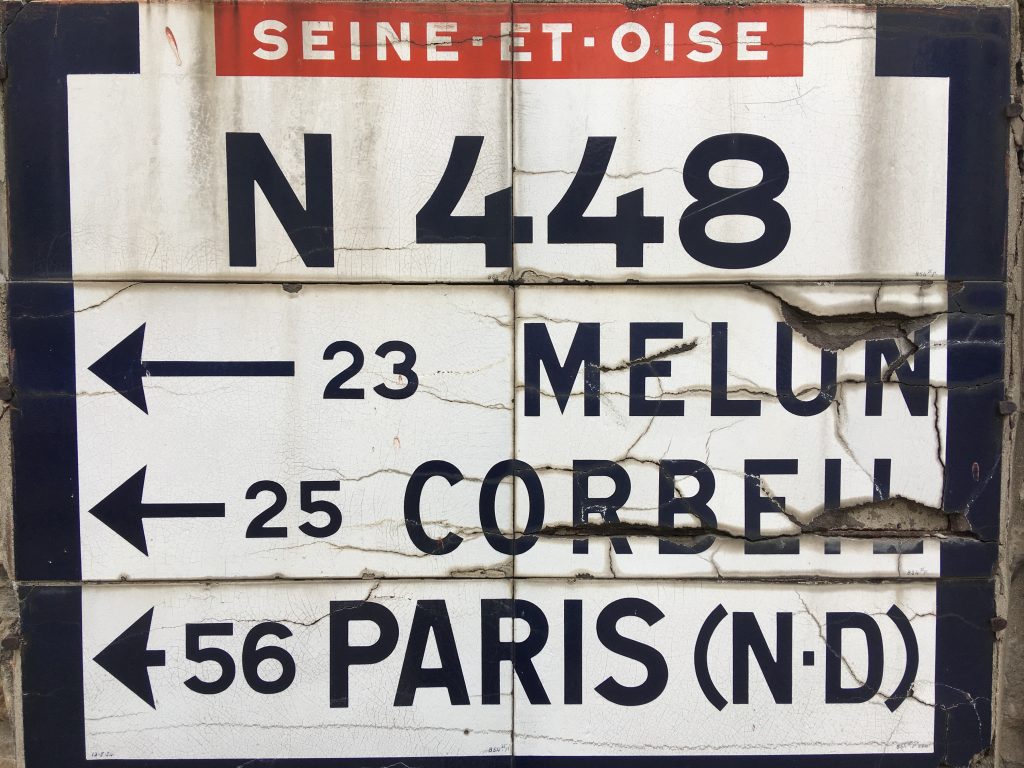
I’ve been to France a fair bit for my wine travels and for bits and bobs of sightseeing but the bulk of my visits latterly have been to go bouldering in the beautiful forest of Fontainebleau (referred to by climbers as “Font”).   There is something very special about this place and over the years (14 visits to be precise and in all weathers) I’ve come to get to know it rather well (although I still get lost on half of the approaches but that’s pretty standard).  There’s a very particular kind of stillness and a certain kind of magic to this place and, even if you aren’t a climber, Font’s wonderfully varied terrain is perfect for a “forest bath” in any season.

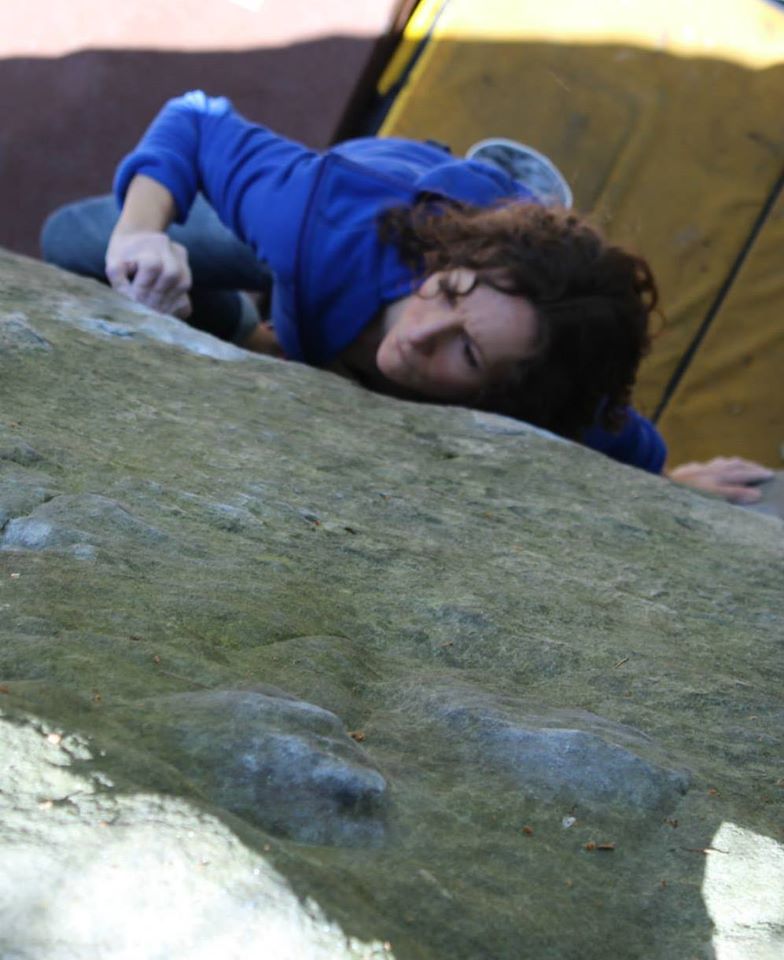
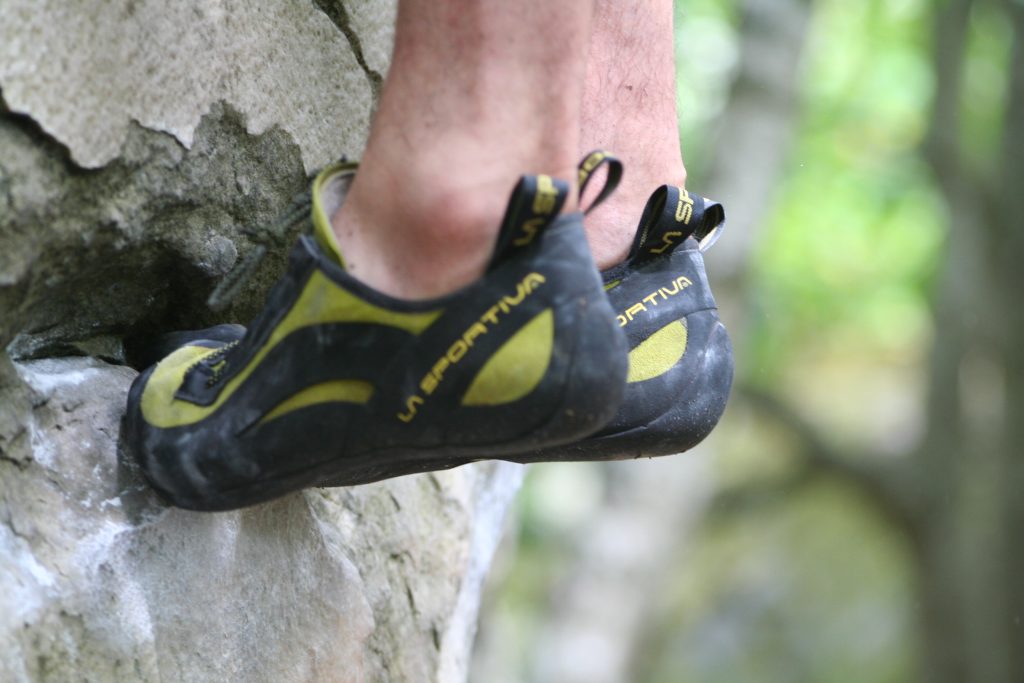
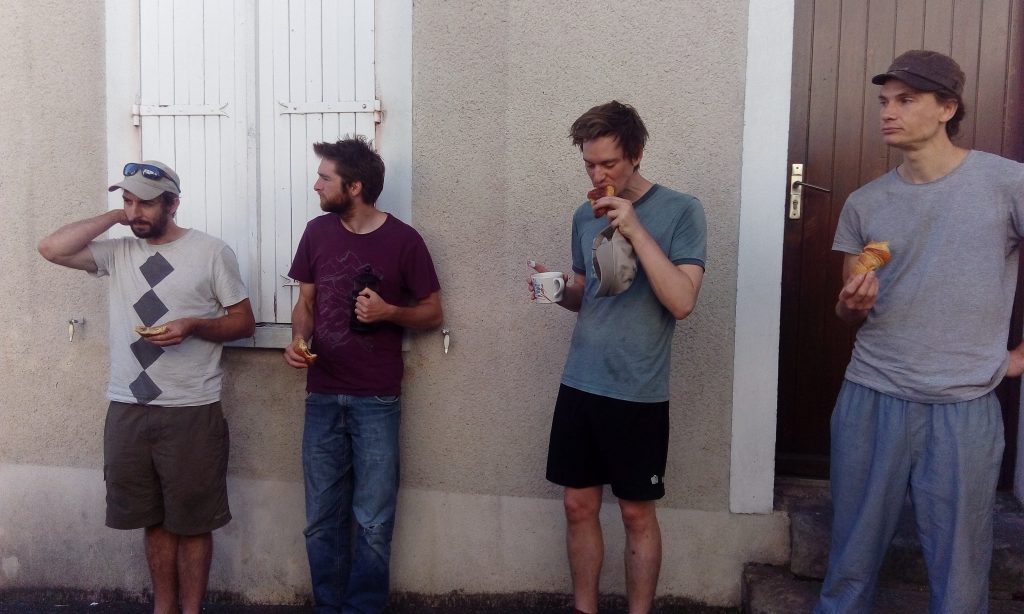
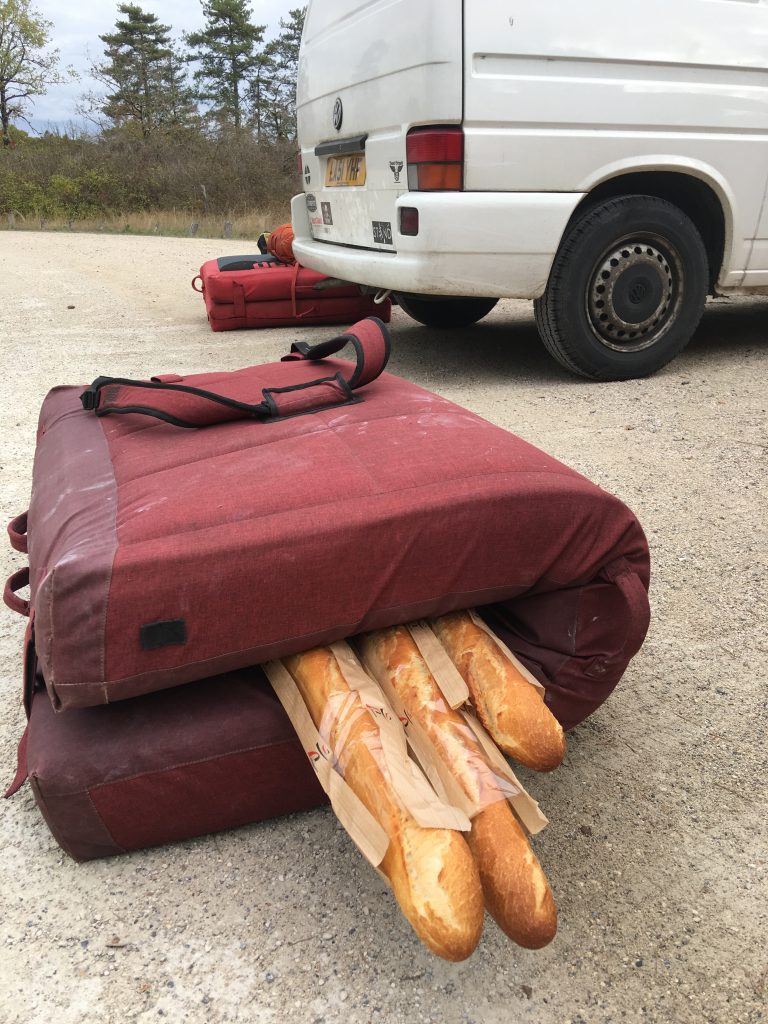
As soon as you start walking along any of the approaches with your boulder mat strapped to your back any niggles on your mind very quickly disappear.  Then, when you put your shoes on and they make that familiar sound when they touch the sandstone as you try some moves, you feel like a kid again.  Then after a few climbs you remember you’ve got a fresh chocolate almond croissant in the pocket of your down jacket and at that point life couldn’t get much better!  Like the beer at the end of a day’s climbing, the visit to the boulangerie every morning quickly becomes part of the routine.  This year will be the first in a while that I’ve not been to Font but… what better time to try to master the art of the croissant than now while I’m stuck at home!

Croissants fall into that category (along with things like filo pastry or puff pastry) where you can be forgiven for thinking that life is too short and you are more likely to enjoy a better one by buying it but it’s all relative and if I thought like that about cooking, I’d never cook anything.  I’ve never attempted to make croissants before; “needs” must however and, actually, although I approached this exercise with some trepidation – the kind with the voice saying things like, “yeah I very much doubt you’ll pull this off what a waste of time (and butter) that will be” – I’m pretty chuffed with the result.   Yeah, they take a bit of time for sure but actually not as much as I thought.  For me, the hardest part was working out how to divide the rectangles into triangles because this involved some geometry skill and maths is not my strong point.  Anyway, lamination win, baby!  Crispy, flaky, fluffy AND the flat smells like a boulangerie!  Fire-up the aeropress and get dipping.  Next time i’m going all-out… chocolate.almond.croissant because essentially they are the only three words you need to have in your head when it comes to buying pastries in Font.  As always, however, and in the same way you would approach a climb, start small and build.

If you liked this recipe, you might like...

hels kitchen recipes climbing travel van life

Week 22 – The Dolomites

hels kitchen recipes climbing travel van life

Week 10 – Morocco

hels kitchen recipes climbing travel van life

Week 1 – Italy

hels kitchen recipes climbing travel van life

Week 43 – Cornwall

Comments

Leave a Comment