
Firstly, the where
Wine folk often talk of terroir – this is one of those untranslatable, “industry” words which gets bandied-about a lot (usually with a few mysterious, wafting hand gestures). It is a combination of soil, climate, microclimate, yeast, “je ne sais quoi”, magic, fairy dust, there being an R in the month, etc. It basically means everything that is going on in that particular area to create that particular wine; but it is essentially soil and climate. Soil and climate are key to sherry wines but that’s not particularly unusual. The so-called sherry triangle is located near the Guadalquivir river and takes in the towns of Jerez, Sanlucar de Barrameda and Puerto de Santa Maria. Whilst vines are grown on sand and clay in some parts, there is a predominance of chalk and limestone in the heart of the region and a special combination known as albariza – a very compact soil with a high chalk content which contributes to the best wines. These two factors mean that when the soil dries hard (as it does in the Spanish sun) it prevents evaporation of precious water but the chalk content allows for good drainage around the vines. There are over 10,000 hectares of vineyards in this “triangle” and the best wines hail from the hills between Jerez and the Guadalquivir.
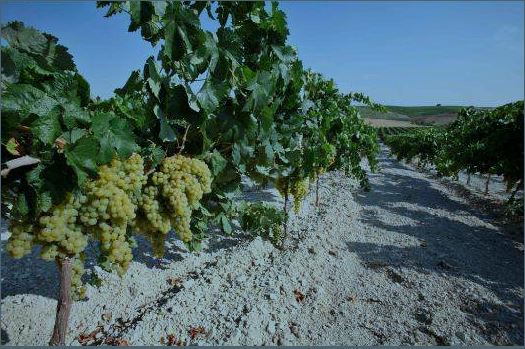
(photo cred. Social Vigneron)
The climate can be described as sub-tropical (and anyone who has been to southern spain in the summer will attest to the heat!). Apparently the sun shines c. 300 days in any year. Rainfall is relatively good for Spain but happens generally between October and May and therefore water has to be carefully stored (collection troughs are dug between the vines). This means that the grapes have a very long ripening season and they end up with high acidity (which the chalk content contributes to) and high alcohol (which the sun contributes to) – both of which are key to the sherry making process.
Secondly, the what:
It is believed that before the invasion of phylloxera (and it is described as an invasion) there were many more varieites that went into sherry production. Essentially it’s now just these two:
Palomino (apparently named after a medieval knight – I rather like that). This is a pretty insipid varietal when grown elsewhere (Cyprus, for example where it is vinified to make light wines (as well as sherry-style wines); and in southern France (where it is known as Listan)) but it just loves this chalky part of Spain which enables it to deliver a pretty solidly high acidity, so crucial for the finished product. Accounting for 90% of the yield, Palomino is the mainstay of sherry production. It’s a bit temperamental in that it’s thin-skinned so is prone to splitting/rot and therefore harvesting at the right time to ensure the correct balance of acidity and alcohol can be a challenge; plus, a lot of this is done by hand because it’s such a delicate variety. After picking, the grapes are pressed immediately as it’s still pretty hot in September (when the harvest takes place). To retain Palomino’s optium acidity, it’s crucial that the grapes aren’t left lying in the sun, so little pressing stations are set up in the vineyards if it’s far to the winery, so as to preseve the freshness for the juice.
The other key player is Pedro Ximenez or, “PX”, as it has come to be known, (which makes it sound less like a character from the Princess Bride but no less fun). Interestingly it also has a military connection as it was possibly named after a German solider in Charles V’s army who was said to have brought this varietal to Spain from Germany (it’s since been traced to the Canary Islands). Anyway, PX is the guy who brings the sweetness. Sometimes mixed with moscatel (another varietal used to make sweeter wines) it is rich, dark and raisiny and delivers the seductive syrupy side of things. PX tends to be planted on the sandier/clay-based soils and when the grapes are picked they are left to dry in the sun to concentrate the sweetness, as happens with many a sun-dried fruit.
Thirdly, the how:
I won’t nerd-out on the scientific detail of the harvest/pressing/fermentation but here are the main points to note:
- Palomino and PX are pressed and fermented separately.
- The pressed juice is fermented as a dry wine – sweetness is added later in the process.
- The tanks (mostly stainless steel these days) that hold the pressed wine while it ferments are kept at higher temperatures than standard white wine. This contributes to the development of certain constituents that give sherry its distinctive taste.
- The final version of sherry is determined after fermentation (usually December/January after the harvest) depending on what is going on in the tanks. It it isn’t necessarily the case, therefore, that a fino is only made from Palomino although it is generally the case. Marks known as “rayas” are made on the tanks to show what type of sherry wine the contents are destined to become.
- Fundamentally, there are two different categories – fino wines and oloroso wines (unoxidised and oxidised) or, if you like, lighter and darker.
- The next key factor in sherry making is “flor”. This is a layer of yeast that occurs naturally around these parts and grows on the top of the fermenting wine . It sounds (and looks for that matter – see below) distinctly unappetising but is, in fact, crucial to the development of the sherry that lurks beneath it. It provides a sort of blanket on top of the wine, preventing oxidation. Much the same as any yeast involved in winemaking, the flor can vary from winery to winery. I like the notion that at some point this seemed appealing to someone – that the drink beneath it would be lovely with a slice of jamon but this is how culinary discoveries happen. Flor is particular and only operates in a very narrow alcohol range between 14.5 and about 16%; below it becomes inactive; above, it dies off. It’s much the same as a yeast in normal wine making it’s just that it forms a thick, breadlike layer on top of the liquid which ferments underneath it. That being said, it is only really deployed for the lighter styles.
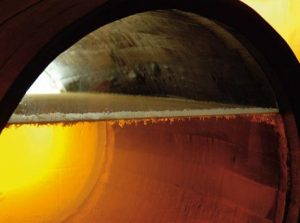
(photo cred. Social Vigneron)
- Once the different styles for the potential wines have been selected, they are fortified (“adding alcohol”) with an equal mixture of spirit and old wine (the old wine is added so that the injection of spirit isn’t too much of a shock apparently!). Finos are fortified up to to 15.5% so the flor can still flourish; Olorosos, to 18% which inhibits flor. Wines destined to be oloroso need to lose the flor so that they can “oxidise” (in a controlled manner) enabling them to develop their disctincitve darker colour and nuttier flavour. This means that they are sometimes stored outside. Back in 17th Century, when winemakers were experimenting with fortifying the wines (to make something that could compete with port wine) this was how oloroso “happened”. They saw that adding alcohol killed off the flor and led to a different style of wine – an oxidised one. This was called olorso – “pungent” – or, perhaps “fragrant” is a nicer word.
- Now we come to the aging proper which takes place up to two years after all the above. Sherry isn’t sold as a vintage wine and, as such, it is matured in a complicated stacking system known as a solera which facilitates factional blending to ensure consistent quality and flavour profile. Say, what… this means that whenever you buy it, it will taste of that house’s style. It will pretty much always taste “the same” – as opposed to oh yes the ’82 was so much better than the ’83 etc. In the cellars in Jerez, rows of barrels are stacked in layers and wine to be bottled is drawn from the lowest row (actually called the solera – the other rows are numbered “criaderas”). The lowest row contains the oldest blend. This is then topped up from wine in the row above and so on, with the newest wine added to the very top row. Wine is run from each barrel in the row to each barrel in the row, and then into each barrel in the row below in a process knowns as “running the scales” and no more than a third can be drawn from one barrel at any one time (and it’s usually around 20%). All this means is that some soleras contain very old wine indeed (although a perpetually decreasing amount). A fino will be drawn from the solera after 5 years. Some premium wines will be drawn after 25 years. Only in an exceptional year would some wine be kept back to age as a vintage but this is rare and as a result, expensive. It is believed that the solera system came about because, when meeting orders, merchants would bottle a small amount from a barrel and top that barrel up with newer wine.
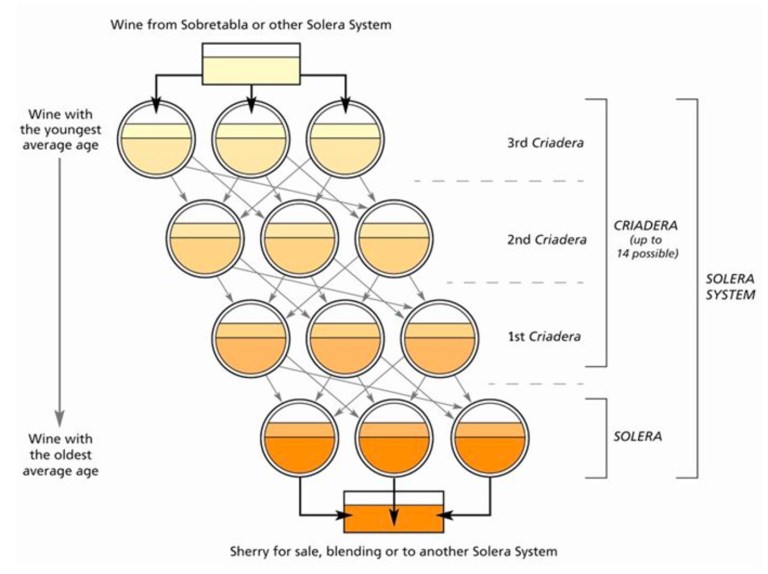
(image from Wine Decoded)
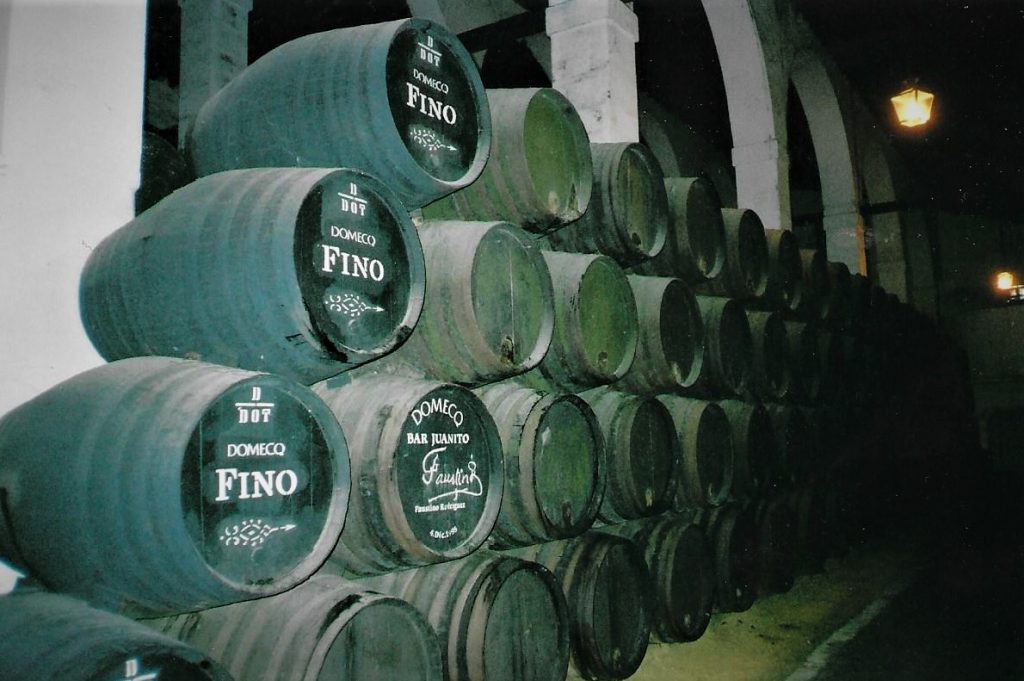
Solera 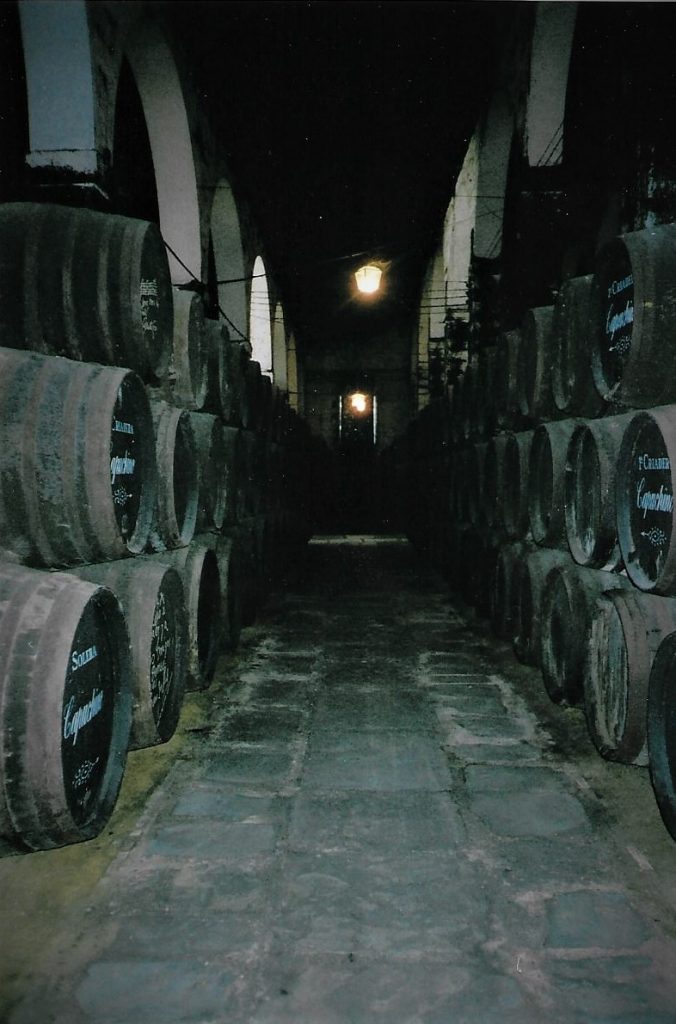
sherry cellars
- Before bottling, the wine will undergo further processes, including any sweetening that is required. This is done by adding PX/Moscatel or Palomino pressed wine from grapes concentrated in the sun before pressing or concentrated grape juice.
And what does this produce… a smorgasboard of vinous delights. Not as complicated as some countries’ wine taxonomy but worth delineating for sure. It’s essentially Finos and Olorosos but there are a few variations within these two camps (I’ve highlighted the main ones on the next page…). Each Sherry type will sit in its own solera system.
When it comes to matching sherry with food, there’s a saying that if it swims you should drink fino, if it flies, amontillado, and if it walks, oloroso. Well, that’s essentially true but I wouldn’t insist that you restrict your palate too much. Some share similar food matches but there’s a lot of joy to be had mooching from tapas bar to tapas bar discovering all sorts of random matches; the Spanish are pretty experimental when it comes to this kind of thing.