
Luke Jones – Margalef, Spain
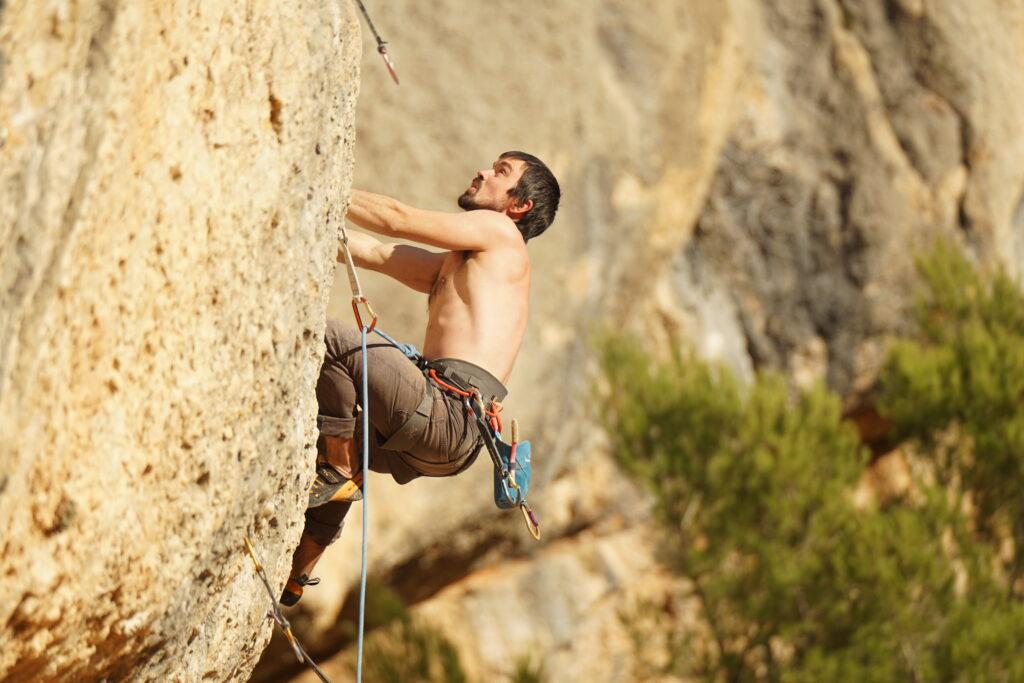
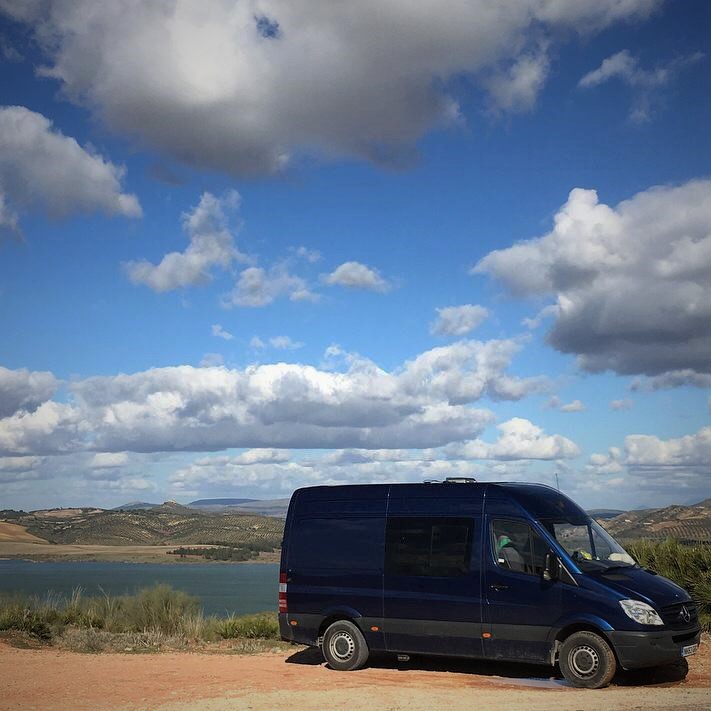
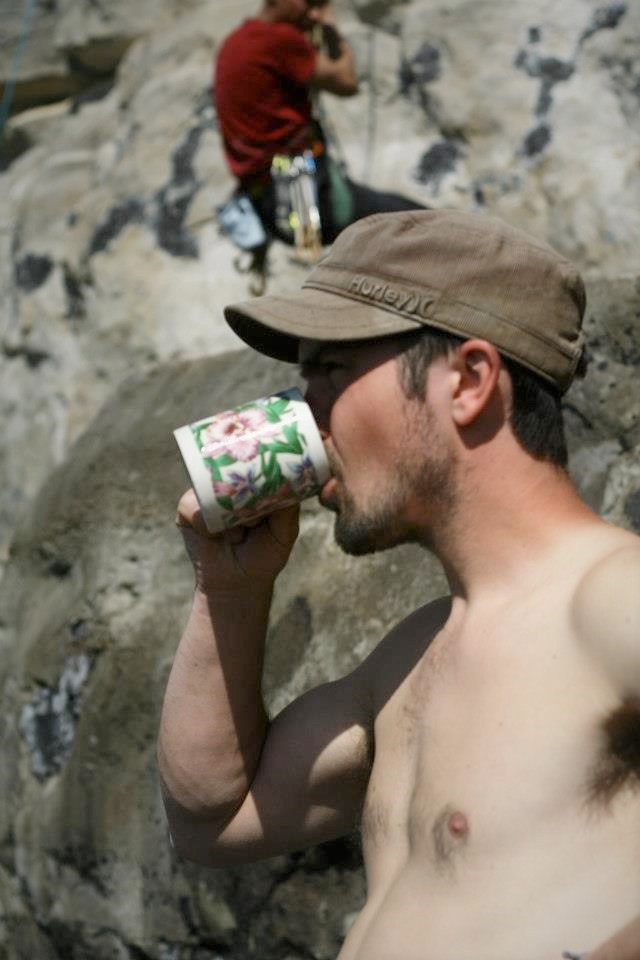
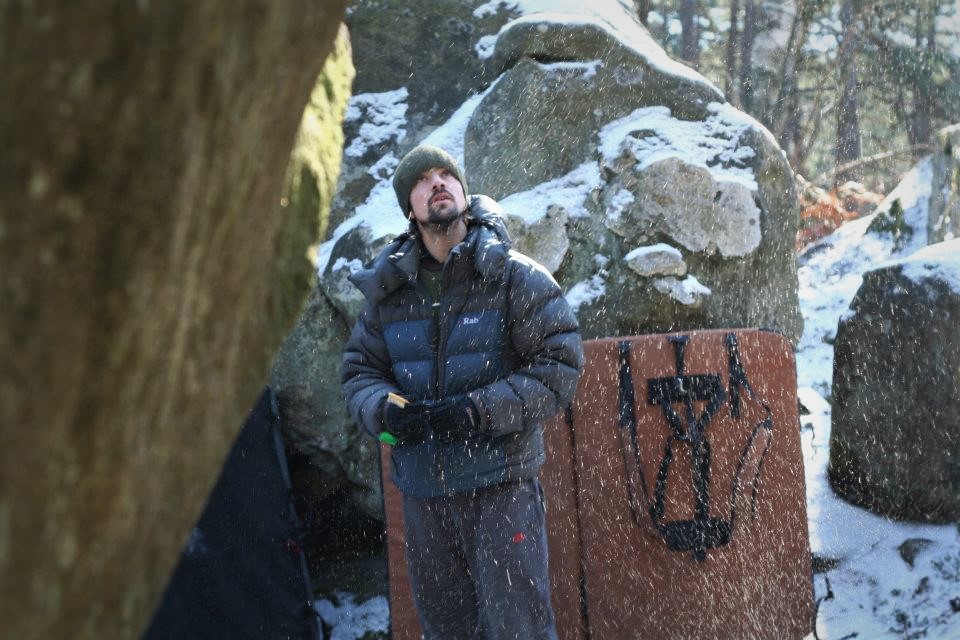
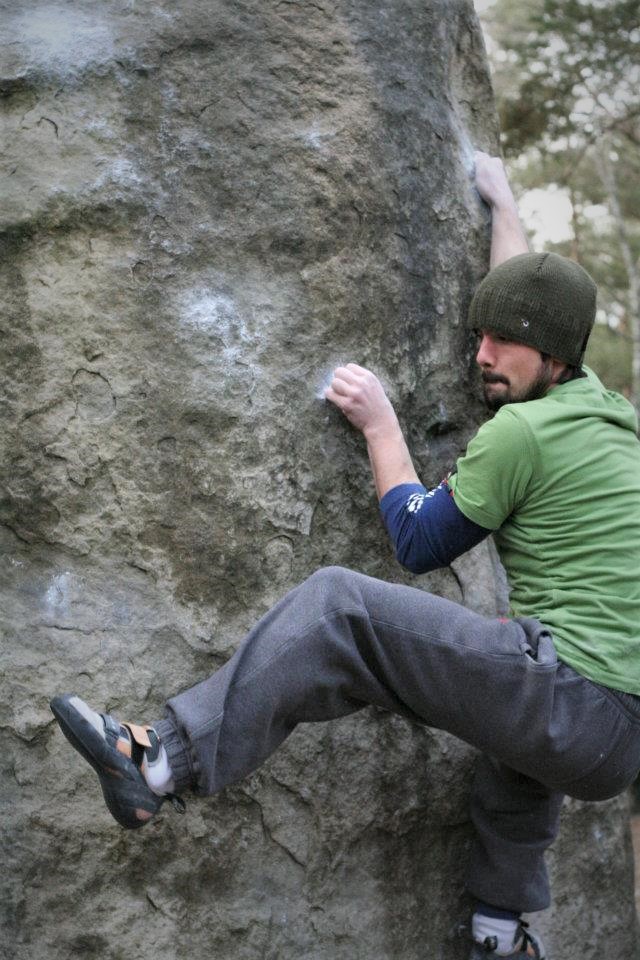
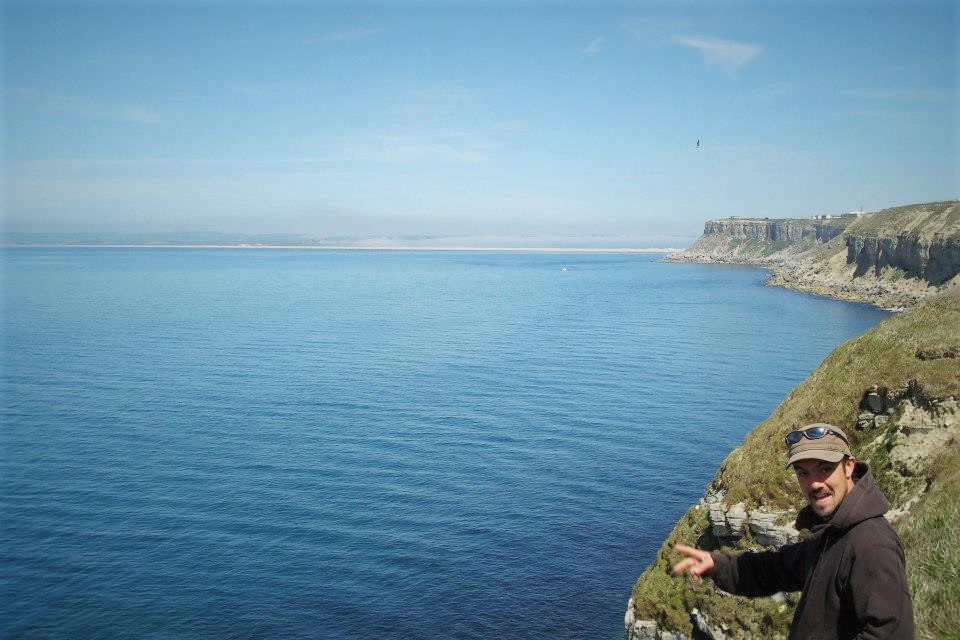
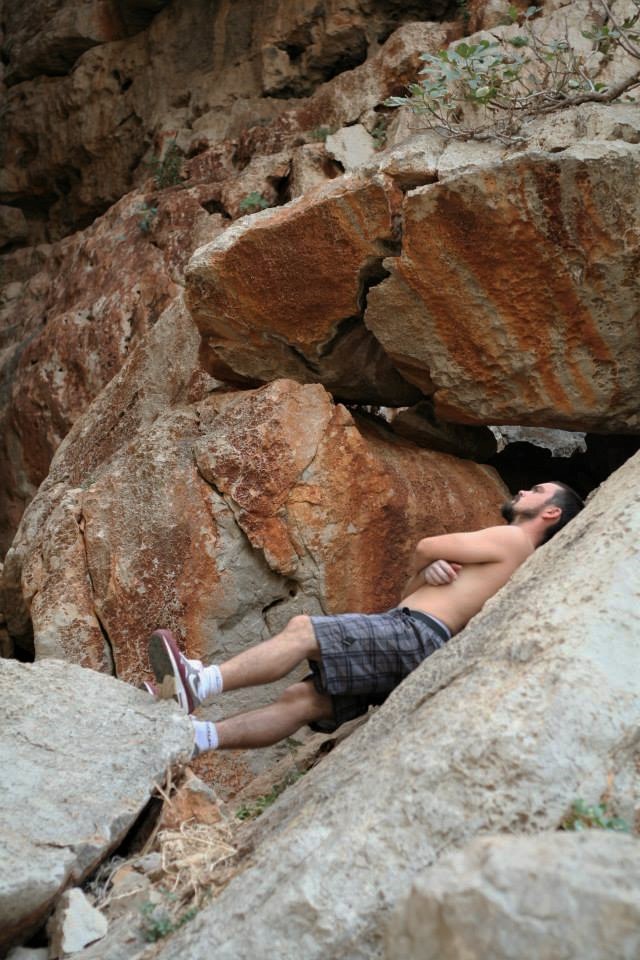
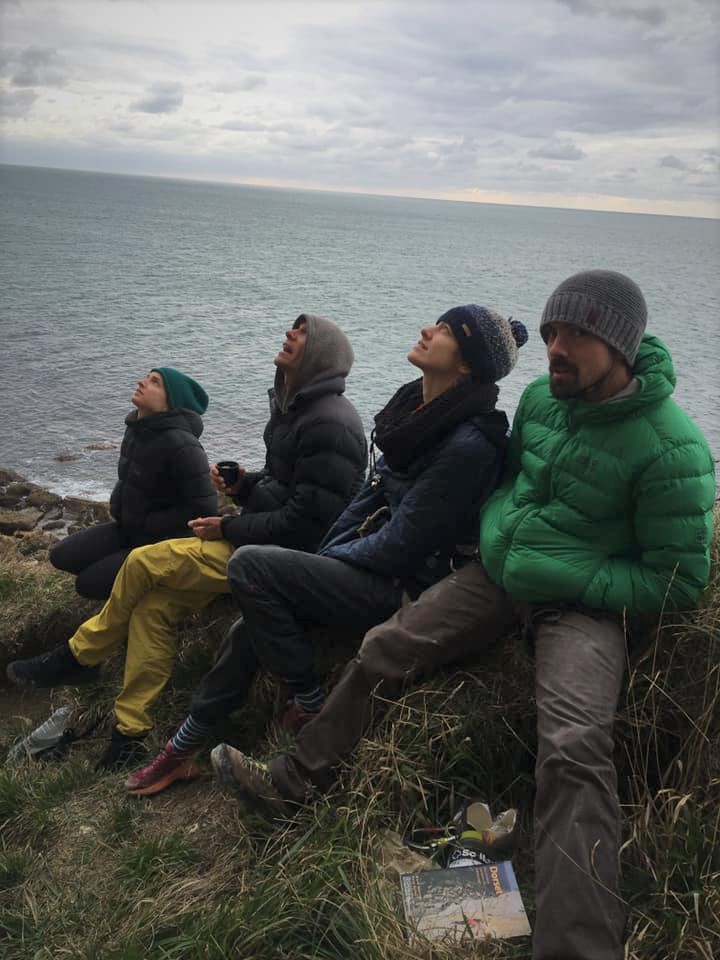
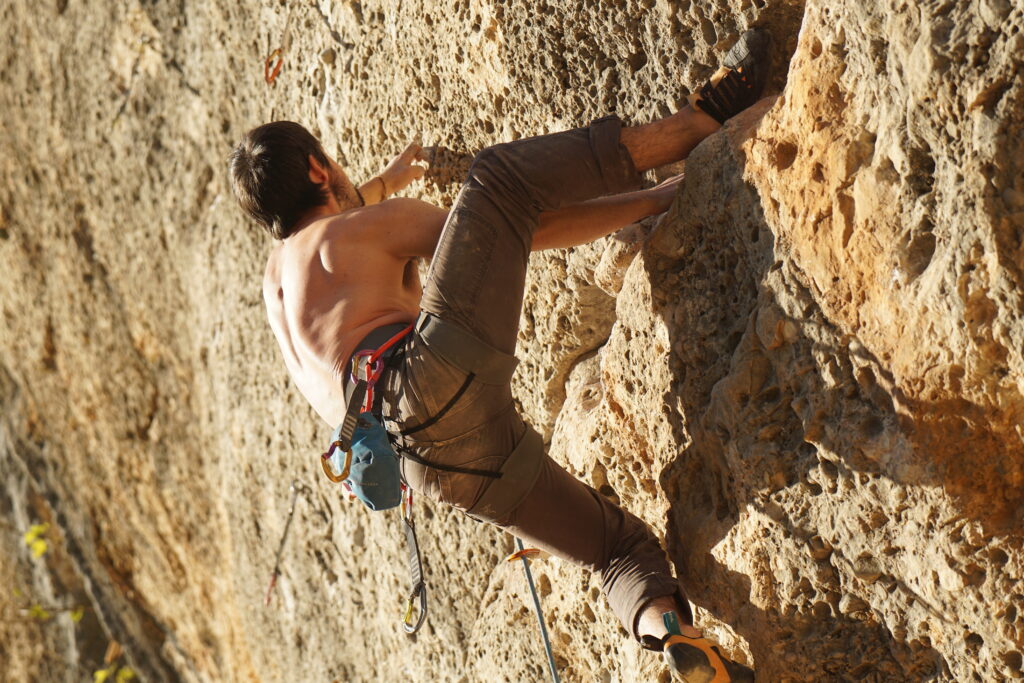
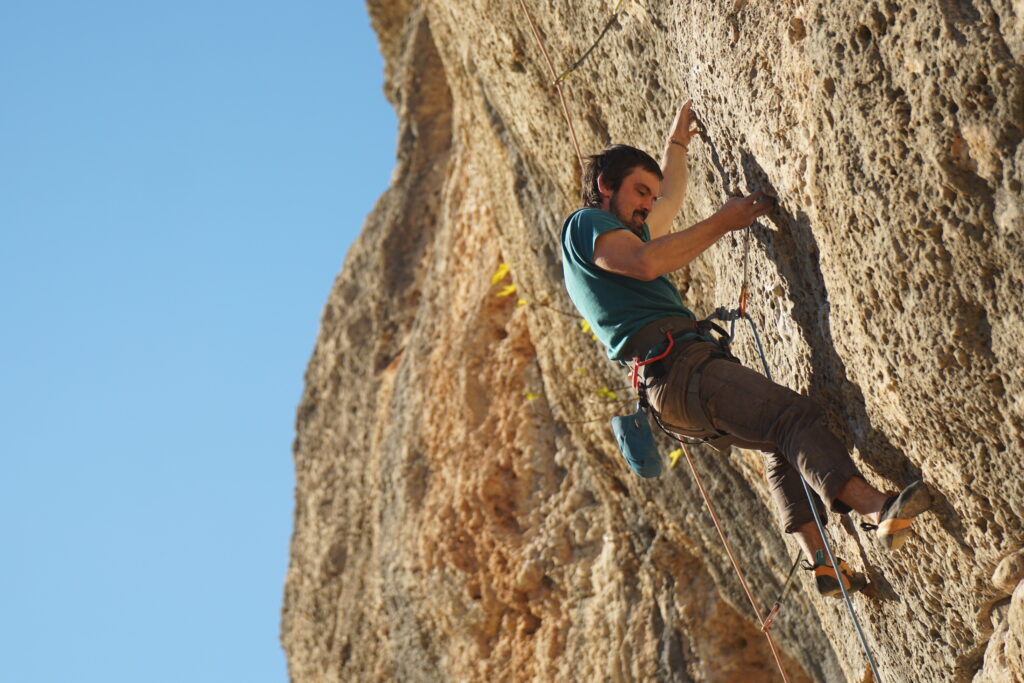
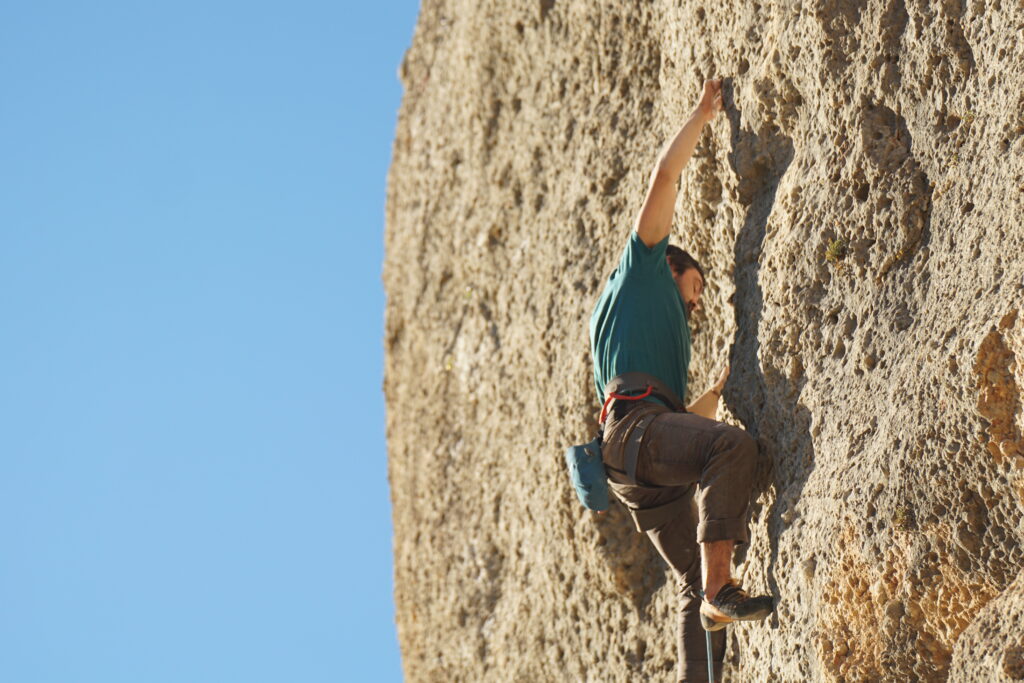
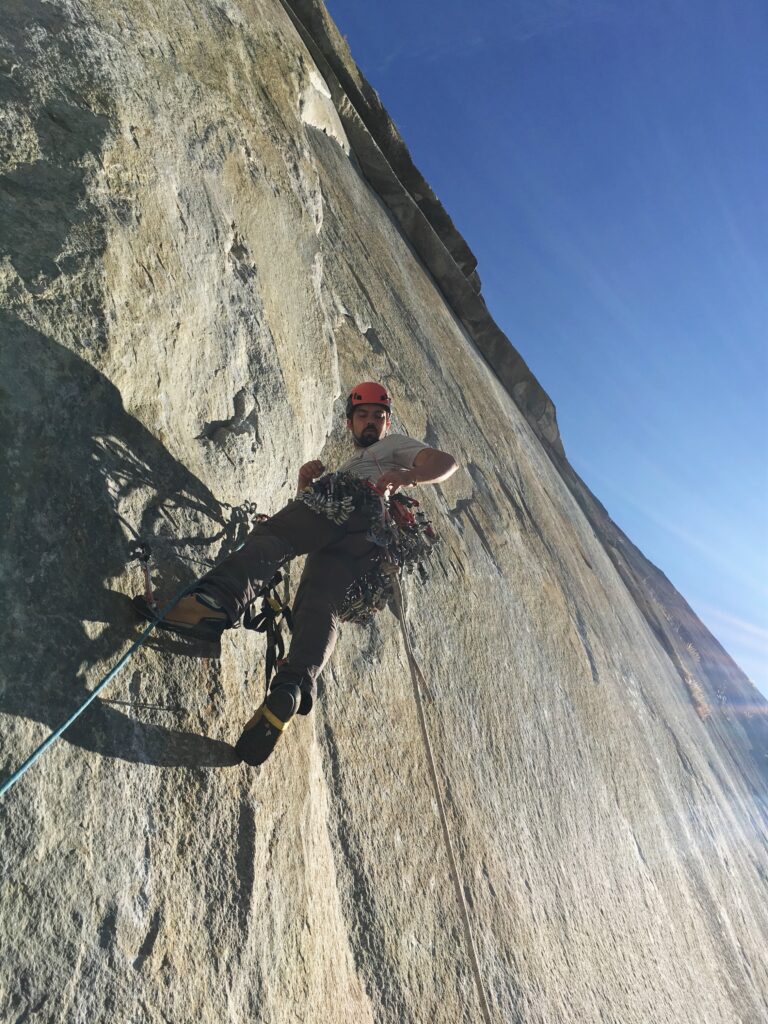
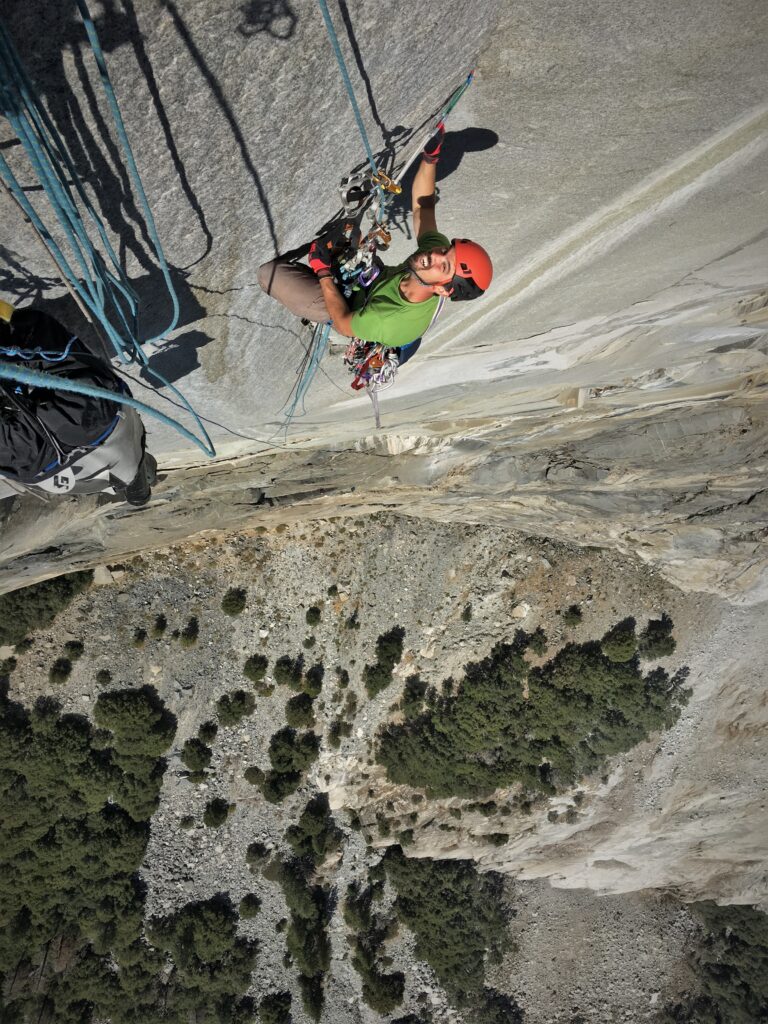
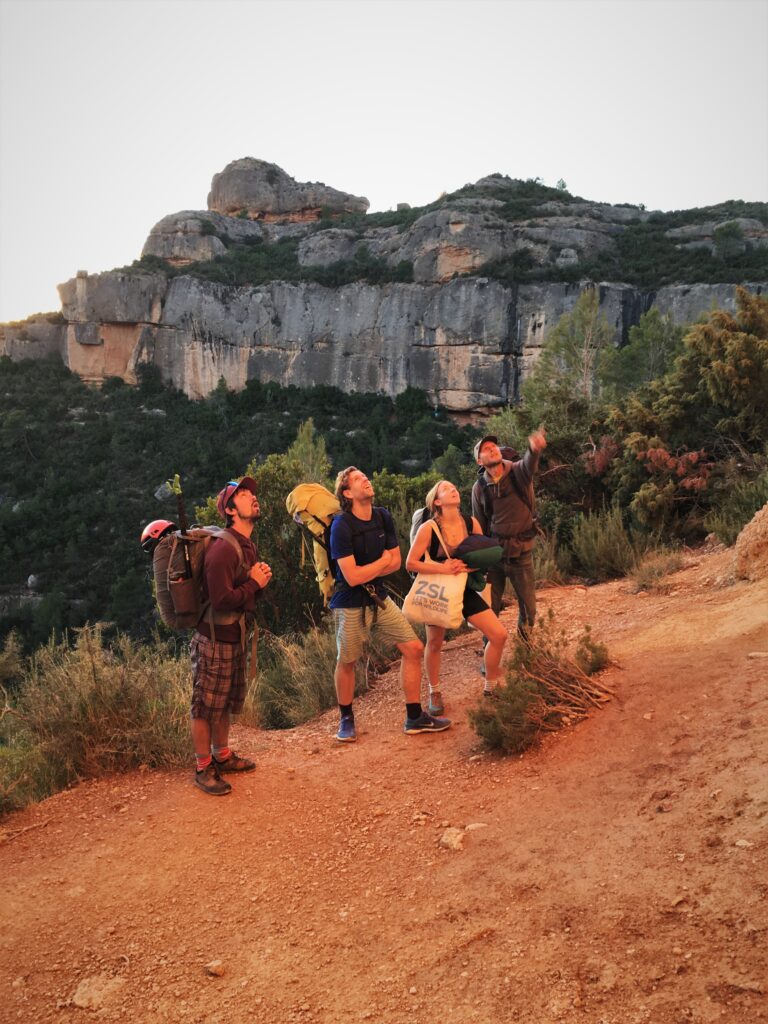
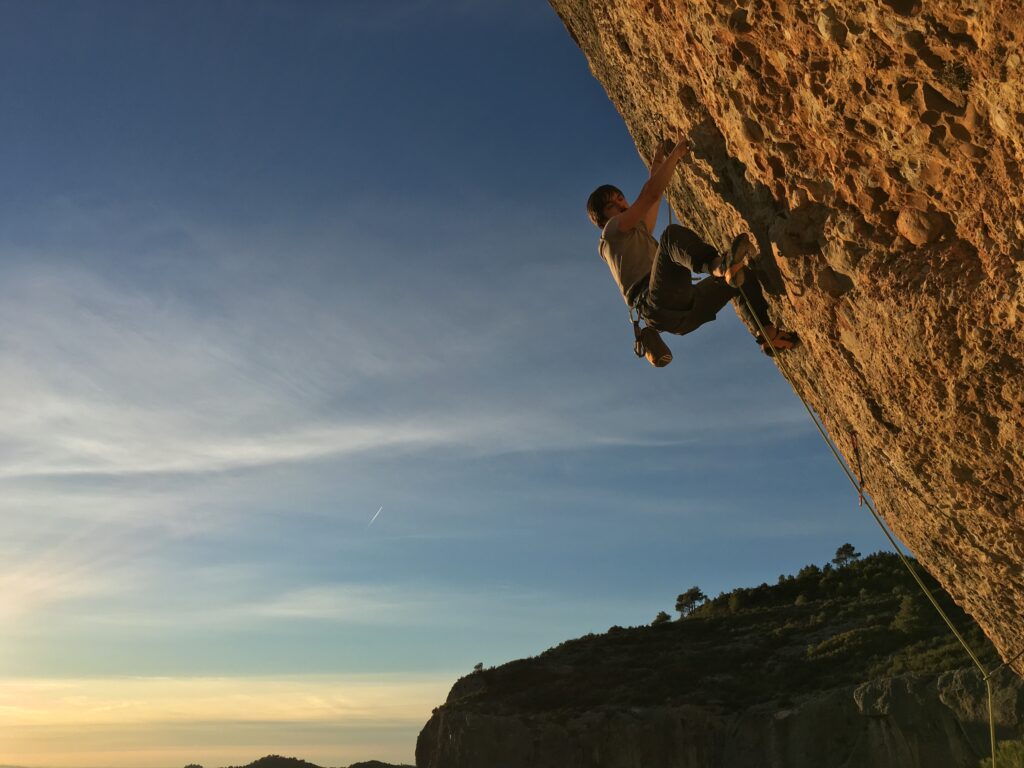
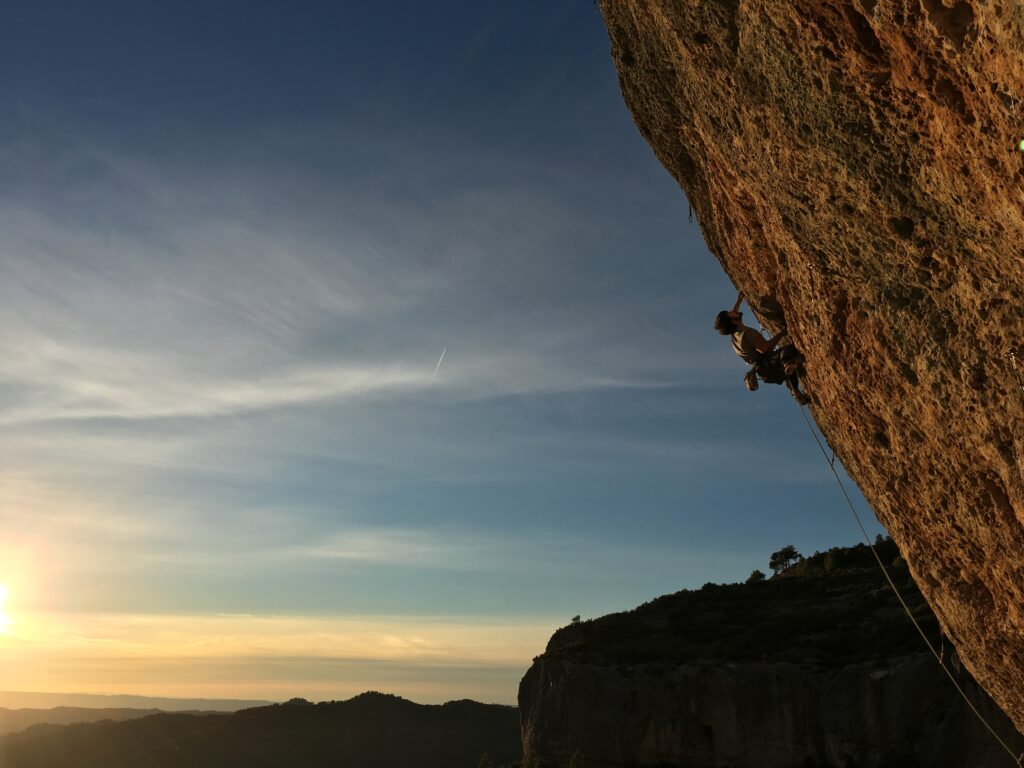
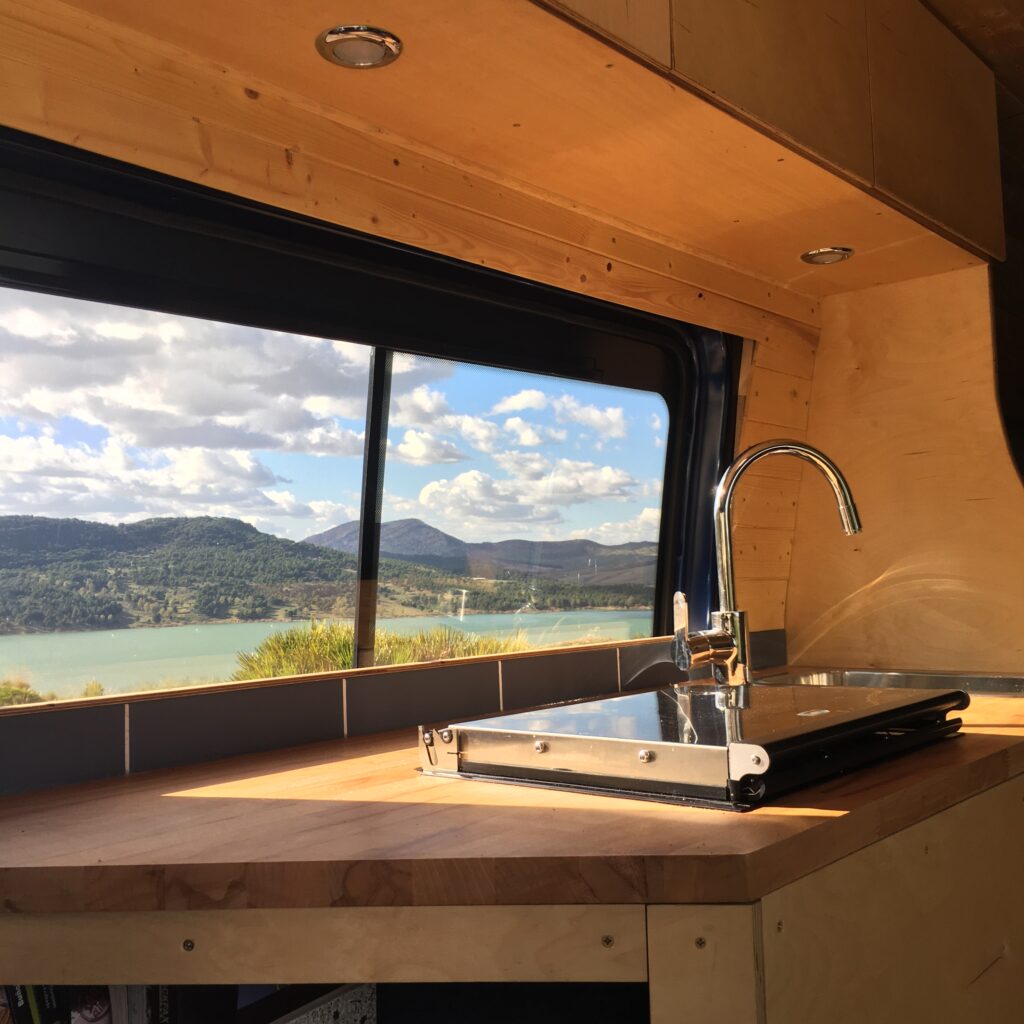
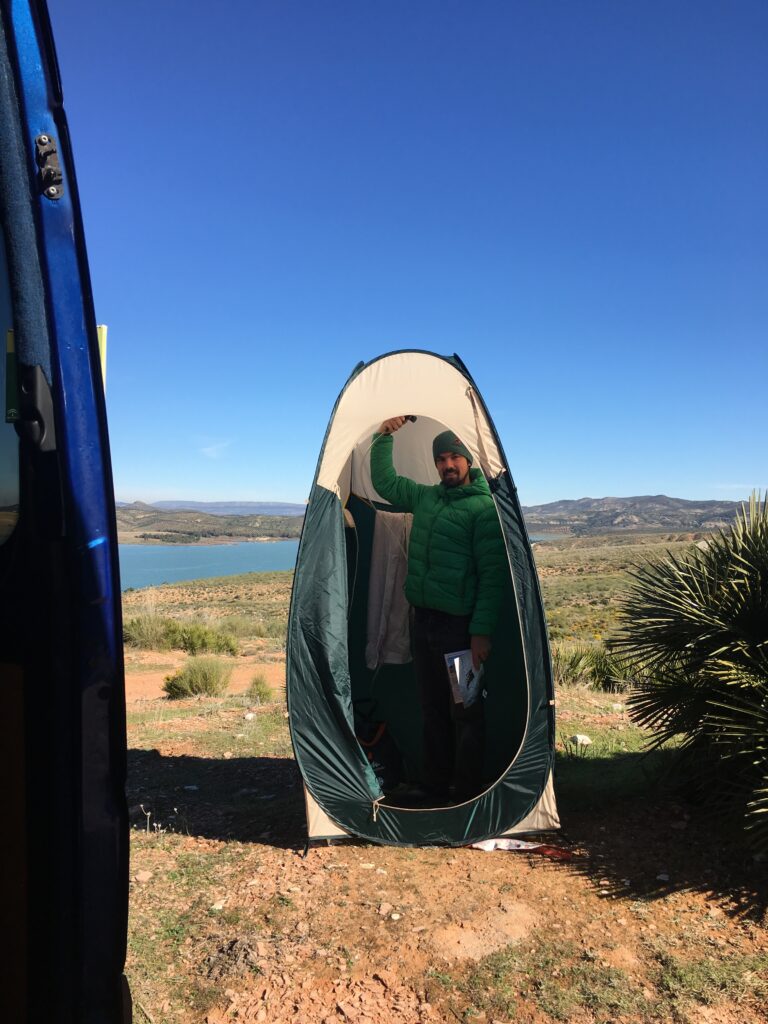
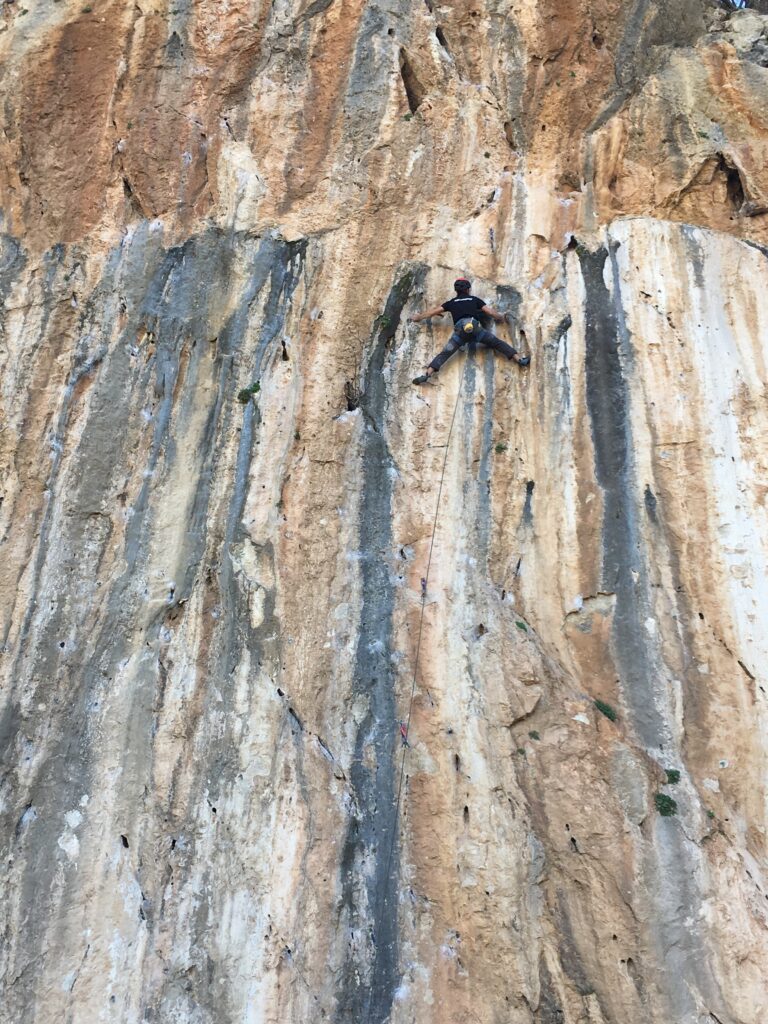
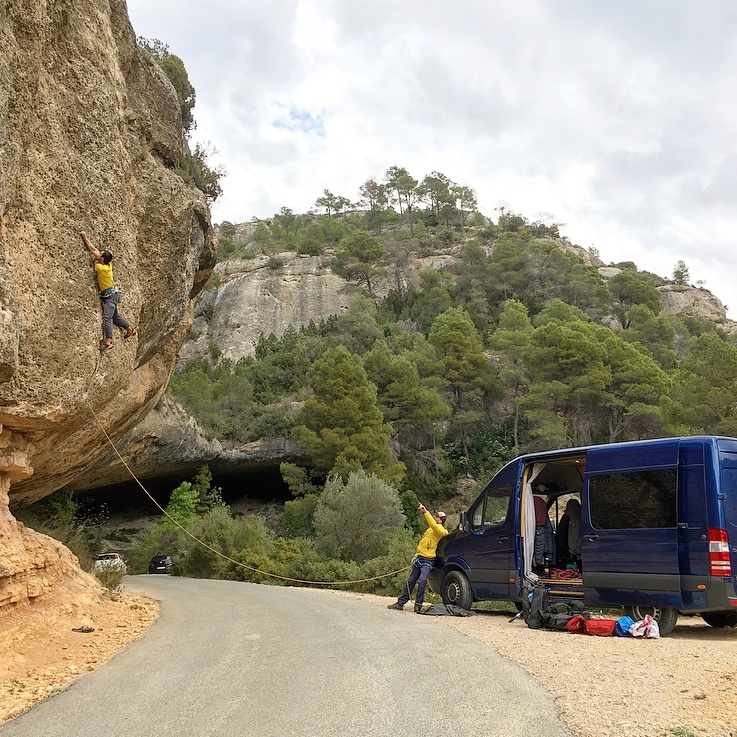
In the 15 or so years I’ve known regular Castle Climbing Centre face, Luke Jones (Jonesy), there’s been a lot of happy times from many jolly trips, arguably overly long nights in the Brownswood pub, and sunny slackline sessions in Clissold Park and, of course, just shooting the breeze under the plastic. These days we often now shoot the breeze under actual bolts when we run into each other in Portland. Pretty most weekends Luke’s off in the van he converted with his partner, sport climbing somewhere in UK, with pup Myla along for the craic. Climbers come and go over the years, the social terrain ebbs and flows but there’s something rather lovely about the fact that climbing itself can remain a constant in your life, no matter what and will always bring fond memories. Luke notes,
“I started climbing a kid with my dad on the gritstone in Yorkshire and the peak. Our local crag was Armscliff just outside Leeds and we used to go up on an evening after school. It’s remained my main passion.”
Passion is an apt word to sum up Luke’s attitude not just to climbing but also to work and to life; it comes across in everything he does and in his genial, thoughtful and gentle yet tenacious manner. He’s a guy who puts his mind to it, his heart and soul into it and gets things done. When he’s not climbing, he’s a logistics and workshop manager who, having cut his teeth in rope access, went on to work for Greenpeace UK. His day job is pretty varied and not a little bit out of the ordinary. from maintaining the boats and vehicles to building all the weird and wonderful props you see Greenpeace using to protest for environmental change. But it’s also a role that’s enabled him to deploy his climbing skills in many Greenpeace protests from scaling Oil Rigs in the Arctic of Greenland to climbing Nelson’s column in London.
A couple of years ago he and Rachel took a year out to sport climb around Europe and when I asked him to contribute to this series here’s where he chose (and where he would (and does) choose again and again and again)…
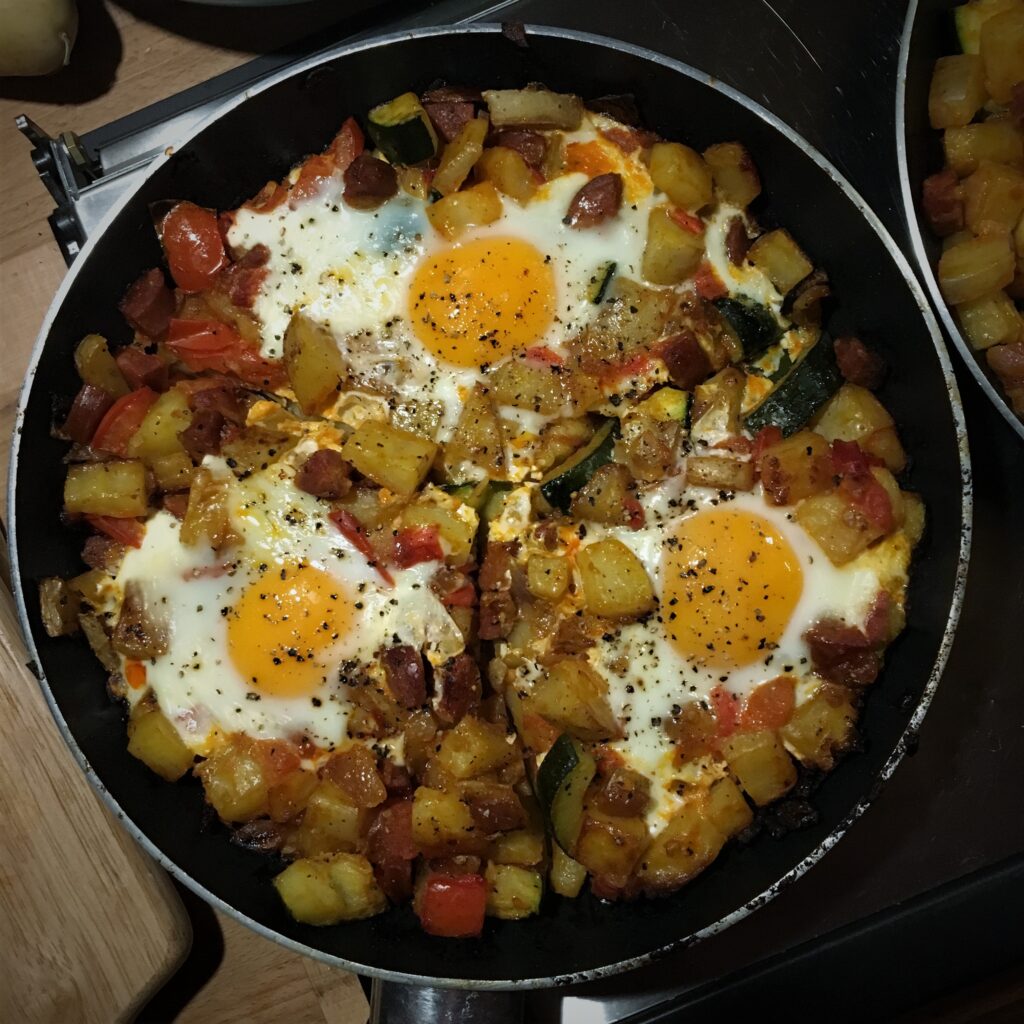
“My favourite venue to go climbing is Margalef (I’m actually here as I write this!). The amount of climbing here is endless already and there’s still loads of development happening. The style is powerful endurance, pocket-pulling on slightly overhanging walls, perfect for me (plus the bolting tends to be pretty friendly!). The town is small with only one small shop and one Bar, Café Vernet. The bar is super welcoming to climbers (as long as you don’t sit on the “locals” table where they play cards every day!) and they do great plates of food which are perfect to refuel after a day of steady pocket pulling. The plates are super simple and you just choose your own combo from the list, be it, chicken, sausage, pork, patatas bravas, eggs, pisto/ratatouille, salad or spinach. But, for me the olives and chorizo are the best things to eat here in Spain, and so I often do a cheeky chorizo, potato egg hash in van.”
Lots to choose from there. Now, I’ve ventured to this region twice elsewhere in this series with Andy Kiely in Cavallers and Penny Scully, who just loves Catalunya in general so in case you think that there are some glaring holes in the forthcoming, check these out too for all things romesco, a traditional Catalan spinach dish, pan ala catalana (in a pan!), and the delights of Escalivada.
Catalonia is a region rich in quality produce tomatoes, garlic, eggplant, peppers, artichokes, mushrooms, beans, chickpeas, and calçots (which are taken traditionally enjoyed and dipped in romesco sauce). Markets abound but it’s not just about glorious veg. Pork and cured meat (especially the botifarra and fuet sausages – botifarra sandwich is one of Barcelona’s typical breakfasts). Catalonia lies between the Pyrenees and the Med and it’s not only meat that is in abundant supply, seafood plays an equally important role in this region’s cuisine and often alongside the meat, pre-dating the Aussie idea of surf ‘n turf by several centuries. So all that means that there’s plenty of options with which to nourish yourself and to get creative.
There’s a veritable cornucopia of Catalan dishes to try, offering something for everyone including dessert lovers – crema Catalana of course, or even bread with chocolate olive oil and salt as a cheeky breakfast). It’s not just everyday eating that’s worth exploring, some of the world’s best restaurants can be found here (if you have a few spare euros…!),as well as plenty of food festivals throughout the year.
Luke notes in the Q&A below that he finds cooking without a hob somewhat challenging – in a creative way. so my aim with the following is to offer 1 pan recipes and, given he mentions tapas, most of these could double up as tasty tapas treats if you fancied getting a crew together one evening.
Hard for an olive to discommode any chef – olives are genius. In fact, I recall a very tasty pasta dish that Luke cooked in Font once involving olives and anchovies. The guy has previous. So I will be showcasing his hash (?) here. Chorizo, (obviously veggies/vegans can look away now) again – this is Spain so it would be rude not to. I’ve tried here to cover most of the ingredients he lists covering traditional recipes and building on them to add a little van-friendly twist.
Luke's chorizo, potato and egg van hash-up
As noted above, I felt sure that after being treated to Luke’s signature pasta in Font that this dish would deliver. The nice thing about a hash is that it is multi-purpose. Effectively, this could work as breakfast, lunch or dinner. It would also work as a little tapas side (without the fried egg). Only a few simple, tasty, hearty ingredients and you will be mono-ing 9a’s with the best of the pocket pullers.
If you wanted to go fancier, a variation for an ersatz Catalan shakshuka would be to fry finely sliced lengths of aubergine and pepper (ala escalavida), and cook them in a romesco sauce thinned down slightly with an extra tin of tomatoes, pop in some spinach, and crack your eggs in on top (ala shakshuka). Go all-out and fry some chorizo to add as a garnish and grate on some local cheese too if you like. Sounds like a total blow-out but is delicious.
It’s a good way to incorporate most of the ingredients Luke mentions above, use-up leftovers/gird your loins and is easy to prep on the hob in one pan.
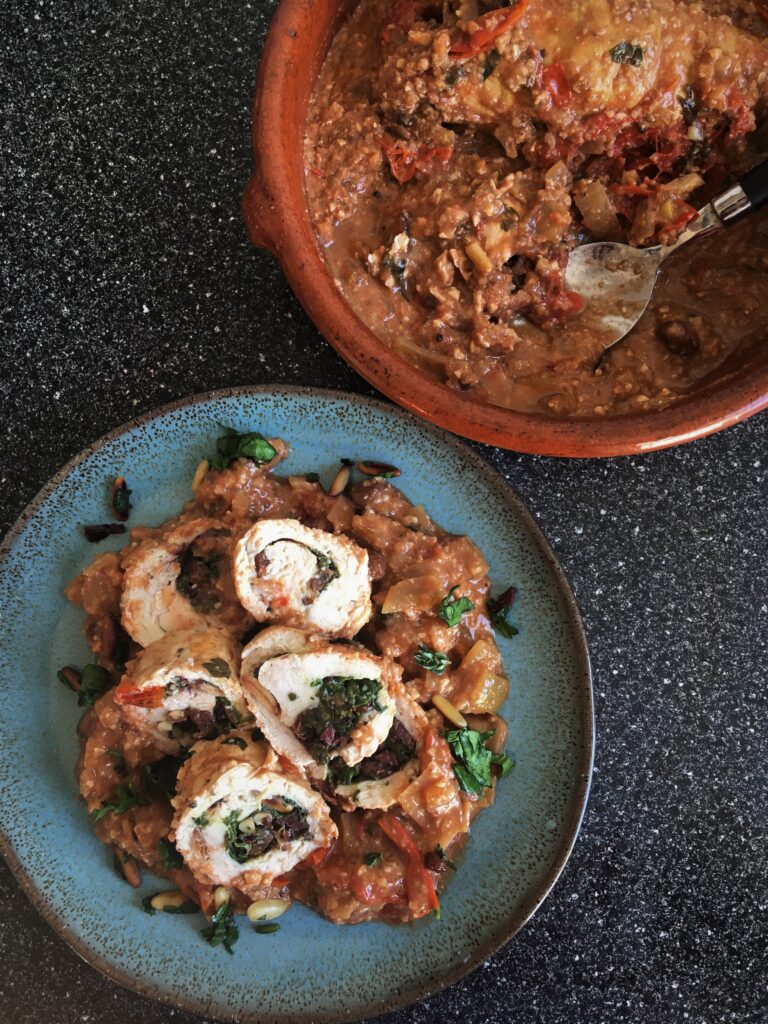
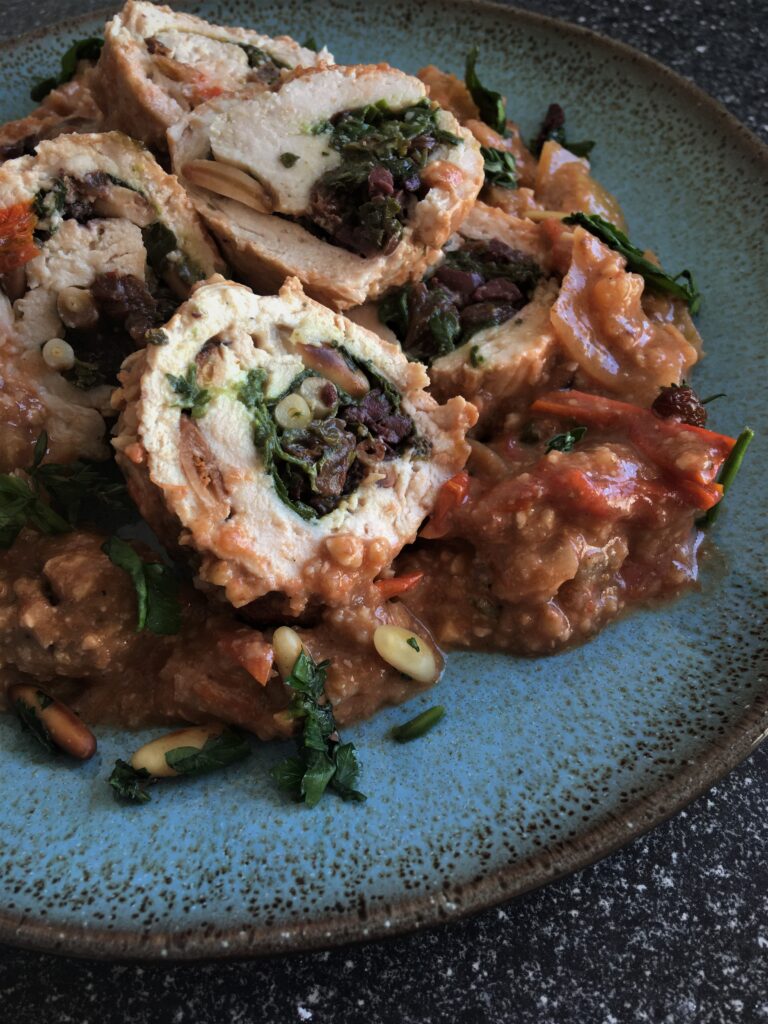
Catalan chicken
I wanted to run with the idea of making your own van-friendly tapas dishes and Catalan chicken is one that I’ve hit upon to play about with. Again, a one pan dish that I’ve adapted, stuffing ballotines of chicken with some of the “catalan” filling. The result is a supper for one or two or for more as tapas depending on how you serve it. Easy to make and easy to scale-up , this dish will also provide tasty leftovers (and you can pop it in the wraps from the recipe below for a cheeky crag lunch).
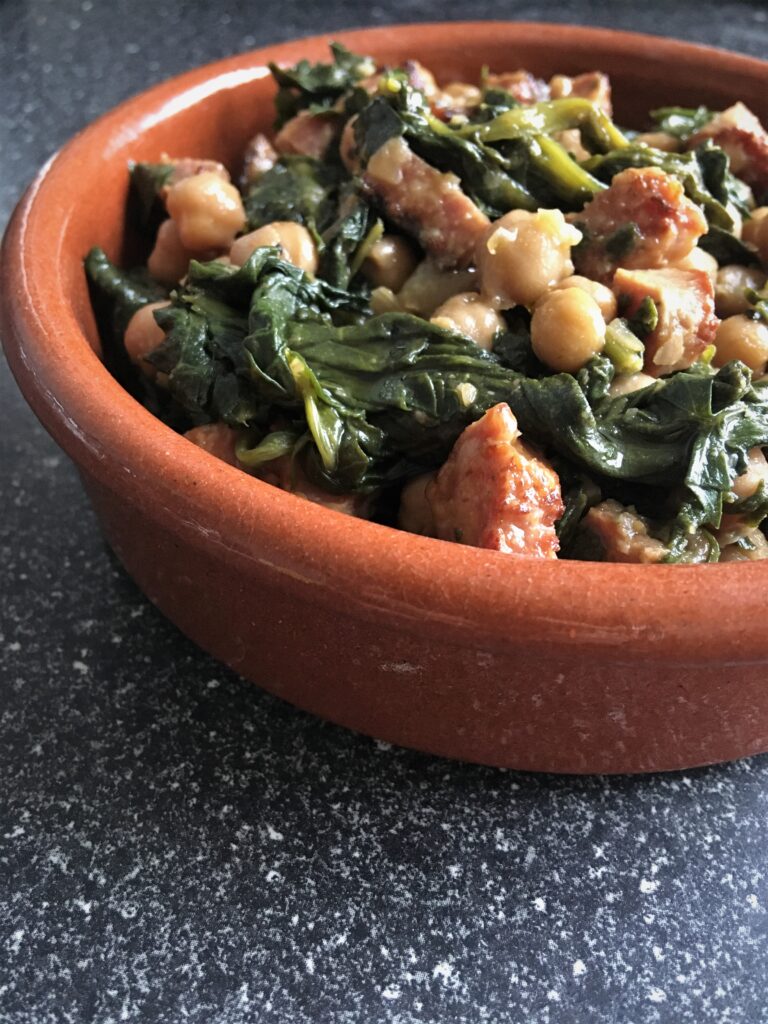
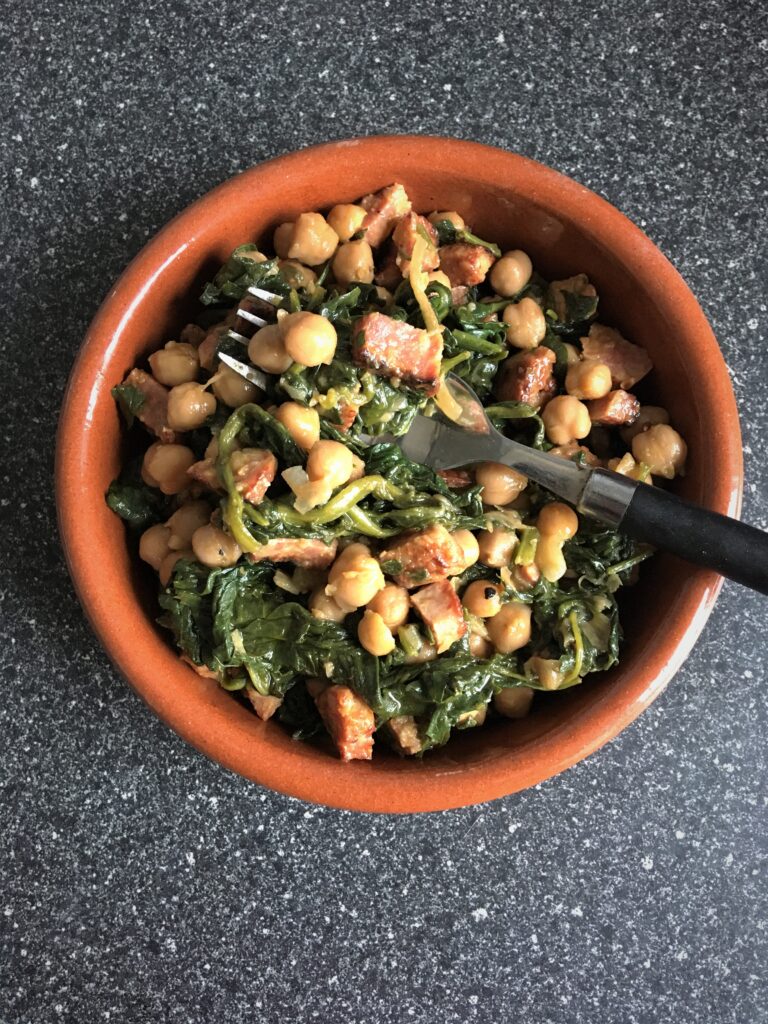
Chorizo, spinach and chickpea stew
Another tapas winner and also pretty decent leftovers contender. If you are veggie, easy to leave out the chorizo. I’ve added a few extra veggie options to make it more veg-friendly too. You can also blitz it up, add some stock and make a nice soup. There are various versions of this, some include a cinnamon stick, along with celery and plum tomatoes if you want to bulk it out
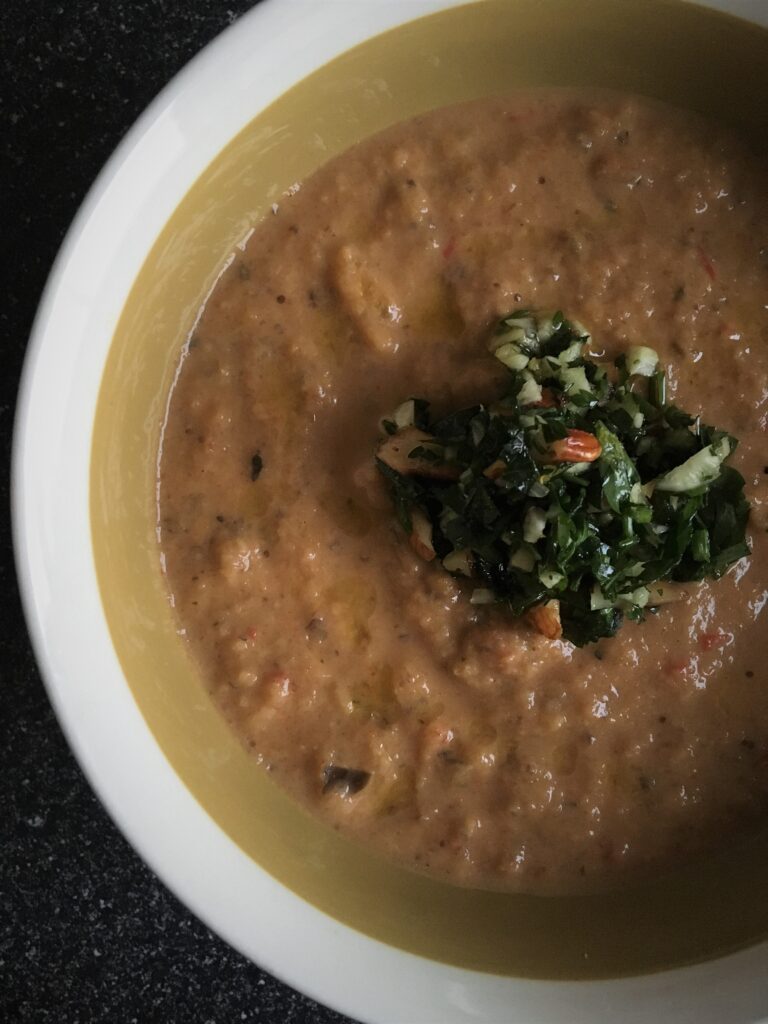
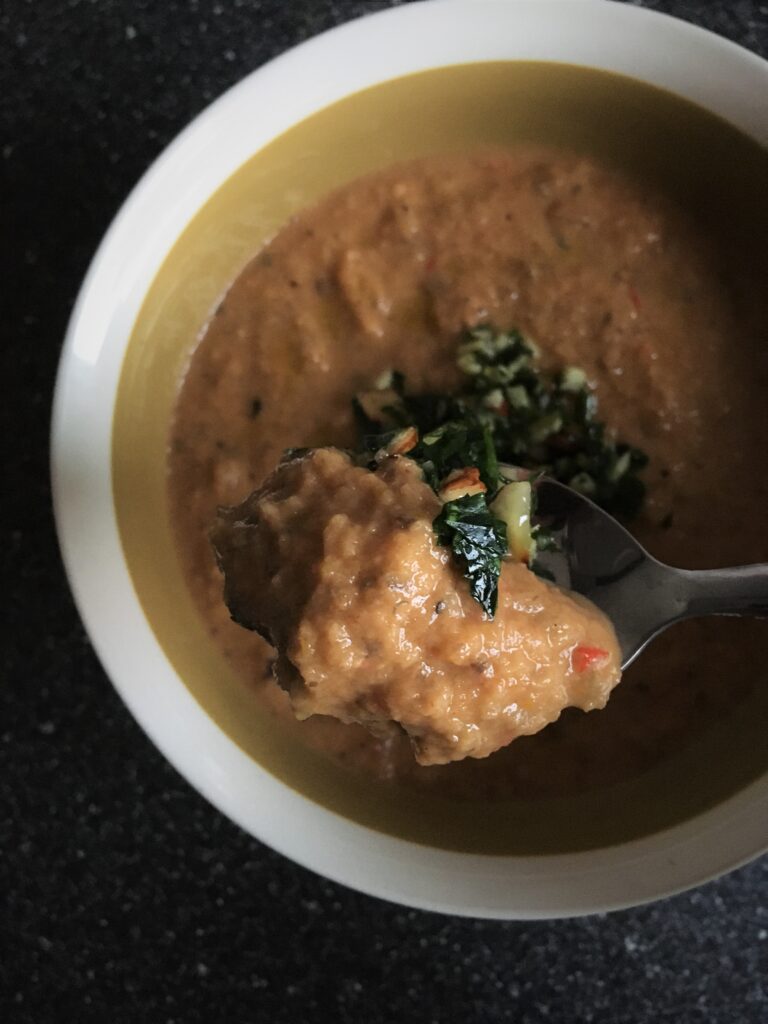
A souper riff on escalivada and romesco...
These are two super prevalent, popular dishes in this hood which I’ve covered in previous blogs here and here. But to ring the changes, a soup! Again, a one pan deal here and an ace way to indulge in some top notch abundant veggies. You can also top the aubergine soup with tabasco for a do-you-good, cold-killer (all that garlic, spice and healthy veg outta help your immune system if you’ve been going at it hard).
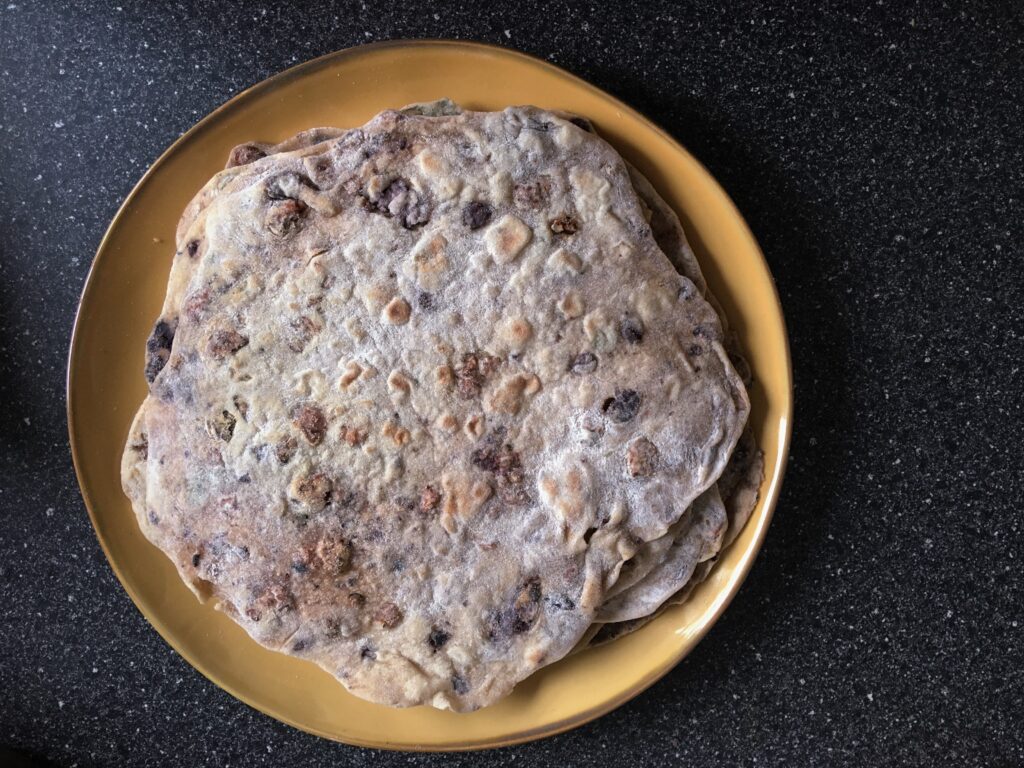
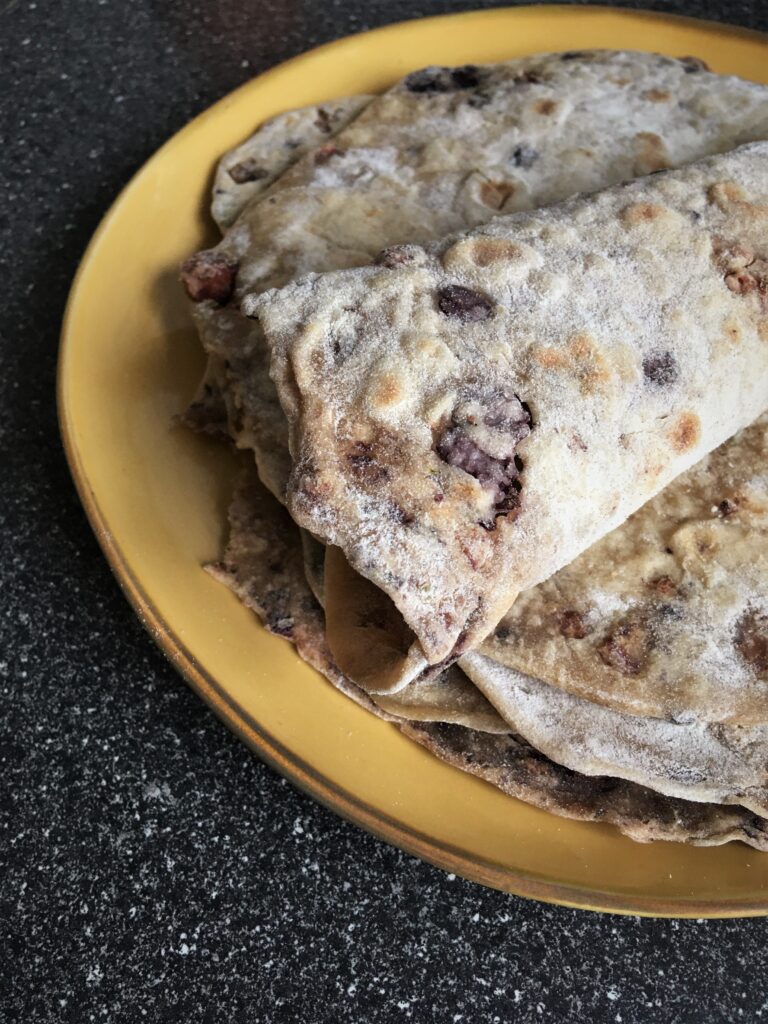
Olive and chorizo wraps
A popular crag essential for many of my climbing chums: the humble wrap. This is a recipe for your basic tortilla dough but I’ve added olive and chorizo to cover the brief! Super quick and super simple to make. You don’t have to add any jazz into the mix you can keep it plain but I’m a huge fan of olives in bread.
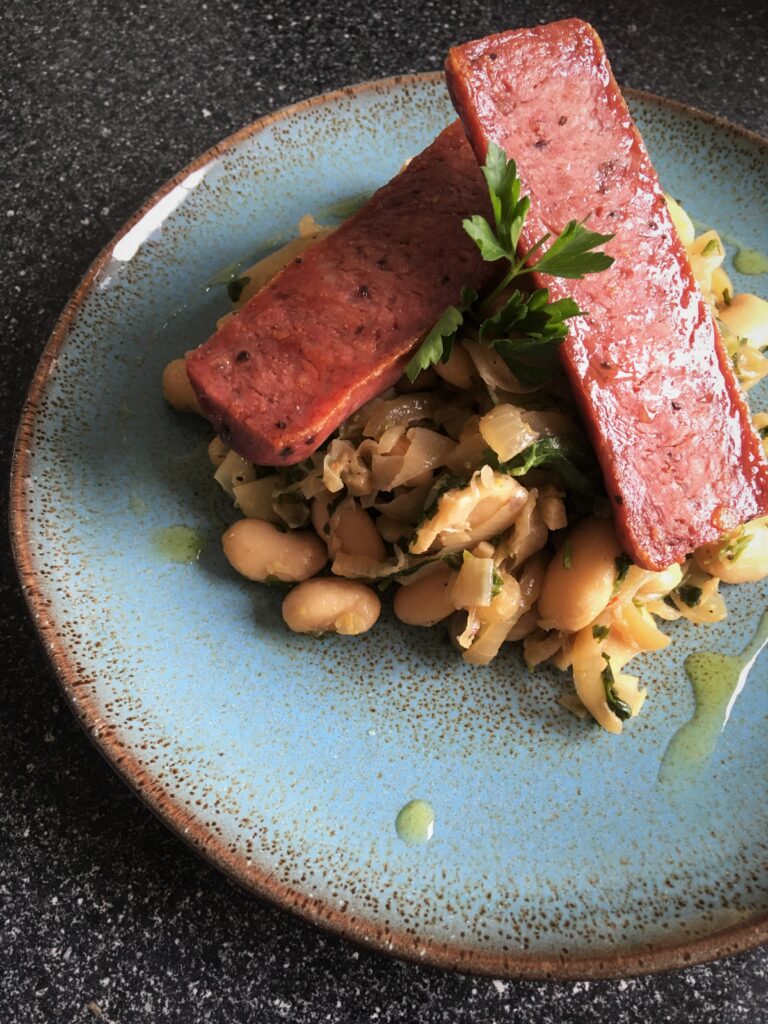
Botifarra amb mongettes
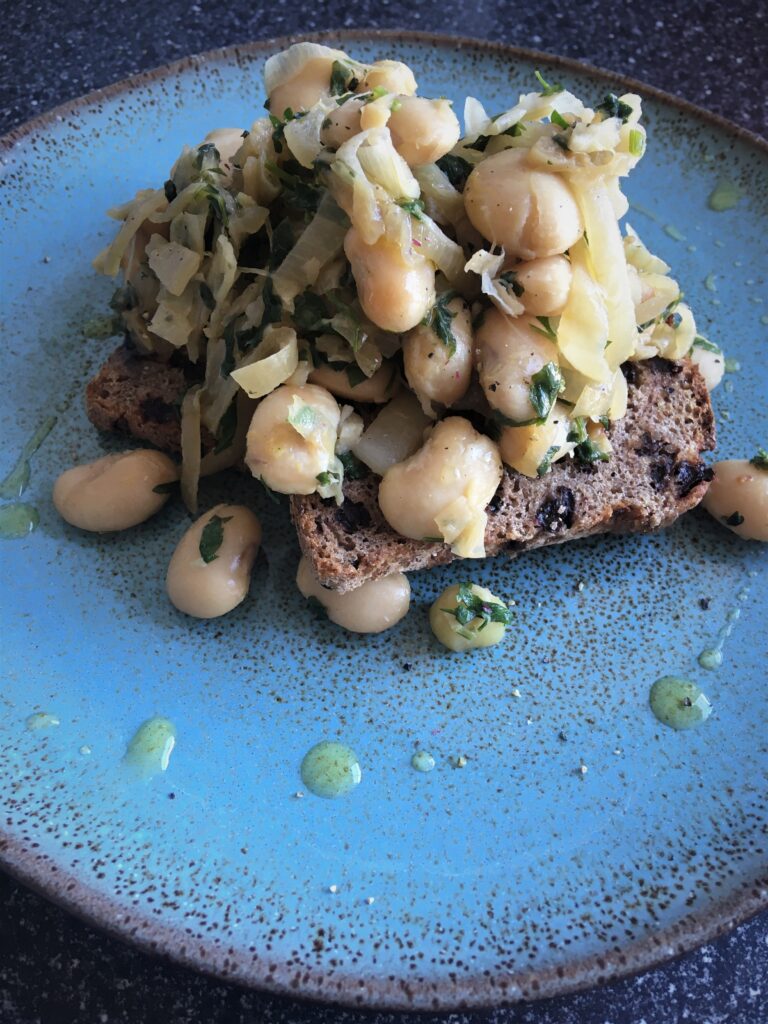
This is very much a meat dish but one of those meat dishes where you can actually remove the meat and still have something interesting (or maybe even add some fish or cheese instead!). Botiffara amb mongettes is basically beans and sausages – standard easy climber food and is in fact often eaten for breakfast in these parts. The white or kidney beans are simply cooked in garlic with a little parsley and served with the fried sausage, served with ailoli (if you have aioli leftover from the cod dish below then that would be lovely with this) and toasted crusty bread. I’ve essentially made it a little more interesting for the veggies – otherwise it’s just garlic beans without a sausage (like an old school vegetarian dish!) but it is great either way (particularly with the sausage).
There’s a nice alternative I found here where the white beans are replaced by broad beans and mint which lend a fragrant summer harvest note.
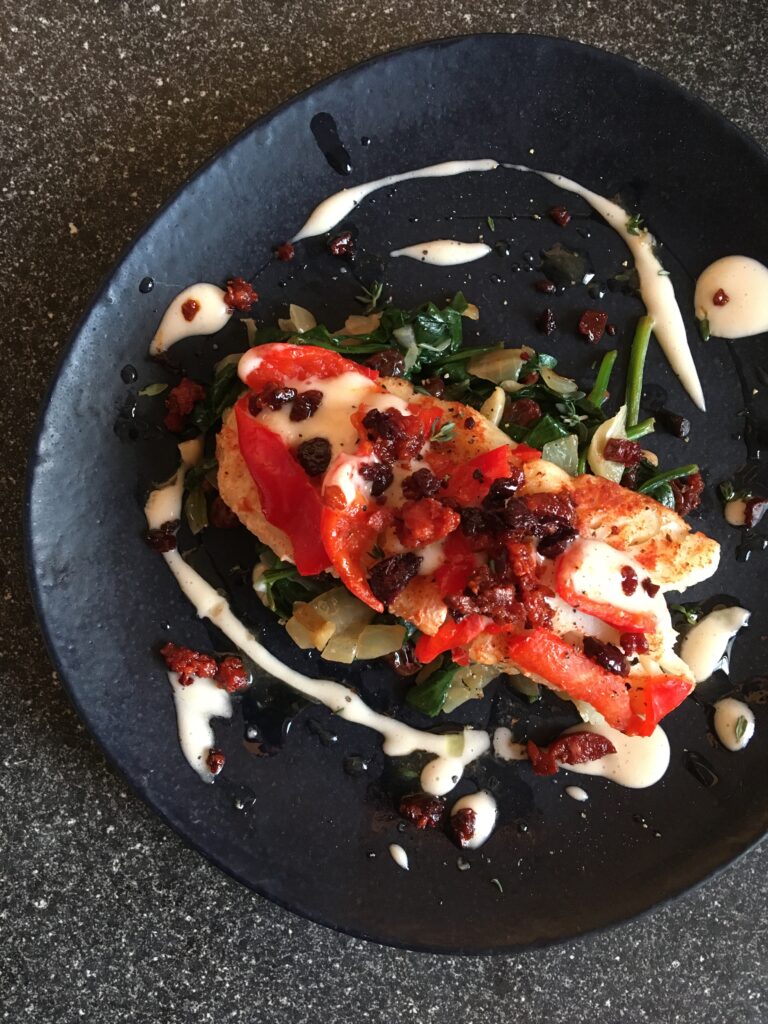
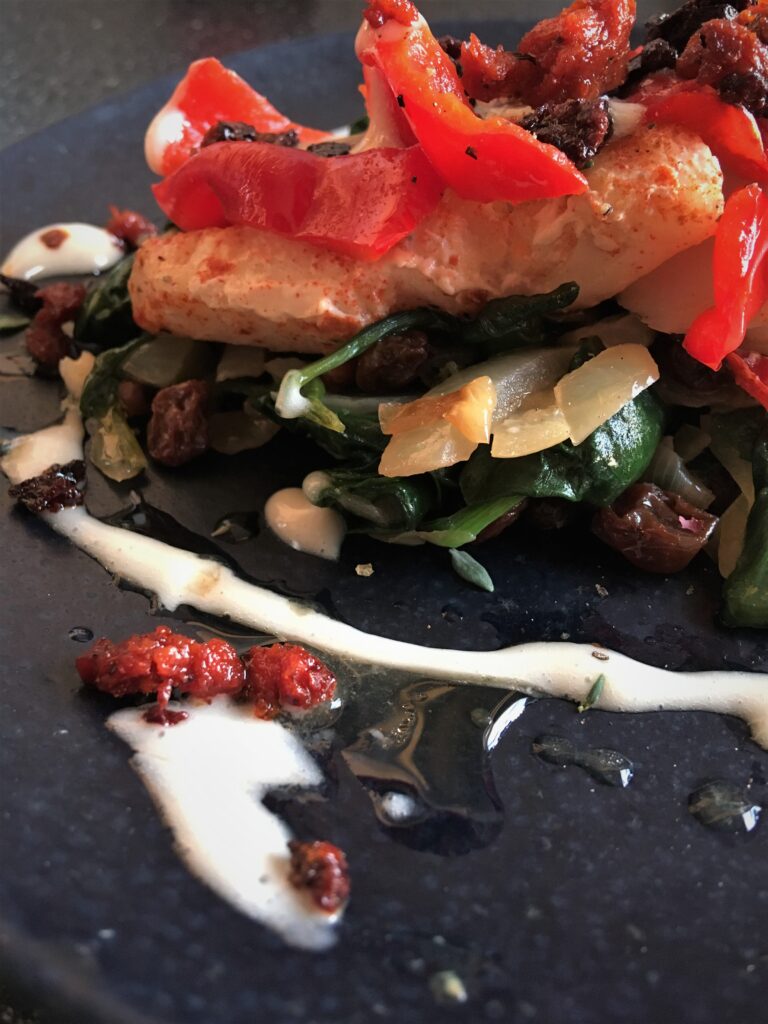
Baked fish with spinach and honeyed aioli
As noted above, for the traditional local spinach, pine nut and raisin dish (which is awesome), see here
It’s humble but delicious there’s no denying that but here’s another way to showcase spinach which I stumbled on during my research and have made a few adaptations too. I picked this not just because of the spinach but because Catalonian cuisine has a big seafood slant and, not least because I know Luke likes fishing (it doesn’t have to be cod…). You could make this as a supper or as a little tapas dish plus it’s all in one pot!
And, last but not least, what to drink with these...
I’ve written about Catalan wines previously here so click for a brief overview.
For the dishes in this blog, consider a cava with the soup and the fish. You could also try a macabeo for the fish dish or indeed a chilled garnacha would work nicely. For the chicken and for the chickpeas I would go macabeo. It’s a versatile variety with the right balance of acidity and rounded fruit to compliment this dish. You could also opt for a (optionally chilled, if light enugh) garnacha as it will have enough earthy notes to combat the depth of flavours and the ripe fruit will pick out the raisins, onions etc.; and for the chickpeas anything heavier like a priorat/monastrell will clash with the tomato and swamp the flavours.
One thing to add, however, is that whilst I realise it’s a hard-sell to suggest that at the end of a hard day pulling at the crag, a weary climber should reach for anything other than a cold cerveça but Catalonia is famous for its Vermouth which is reached for across the country as an aperitif during la hora del vermut (“the vermouth hour”). Whilst it’s made and enjoyed throughout the country, in fact it’s an institution, the most famous Spanish vermouth comes from Reus, a small town with a history of Vermouth-making stretching back into 18th century when it came to be adapted from the original Italian recipe. At the turn of the 20th century Reus already had 30 different producers. As in Italy with Campari, you can drink it straight but the standard is iced along with a slice of orange and an olive. You may also be offered a squirt of sifón – soda to open up the aromatics. All vermouth starts life as white wine (and in this instance it’s likely to be Albarino/Macabeo). It is then fortified with a spirit and, rather like gin, is flavoured with an infusion of local plants, peel, leaves, flowers and citrus and, like gin, each has its own particular recipe . The colour and sugar content comes from it being infused with caramel.
Rather like Sherry, it’s great to pairing with nibbles like almonds, olives, cheeses, breads, anchovies etc which will often come free with it (rather like sherry and tapas) in a vermut bar (a vermuteria) (although the most traditional way to buy it is to fill up your own bottle straight from barrel at a bodega). The traditional style is sweet red vermouth (vermut rojo) but the fashion is now for drier styles. There’s a traditional and an innovative scene – with more unusual botanicals in play like jasmine or peppers, as well as a foray into organic and biodynamic production.
Just as you can visit wineries across the region, you can also visit various vermouth-makers which is a nice little explore to add to your rest-day ticklist.
Q & A
What do you find challenging when cooking on a trip?
Not having an oven, in our van we only have a 2 ring hob, it means you have to get creative as to what you can cook in 1 or 2 pans. [Sounds like you need an Omnia!]
Do you follow a nutrition plan and how easy is it to stick to when you are travelling/living in a van? What do you tend to eat at the crag?
Not really. I just eat what I want when I want. Oh and a lot of wraps!
What’s your best van/camping hack – cooking or otherwise?
Our pop-up shower tent and pump up shower, its game changer for longer van trips!
What’s your top climbing trip/van cooking equipment purchase?
A jetboil to use as our kettle. Having a diesel hob means it takes ages for the kettle to boil!
Do you do anything to complement your climbing while you are on the road – do you have any training hacks for vanlife?
Apart from walking the dog on rest days (long walks!), not really. I’m super lazy [he’s really not ;)].
What’s your most memorable climb?
Taking my dad up a route called Hope on Idwall slabs in North Wales. It was the final time we climbed together before he passed away.
Who are your climbing heroes?
Dave Birkett.
What got you into climbing and what does climbing give you?
I started climbing with my dad when I was little so I’ve pretty much climbed all my life on and off. I suppose it is my way of escaping from the real world and just relaxing.
Bouldering or sport or trad?
I dabble in them all but deep down I’m an out and out sport climber.
Climbers love gear. What bit of gear/clothing could you not be without?
Simple. My downie! It comes on all my trips no matter what the season! You quickly learn that you should always pack it.
If you were a pair of climbing shoes what would you be?
Scarpa Instinct VS – a good all-rounder!
What’s the best view you’ve enjoyed at the top of a climb?
The view from Ceuse.
Where do you return again and again to climb and why?
Margalef, the scenery is stunning, the locals are friendly and the climbing is super-fun and suits me!
How do you choose where you want to climb?
I base it on the weather ;).
How do you manage your expectations/training/enjoyment and what’s your best piece of advice when it comes to training?
Try to make it fun or have something you are training for. It’s much easier when you enjoy it and there is a goal at the end of the training plan.
How has the climbing scene changed since you started climbing and how do you think the Olympics will affect it?
When I started climbing you really had to know someone who was into climbing to get started as climbing gyms were few and far between. It wasn’t like today where there seems to be a new climbing centre opening every week as climbing becomes much more of a mainstream sport! This is especially the case since it’s inclusion in the Olympics. In London it feels like climbing has become a trendy alternative to going to the gym and I can understand why. It’s a much more fun and interesting way of keeping fit because it also involves problem solving and you get a real sense of achievement when you complete a boulder problem or route.
If you weren’t addicted to climbing, what would replace it?
Snowboarding. It’s another mountain sport and I’m just addicted to being in the mountains.
Where you would you like to develop some routes (and what would be the first name)?
In Chulilla simply because of a trip there when the whole time we talked about wanting to develop some routes, especially when we went fishing for black bass on the rest days! We came up with loads of names but I think my favourites of all the ones we came up with were ‘Mini Wad 2000’ and ‘Black Bass and Biggie’.
Where is the most unusual place you have climbed and why?
In a very small private gym in Medellin Colombia. I met a guy who was climbing in the Mesa De Los Santos and he invited me over. I didn’t think he was serious but when I got to Medellin a few weeks later I got in touch and ended up doing a few sessions with the locals!
What’s your proudest moment?
Topping out Zodiac on El Cap, my first big wall!
What’s your best tip for someone starting-out in climbing?
Climb. A lot!
What’s your best tip for someone planning a year-out as a vanlife climber?
Set a rough plan but be prepared to change it. For example, we were planning only to spend a week in Arco but ended up staying for a month! Also talk to the locals and head to smaller venues you wouldn’t go to on a week trip, as you have loads of time it doesn’t matter if you ‘waste’ a few days. We found some amazing climbing this way.
Where’s your next trip and why?
Margalef because it’s the best!
Comments
Hit me up with any variations you've got for these ingredients/dishes; any other van-friendly recipes you would like to share from your travels to this region; or, indeed wines that you have come across on your travels that you would recommend - either as a match or just for drinking!